Healthy Grocery List for Fitness Beginners (Complete Shopping Guide)

Discover a healthy grocery list for fitness beginners to build muscle, lose fat, and eat clean.
Healthy Grocery List for Fitness Beginners: Complete Shopping Guide (2026)
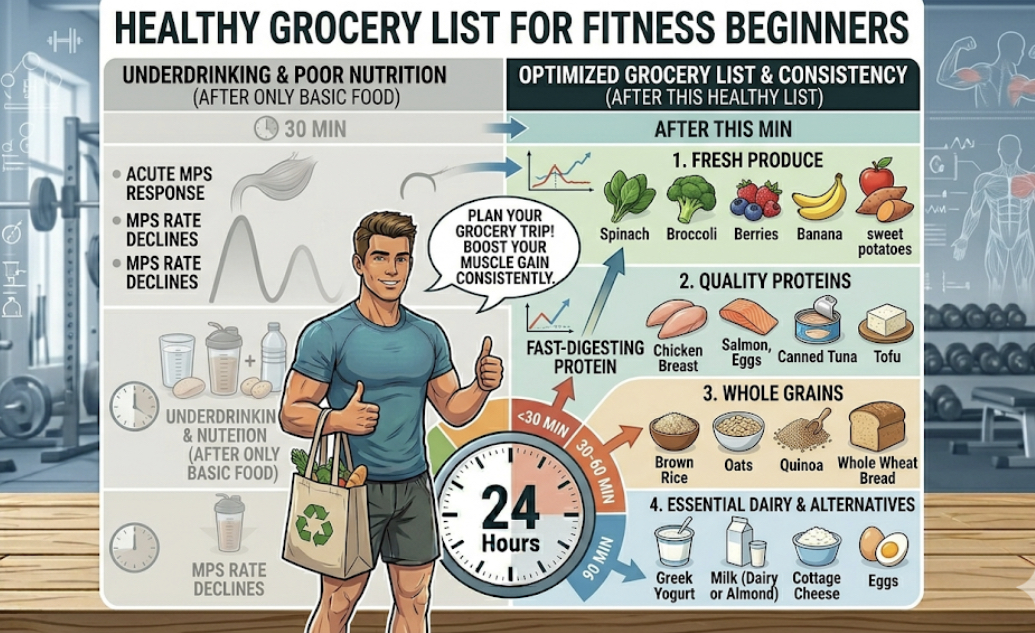
Healthy Grocery List for Fitness Beginners: Complete Shopping Guide (2026)

Healthy grocery list for fitness beginners showing shopping cart with proteins, vegetables, fruits, and whole grains
Image 1: A well-stocked kitchen with the right foods makes healthy eating effortless.

⚡ TL;DR

A healthy grocery list for fitness beginners focuses on whole foods from the perimeter of the store. This clean eating shopping guide includes lean proteins (chicken, eggs, Greek yogurt), complex carbs (rice, oats, sweet potatoes), healthy fats (olive oil, nuts, avocado), and fruits/vegetables. For muscle gain grocery list, prioritize protein (1.6–2.2 g/kg body weight) and calorie-dense carbs. For weight loss, emphasize vegetables, lean proteins, and portion control. This beginner diet grocery list works for any goal .

1. The Grocery Store Map: Shop the Perimeter

Walking into a grocery store can be overwhelming. The secret to healthy food list for gym success is simple: shop the perimeter. That's where you'll find fresh produce, meat, dairy, and eggs. The inner aisles contain processed foods. This fitness grocery list prioritizes whole, minimally processed ingredients that support muscle growth, fat loss, and overall health. Whether you're building muscle or losing fat, these foods to buy for fitness form the foundation of any healthy diet.

What should beginners buy for a healthy fitness diet?

🔹 Protein

chicken breast, eggs, canned tuna, Greek yogurt, cottage cheese, lean beef

🔹 Carbs

rice, oats, sweet potatoes, whole grain bread, quinoa

🔹 Fats

olive oil, almonds, peanut butter, avocado

🔹 Fruits & Veggies

bananas, apples, berries, spinach, broccoli, frozen mixed vegetables
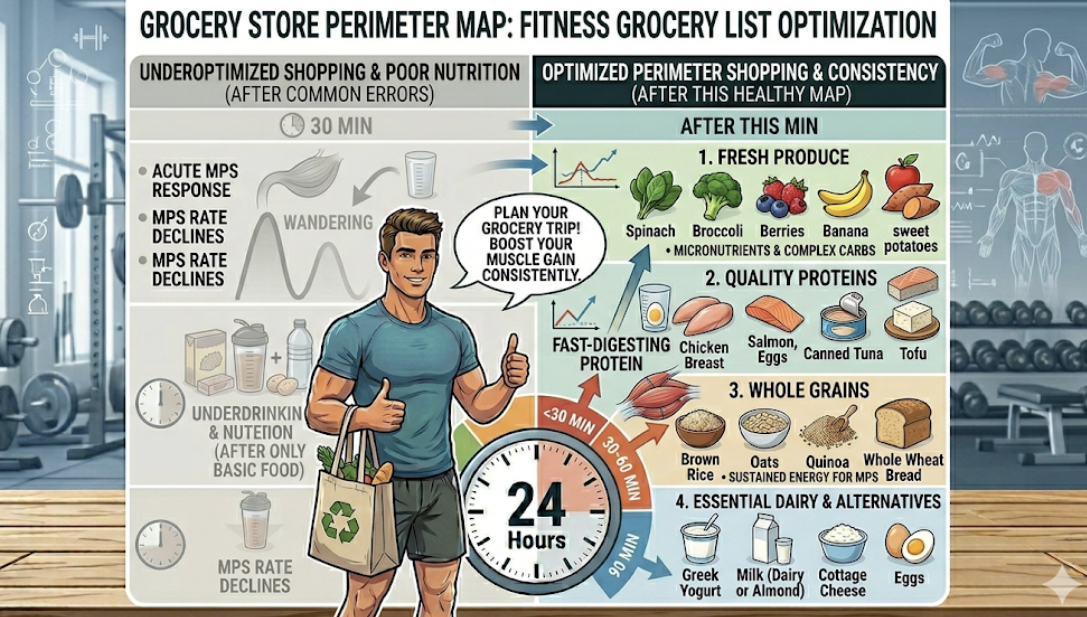
Refrigerator stocked with healthy fitness grocery list items including eggs, Greek yogurt, chicken, vegetables, and fruits
Image 2: Shop the perimeter of the grocery store for whole, unprocessed foods.

2. Complete Healthy Grocery List by Category

📊 Master Shopping List for Fitness Beginners

.= "Proteins" ? 'Proteins' : '' ?>Proteins .= "Complex Carbs" ? 'Complex Carbs' : '' ?>Complex Carbs .= "Healthy Fats" ? 'Healthy Fats' : '' ?>Healthy Fats .= "Fruits" ? 'Fruits' : '' ?>Fruits .= "Vegetables" ? 'Vegetables' : '' ?>Vegetables .= "Dairy & Alternatives" ? 'Dairy & Alternatives' : '' ?>Dairy & Alternatives .= "Pantry Staples" ? 'Pantry Staples' : '' ?>Pantry Staples

3. Protein Sources: The Muscle-Building Foundation

Protein is the most important macronutrient for fitness. Aim for 1.6-2.2 g per kg body weight . Best foods to buy for fitness protein:

  • Chicken breast: Lean, versatile, 31g protein per 100g
  • Eggs: Affordable, 6g protein each, nutrient-dense
  • Canned tuna: Cheap, shelf-stable, 25g protein per can
  • Greek yogurt: 20g protein per 200g, probiotics
  • Cottage cheese: 25g protein per cup, slow-digesting casein
  • Lean beef: 26g protein per 100g, iron and B12
  • Salmon: 25g protein per 100g, omega-3 fatty acids
  • Tofu/Tempeh: 15-20g protein per 100g, plant-based options

4. Carbohydrates: Fuel for Training

Carbs provide energy for workouts and replenish glycogen . Best choices:

  • Oats: Slow-digesting, great for breakfast, 27g carbs per ½ cup
  • Rice (white or brown): Easy to digest, 45g carbs per cup cooked
  • Sweet potatoes: Nutrient-dense, 25g carbs per medium
  • Quinoa: Complete protein + carbs, 20g carbs per cup
  • Whole grain bread: Fiber-rich, 12-15g carbs per slice
  • Potatoes: Cheap, 35g carbs per medium
  • Fruit (bananas, apples, berries): Natural sugar, vitamins, fiber

5. Healthy Fats: Essential for Hormones and Health

  • Olive oil: Monounsaturated fat, 120 kcal per tbsp
  • Avocado: Healthy fats, fiber, potassium, 320 kcal each
  • Nuts (almonds, walnuts): Protein + healthy fats, 160-180 kcal per oz
  • Peanut butter: Affordable, 190 kcal per 2 tbsp, 8g protein
  • Chia/Flax seeds: Omega-3s, fiber, 60 kcal per tbsp

6. Fruits and Vegetables: Micronutrient Powerhouses

Frozen vegetables are just as nutritious as fresh and cheaper . Recommended:

  • Spinach: Iron, vitamins, 7 kcal per cup
  • Broccoli: Fiber, vitamin C, 30 kcal per cup
  • Bell peppers: Vitamin C, 30 kcal per cup
  • Frozen mixed vegetables: Convenient, cheap, 50 kcal per cup
  • Bananas: Potassium, quick energy, 105 kcal each
  • Berries (frozen or fresh): Antioxidants, low sugar, 50-80 kcal per cup
  • Apples: Fiber, portable, 95 kcal each

7. Sample 7-Day Grocery List ($50-70/week)

  • Proteins ($20-25): 2 dozen eggs ($5), 2 lbs chicken breast ($8), 1 can tuna ($2), 1 large Greek yogurt ($5), 1 lb lean beef ($6)
  • Carbs ($10-15): 2 lb rice ($3), 1 large oats canister ($4), 5 sweet potatoes ($4), 1 loaf whole grain bread ($3)
  • Fruits & Veggies ($10-15): Bananas ($2), frozen berries ($4), frozen mixed vegetables ($3), spinach ($3), apples ($3)
  • Fats ($8-10): Olive oil ($4), peanut butter ($3), almonds ($4)
  • Dairy ($5-8): Milk ($3), cottage cheese ($4)
  • Pantry ($5): Spices, salt, pepper, honey
  • Total: ~$58-78/week

8. Foods to Avoid for Fitness Beginners

  • Sugary cereals: High sugar, low protein
  • Sodas and sweetened drinks: Empty calories, sugar spikes
  • Processed snacks (chips, cookies): High in unhealthy fats, low nutrients
  • White bread and pastries: Refined flour, low fiber
  • Frozen meals with additives: High sodium, preservatives
  • Candy: Pure sugar, no nutritional value
  • Foods with hydrogenated oils or high-fructose corn syrup

9. Budget-Friendly Shopping Tips

  • Buy in bulk: Rice, oats, frozen vegetables, chicken (freeze portions)
  • Choose store brands: Often identical to name brands at half price
  • Shop discount grocers: Aldi, Lidl, WinCo
  • Buy frozen produce: Cheaper than fresh, same nutrition
  • Use cheaper protein sources: Eggs, canned tuna, chicken thighs, beans
  • Meal prep: Reduces waste and saves money
  • Avoid pre-cut fruits/vegetables: Pay for convenience; cut yourself

10. Sample Beginner Meal Plan Using This Grocery List

Day 1 (~2,200 kcal, 140g Protein)

  • Breakfast: 3 eggs + 1 cup oats + 1 banana (550 kcal, 30g protein)
  • Lunch: 150g chicken breast + 1.5 cups rice + 1 cup broccoli (550 kcal, 40g protein)
  • Snack: 200g Greek yogurt + ½ cup berries (200 kcal, 20g protein)
  • Dinner: 150g lean beef + 1.5 cups sweet potato + 2 cups spinach + 1 tbsp olive oil (650 kcal, 35g protein)
  • Evening: 1 cup cottage cheese (200 kcal, 25g protein)

Vegan/Vegetarian Beginner Plan

  • Breakfast: Tofu scramble (150g tofu) + 1 cup oats + 1 banana (550 kcal, 25g protein)
  • Lunch: 1.5 cups lentils + 1 cup quinoa + 2 cups spinach + 1 tbsp olive oil (550 kcal, 25g protein)
  • Snack: 1 cup soy yogurt + 1 tbsp chia seeds (200 kcal, 10g protein)
  • Dinner: 150g tempeh + 1.5 cups brown rice + 2 cups broccoli + 1 tbsp olive oil (600 kcal, 30g protein)
  • Total: ~1,900 kcal, ~90g protein (add plant protein shake for higher)

Gluten-Free Options

  • Use certified gluten-free oats
  • Choose rice, quinoa, buckwheat
  • Verify protein sources are gluten-free certified

11. Quick Recipes Using Grocery List Items

Chicken & Rice Bowl (5 ingredients)

  • 150g chicken breast (cubed)
  • 1.5 cups cooked rice
  • 1 cup frozen mixed vegetables
  • 1 tbsp olive oil
  • Salt, pepper, garlic powder
  • Sauté chicken in oil, add vegetables, serve over rice.

Oatmeal with Peanut Butter & Banana

  • 1 cup oats
  • 1 cup milk
  • 1 banana
  • 2 tbsp peanut butter
  • Cook oats with milk, top with sliced banana and peanut butter.

12. Frequently Asked Questions

What should beginners buy for a healthy fitness diet?

🔹 Protein: chicken breast, eggs, canned tuna, Greek yogurt, cottage cheese, lean beef
🔹 Carbs: rice, oats, sweet potatoes, whole grain bread, quinoa
🔹 Fats: olive oil, almonds, peanut butter, avocado
🔹 Fruits & Veggies: bananas, apples, berries, spinach, broccoli, frozen mixed vegetables

What is the best grocery list for muscle gain?

For muscle gain, prioritize: protein (chicken, eggs, Greek yogurt, tuna), complex carbs (rice, oats, sweet potatoes, whole grain pasta), healthy fats (peanut butter, olive oil, nuts), and calorie-dense fruits (bananas, dates). Aim for 1.6-2.2g protein per kg body weight.

What foods should I avoid when grocery shopping for fitness?

Avoid: sugary cereals, sodas and sweetened drinks, processed snacks (chips, cookies), white bread and pastries, frozen meals with additives, candy, and foods with hydrogenated oils or high-fructose corn syrup.

How much should I spend on groceries for a fitness diet?

A healthy fitness grocery budget is $50-80 per week for one person. Buy in bulk (rice, oats, frozen vegetables), choose store brands, and focus on affordable proteins (eggs, canned tuna, chicken thighs, beans) to save money.

What are cheap healthy foods for beginners?

Cheap healthy foods include: eggs ($2-3/dozen), oats ($3-4/large canister), rice ($1-2/lb), canned tuna ($1-2/can), frozen vegetables ($1-2/bag), bananas (20-30¢ each), peanut butter ($2-4/jar), and chicken thighs ($2-3/lb).

Do I need to buy organic for a healthy diet?

No, organic is not necessary for a healthy fitness diet. Conventional produce and meats provide the same macronutrients. Focus on whole foods first; organic is optional and often significantly more expensive. Prioritize buying from the perimeter of the grocery store.

13. Related Resources

14. Scientific References

  1. Morton, R. W., et al. (2018). A systematic review, meta-analysis and meta-regression of the effect of protein supplementation on resistance training-induced gains in muscle mass and strength. British Journal of Sports Medicine, 52(6), 376–384. PubMed
  2. Helms, E. R., et al. (2014). Evidence-based recommendations for natural bodybuilding contest preparation. Journal of the International Society of Sports Nutrition, 11(1), 20. PubMed
  3. Slavin, J. L., & Lloyd, B. (2012). Health benefits of fruits and vegetables. Advances in Nutrition, 3(4), 506–516. PubMed
  4. USDA FoodData Central. (2024). Food composition databases. USDA
  5. ACSM. (2021). Nutrition and Athletic Performance. Medicine & Science in Sports & Exercise, 53(3), 600–618. PubMed
FitForge Lab. Created by Techly420
FitForge Lab Welcome to WhatsApp chat
Hi! Need help with fitness or diet? 💪
Type here...
CategoryFood ItemsWhy It's Good
Chicken breast, eggs, canned tuna, Greek yogurt, cottage cheese, lean beef, turkey, salmon, tofu, tempehMuscle repair, satiety, high thermic effect
Brown rice, white rice, oats, sweet potatoes, quinoa, whole grain bread, whole wheat pasta, potatoesSustained energy, glycogen replenishment
Olive oil, avocado, almonds, walnuts, peanut butter, chia seeds, flax seedsHormone production, joint health, satiety
Bananas, apples, oranges, berries, grapes, datesVitamins, fiber, natural sugar for energy
Spinach, broccoli, bell peppers, onions, carrots, frozen mixed vegetables, asparagus, zucchiniFiber, micronutrients, volume for fullness
Milk, Greek yogurt, cottage cheese, cheese, soy milk, almond milkProtein, calcium, probiotics
Oats, rice, quinoa, canned beans, lentils, canned tomatoes, spices, salt, pepper, honeyBase for meals, flavor