How to Stay Consistent With Your Diet (Simple Habits That Work)

Learn how to stay consistent with your diet using simple habits to maintain results and avoid setbacks.
How to Stay Consistent With Your Diet: Simple Habits That Work (2026)
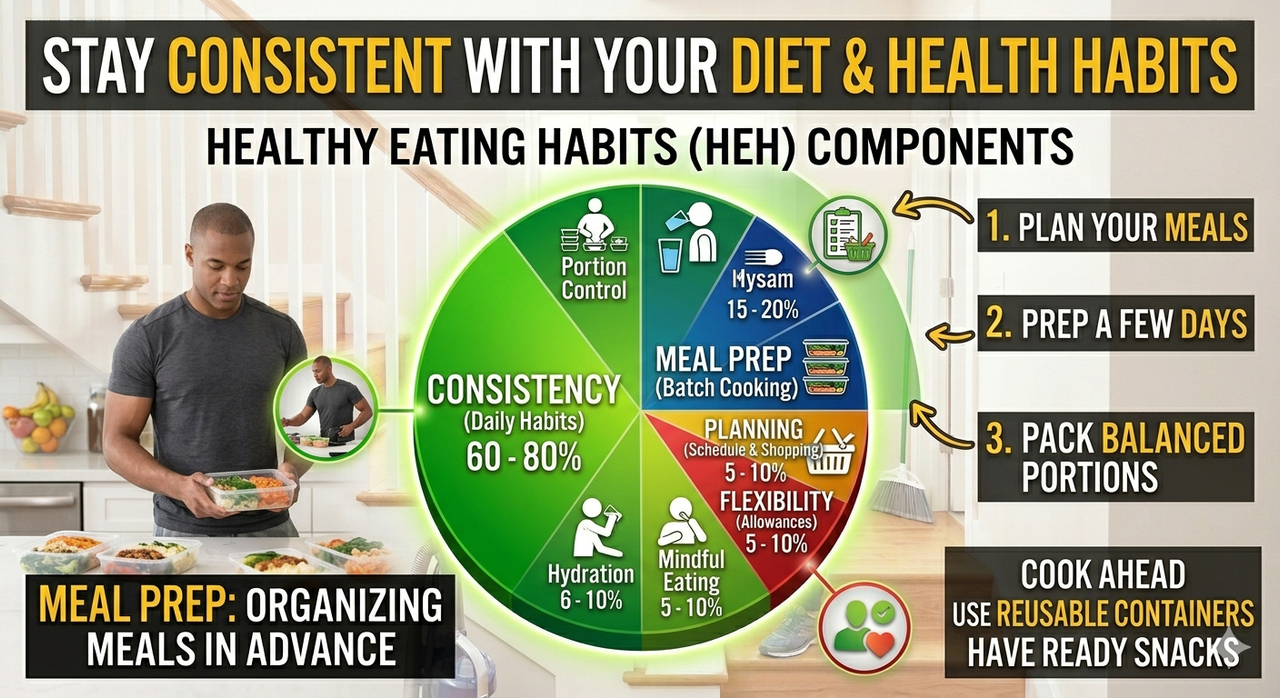
How to Stay Consistent With Your Diet: Simple Habits That Work (2026)

Infographic showing diet consistency tips including meal prep, 80/20 rule, simple meals, and progress tracking to stay consistent with diet
Image 1: Consistency beats intensity. Small, sustainable habits lead to long-term diet success.

⚡ TL;DR

To stay consistent with your diet, focus on simplicity and flexibility. Key diet consistency tips: keep meals simple (3-5 rotating recipes), meal prep on weekends, follow the 80/20 rule (80% whole foods, 20% flexible), track progress weekly (not daily), and avoid extreme restrictions. How to stick to a diet long-term isn't about perfection—it's about building habits you can maintain. Research shows flexible dieting leads to 3x higher adherence rates than rigid restriction . Start small, forgive slip-ups, and focus on progress over perfection.

1. The Consistency Paradox: Why Most Diets Fail

You start a new diet with enthusiasm. You meal prep, track everything, resist temptation. Then life happens—a party, a stressful week, a vacation—and you're back to old habits. This cycle affects up to 80% of dieters . The problem isn't willpower; it's an approach that's too rigid. Learning how to stay consistent with your diet requires building flexible habits that work with your life, not against it. This guide provides science-backed diet consistency tips that actually last.

How can I stay consistent with my diet?

Stay consistent with your diet by: keeping meals simple (3-5 rotating recipes), planning ahead with meal prep, allowing flexible foods (80/20 rule: 80% whole foods, 20% fun foods), tracking progress weekly (not daily), and avoiding extreme restrictions that lead to binge eating. Focus on adding healthy foods rather than eliminating all favorites.
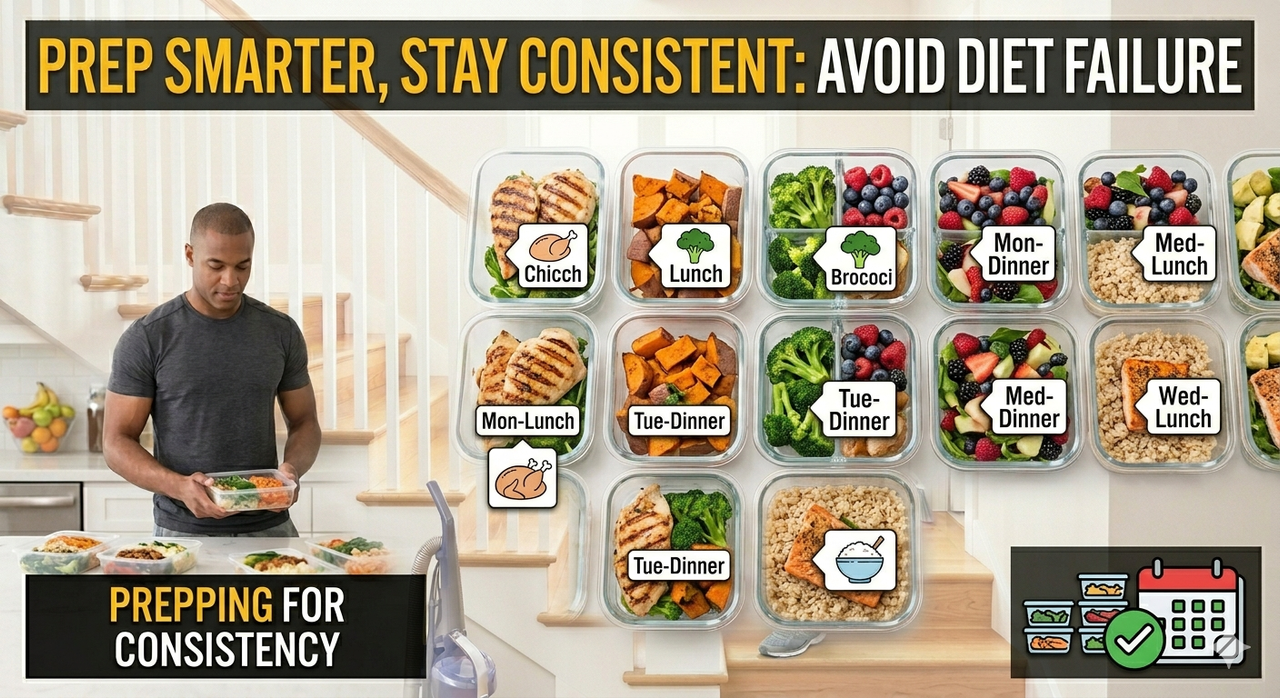
Meal prep containers with healthy food to maintain healthy eating habits and avoid diet failure
Image 2: Meal prep is one of the most effective strategies for maintaining dietary consistency.

2. The Science of Habit Formation

Understanding how habits form is crucial for maintaining healthy eating habits. Research shows it takes an average of 66 days to form a new habit (range: 18-254 days depending on complexity) . Key principles:

  • Cue: Trigger for behavior (time of day, location, preceding action)
  • Routine: The behavior itself (eating a healthy breakfast)
  • Reward: Positive reinforcement (feeling energized, seeing progress)
💡 Action Step: Attach new eating habits to existing routines. Example: "After I brush my teeth in the morning, I will prepare my lunch for the day."

3. Common Reasons for Diet Failure

Understanding how to avoid diet failure starts with recognizing common pitfalls:

  • Overly restrictive rules: Eliminating all enjoyable foods leads to cravings and binges
  • Unrealistic expectations: Expecting perfection or rapid results causes discouragement
  • Lack of meal prep: No plan leads to impulsive choices when hungry
  • Tracking fatigue: Weighing and measuring every bite becomes unsustainable
  • Social pressure: Difficulty navigating dining out and social events
  • All-or-nothing thinking: One "bad" meal derails the entire day or week

4. The 80/20 Rule: Flexible Dieting for Real Life

The 80/20 rule is a powerful diet discipline tip that increases adherence. 80% of calories come from nutrient-dense whole foods; 20% from flexible foods you enjoy . Research shows flexible dieters have 3x higher adherence rates and similar or better results compared to rigid dieters .

📊 80/20 Rule Examples

5. Practical Strategies for Diet Consistency

5.1. Simplify Your Meals

Create 3-5 go-to meals you enjoy and can prepare easily. Rotate these rather than cooking something new daily. This reduces decision fatigue and makes tracking simpler .

5.2. Meal Prep Weekly

Dedicate 1-2 hours on Sunday to cook proteins, chop vegetables, and portion snacks. This eliminates daily decision-making and ensures healthy options are always available .

5.3. Use the Hand Portion Method

Stop weighing everything. Use your hand as a guide: palm for protein, fist for vegetables, cupped hand for carbs, thumb for fats. This is accurate enough for most goals and sustainable long-term.

5.4. Track Progress, Not Every Calorie

Weekly weigh-ins, progress photos, and how clothes fit are more sustainable than daily calorie counting. Track trends over weeks, not daily fluctuations .

5.5. Plan for Social Events

Eat a small protein-rich snack before parties. Scan menus ahead of time. Use the 80/20 rule—enjoy without guilt, then return to normal eating.

💡 Pro Tip: The "one meal" rule: one less-than-perfect meal doesn't ruin progress. What matters is what you do consistently over weeks and months, not a single choice.

6. Sample Sustainable Meal Plan (2,200 kcal)

Omnivore Plan

  • Breakfast (7:30 AM): 3 eggs, 1 cup oats, ½ cup berries (500 kcal, 28g protein)
  • Lunch (12:30 PM): 150g chicken breast, 1.5 cups roasted vegetables, 1 cup quinoa (550 kcal, 40g protein)
  • Snack (3:30 PM): 170g Greek yogurt, 1 apple (200 kcal, 18g protein)
  • Dinner (7:00 PM): 150g salmon, 1.5 cups sweet potato, 2 cups spinach (550 kcal, 35g protein)
  • Flexible (8:30 PM): 2 squares dark chocolate or 1 small treat (100 kcal, 2g protein)
  • Total: ~1,900 kcal, ~123g protein (add scoop protein for higher)

Vegan/Vegetarian Sustainable Plan

  • Breakfast: Tofu scramble (150g tofu), 1 cup oats, ½ cup berries (500 kcal, 25g protein)
  • Lunch: 1.5 cups lentils, 1 cup quinoa, 2 cups vegetables, 1 tbsp olive oil (550 kcal, 25g protein)
  • Snack: 1 cup edamame, 1 apple (200 kcal, 11g protein)
  • Dinner: 150g tempeh, 1.5 cups brown rice, 2 cups spinach, 1 tbsp olive oil (550 kcal, 30g protein)
  • Flexible: 1 small treat (100 kcal)
  • Total: ~1,900 kcal, ~91g protein (add plant shake for higher)

Gluten-Free Options

  • Use certified gluten-free oats
  • Choose rice, quinoa, buckwheat
  • Verify protein sources are gluten-free certified

7. How to Get Back on Track After a Slip

How to avoid diet failure includes having a recovery plan:

  • Forgive immediately: One bad meal doesn't erase progress
  • Return to normal next meal: Don't skip meals or over-restrict to "compensate"
  • Identify the trigger: Stress? Lack of prep? Social pressure?
  • Adjust your plan: Make small changes to prevent recurrence
  • Focus on what you can control now: The next choice is what matters

8. Common Diet Consistency Mistakes

  • All-or-nothing thinking: "I already ruined today, so I'll start Monday"
  • Perfectionism: Expecting 100% adherence 100% of the time
  • Too much too fast: Overhauling everything at once leads to burnout
  • Not planning for cravings: Ignoring them leads to binges
  • Comparing progress: Everyone's journey is different
  • Ignoring non-scale victories: Energy, sleep, mood, strength all matter

9. Sample Weekly Consistency Tracker

Track these simple metrics to stay on track with nutrition without obsession:

  • Weekly weigh-in: Same time, same day (e.g., Friday morning)
  • Meal prep completion: Did you prep Sunday? (Yes/No)
  • 80/20 adherence: Rate your week 1-10
  • Social events navigated: How many? How did you handle?
  • Non-scale victories: Energy, sleep quality, workout performance

10. Frequently Asked Questions

How can I stay consistent with my diet?

Stay consistent with your diet by: keeping meals simple (3-5 rotating recipes), planning ahead with meal prep, allowing flexible foods (80/20 rule: 80% whole foods, 20% fun foods), tracking progress weekly (not daily), and avoiding extreme restrictions that lead to binge eating. Focus on adding healthy foods rather than eliminating all favorites.

Why is it so hard to stick to a diet?

Diet failure often occurs due to: overly restrictive rules (eliminating all enjoyable foods), unrealistic expectations (expecting perfection), lack of meal prep leading to impulsive choices, tracking fatigue (over-measuring everything), social pressure, and viewing one mistake as total failure (all-or-nothing thinking).

How do I get back on track after diet failure?

Get back on track by: forgiving yourself immediately (one bad meal doesn't ruin progress), returning to your normal next meal (no extreme restriction to 'compensate'), reviewing what triggered the slip, and adjusting your plan to prevent recurrence. Consistency over time matters more than perfection.

What is the 80/20 rule for dieting?

The 80/20 rule means 80% of calories come from nutrient-dense whole foods (lean protein, vegetables, whole grains, fruits, healthy fats) and 20% from flexible foods you enjoy (treats, dining out, favorite snacks). This approach increases adherence by preventing deprivation while still achieving results.

How long does it take to form a diet habit?

Research suggests forming a new dietary habit takes 18-254 days, with an average of 66 days. Simple habits (drinking water before meals) take less time; complex habits (complete meal prep routine) take longer. Consistency, not intensity, determines habit formation speed.

Should I track calories to stay consistent?

Tracking can help initially (2-4 weeks) to understand portions and macros, but long-term consistency often requires less rigid methods. Alternatives include: hand portion method, plate method, taking progress photos, or tracking only protein intake. Choose the method you can sustain indefinitely.

11. Related Resources

12. Scientific References

  1. Lally, P., et al. (2010). How are habits formed: Modelling habit formation in the real world. European Journal of Social Psychology, 40(6), 998–1009. PubMed
  2. Smith, C. F., et al. (2012). Flexible vs. rigid dieting strategies: relationship with dietary restraint and weight loss outcomes. Appetite, 58(2), 503–509. PubMed
  3. Gardner, B., et al. (2012). Making health habitual: the psychology of 'habit-formation' and general practice. British Journal of General Practice, 62(605), 664–666. PubMed
  4. Helms, E. R., et al. (2014). Evidence-based recommendations for natural bodybuilding contest preparation. Journal of the International Society of Sports Nutrition, 11(1), 20. PubMed
  5. ACSM. (2021). Nutrition and Athletic Performance. Medicine & Science in Sports & Exercise, 53(3), 600–618. PubMed
FitForge Lab. Created by Techly420
FitForge Lab Welcome to WhatsApp chat
Hi! Need help with fitness or diet? 💪
Type here...
Day Type80% Whole Foods20% Flexible Foods
Normal day (2,000 kcal)1,600 kcal from lean protein, vegetables, whole grains, fruits, healthy fats 400 kcal for treats, dining out, favorite snacks
Meal prep approach Pre-portioned healthy lunches and dinners Flexible breakfast and snacks
Restaurant strategy Healthy protein + vegetable choice Enjoy a dessert or drink