Best Pre-Bed Meals for Muscle Growth (Overnight Recovery Foods)
Best Pre-Bed Meals for Muscle Growth: Overnight Recovery Foods (2026)
⚡ TL;DR
The best pre-bed meals for muscle growth combine slow-digesting protein (casein) with healthy fats to sustain amino acid release during sleep. Top overnight muscle recovery foods include cottage cheese (25g protein), Greek yogurt (20-25g), casein protein, eggs, and milk. Research shows consuming 30-40g protein before bed increases overnight muscle protein synthesis by 20-30% compared to sleeping fasted . These night time protein foods support recovery, reduce muscle breakdown, and enhance next-day performance. Timing: eat 30-90 minutes before sleep.
1. The Science of Overnight Muscle Recovery
While you sleep, your body enters a catabolic state—muscle protein breakdown (MPB) exceeds muscle protein synthesis (MPS) without adequate nutrition. This is where pre-bed meals for muscle growth become crucial. By providing a slow-release protein source before sleep, you maintain positive amino acid balance throughout the night, enhancing recovery and growth. Understanding what to eat before bed for muscle gain can transform your results .
What should I eat before bed to build muscle?
The best foods to eat before bed to build muscle include: cottage cheese (25g protein, slow-digesting casein), Greek yogurt (20-25g protein), casein protein powder (25g protein), eggs (6g each, slow digesting), nuts and peanut butter (healthy fats + protein), and milk (8g protein per cup, natural casein).
2. Why Slow-Digesting Protein Matters for Sleep
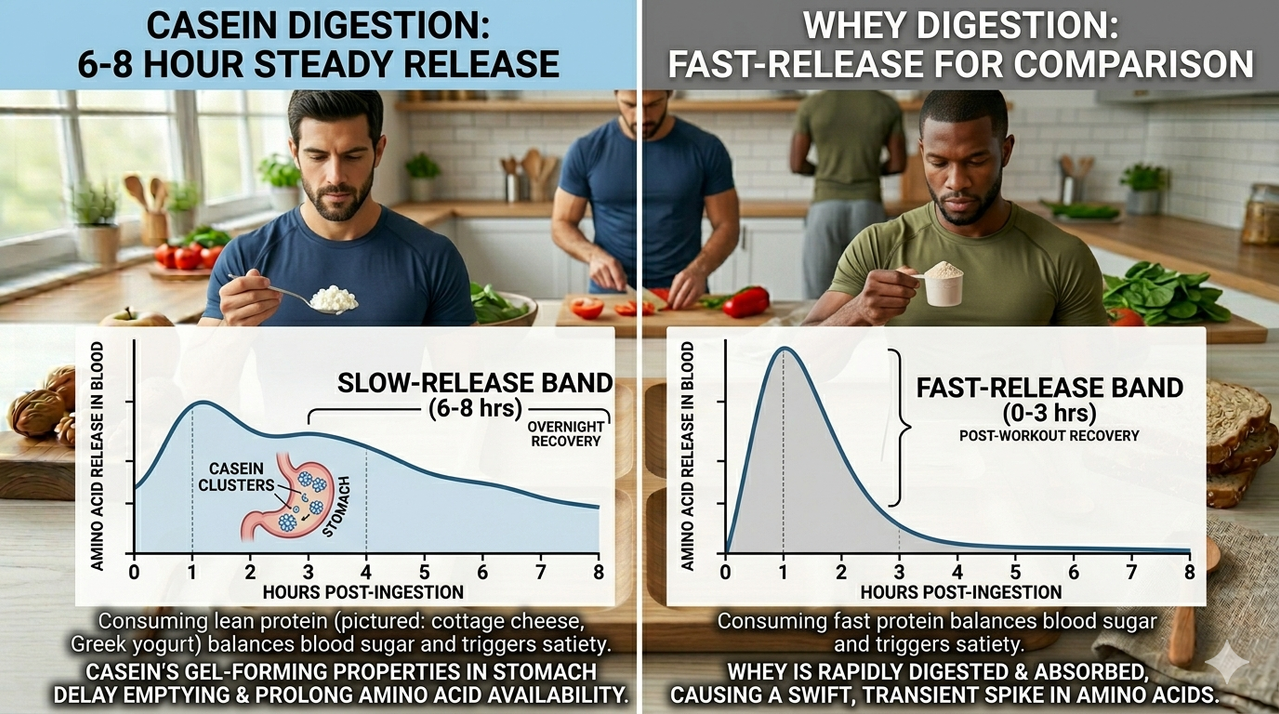
The key to effective pre-sleep nutrition is the rate of digestion. Fast-digesting proteins (whey) spike amino acids quickly but clear within 2-3 hours. Slow-digesting proteins (casein) form a gel in the stomach, providing sustained release over 6-8 hours—perfect for overnight recovery .
📊 Protein Digestion Rates Comparison
| Protein Source | Digestion Rate | Duration of Amino Acid Release | Best For |
|---|---|---|---|
| Casein (cottage cheese, milk) | Slow | 6-8 hours | Pre-bed, overnight recovery |
| Whey (protein powder) | Fast | 2-3 hours | Post-workout |
| Egg protein | Moderate | 3-5 hours | Meals, general recovery |
| Greek yogurt | Slow | 4-6 hours | Pre-bed, sustained release |
| Plant protein (pea/rice) | Moderate | 3-5 hours | Vegan options |
3. Top Pre-Bed Foods for Muscle Growth
3.1. Cottage Cheese
One cup of low-fat cottage cheese provides 25g protein, primarily casein. Studies show consuming cottage cheese before bed increases overnight MPS and next-day metabolism .
3.2. Greek Yogurt
Full-fat or low-fat Greek yogurt offers 20-25g protein per 200g serving. Natural probiotics also support gut health, which influences recovery .
3.3. Casein Protein Powder
A convenient option: 1 scoop (30g) provides 25g slow-digesting protein. Mix with water or milk for added calories and flavor.
3.4. Eggs
Eggs contain high-quality protein with moderate digestion rate. 2-3 eggs provide 12-18g protein plus healthy fats for sustained energy.
3.5. Milk
One cup of milk contains 8g protein (80% casein, 20% whey). Add to cottage cheese or yogurt for additional protein.
3.6. Nuts and Nut Butter
Almonds, walnuts, and peanut butter provide protein plus healthy fats that slow digestion further. Pair with cottage cheese or yogurt.
📊 Top Pre-Bed Protein Sources
| Food | Serving | Protein (g) | Fat (g) | Calories |
|---|---|---|---|---|
| Cottage cheese (low-fat) | 1 cup (226g) | 25 | 5 | 180 |
| Greek yogurt (plain) | 200g (¾ cup) | 20-25 | 0-10 | 150-200 |
| Casein protein | 1 scoop (30g) | 25 | 1 | 110 |
| Eggs (whole) | 3 large | 18 | 14 | 210 |
| Milk (whole) | 1 cup (240ml) | 8 | 8 | 150 |
| Peanut butter | 2 tbsp (32g) | 8 | 16 | 190 |
| Almonds | 1 oz (28g) | 6 | 14 | 160 |
4. Timing: When to Eat Before Bed
Consume your pre-bed meal 30-90 minutes before sleep. This allows initial digestion while ensuring amino acids are available throughout the night. Avoid eating immediately before lying down to prevent acid reflux. For optimal results, aim for 30-40g protein with minimal fat and fiber to avoid digestive disruption .
5. Sample Pre-Bed Meal Options
Omnivore Options
- Cottage Cheese Bowl: 1 cup cottage cheese + 1 tbsp peanut butter + cinnamon (300 kcal, 30g protein)
- Greek Yogurt Mix: 200g Greek yogurt + 1 tbsp almond butter + 10g chia seeds (350 kcal, 28g protein)
- Egg & Toast: 2 eggs + 1 slice whole grain toast (250 kcal, 14g protein)
- Casein Shake: 1 scoop casein + 1 cup milk + 1 tbsp peanut butter (350 kcal, 35g protein)
- Turkey Roll-Ups: 3 oz turkey breast + 1 oz cheese (200 kcal, 20g protein)
Vegan/Vegetarian Options
- Soy Yogurt Bowl: 200g soy yogurt + 2 tbsp almond butter + 1 tbsp hemp seeds (350 kcal, 25g protein)
- Tofu Scramble: 150g firm tofu + nutritional yeast (200 kcal, 18g protein)
- Plant Protein Shake: 1 scoop pea/rice protein + 1 cup soy milk + 1 tbsp peanut butter (300 kcal, 30g protein)
- Chickpea Snack: 1 cup roasted chickpeas + 1 tbsp tahini (350 kcal, 15g protein)
Gluten-Free Options
- Use certified gluten-free oats or rice cakes with nut butter
- Choose gluten-free bread for toast
- Verify protein powders and yogurt are gluten-free certified
6. Quick Pre-Bed Recipes
High-Protein Cottage Cheese Bowl (300 kcal, 30g protein)
- 1 cup low-fat cottage cheese
- 1 tbsp peanut butter
- ½ tsp cinnamon
- Mix and enjoy.
Sleepy Greek Yogurt Pudding (350 kcal, 28g protein)
- 200g Greek yogurt
- 1 tbsp almond butter
- 1 tbsp chia seeds
- ½ cup berries
- Combine, refrigerate 10 minutes if desired.
Casein "Protein Pudding" (250 kcal, 30g protein)
- 1 scoop casein protein powder
- ¼ cup water or milk (add gradually)
- 1 tbsp nut butter (optional)
- Mix to thick pudding consistency.
7. What to Avoid Before Bed
- Large, heavy meals: Can disrupt sleep quality
- High-sugar foods: Cause blood sugar spikes and crashes
- Caffeine: Interferes with sleep onset and quality
- Excessive fat: Delays digestion and may cause discomfort
- Spicy foods: Can cause acid reflux
- Alcohol: Disrupts sleep architecture and protein synthesis
8. Research: Does Pre-Bed Protein Really Work?
Multiple studies support pre-sleep protein for muscle growth:
- A 2015 study found that 40g casein before bed increased overnight MPS by 22% in active men .
- Research on older adults showed pre-sleep protein improved muscle recovery and next-day strength .
- Long-term studies demonstrate pre-sleep protein combined with resistance training leads to greater gains in muscle mass and strength compared to training alone .
9. Common Pre-Bed Nutrition Mistakes
- Skipping protein entirely: Missed opportunity for overnight recovery
- Eating too close to sleep: Can cause acid reflux and disrupted sleep
- Using fast-digesting protein: Whey won't sustain amino acids through the night
- Adding too many calories: Unnecessary surplus may lead to fat gain if not accounted for
- Ignoring individual tolerance: Some people digest dairy poorly; find alternatives
10. Frequently Asked Questions
What should I eat before bed to build muscle?
The best foods to eat before bed to build muscle include: cottage cheese (25g protein, slow-digesting casein), Greek yogurt (20-25g protein), casein protein powder (25g protein), eggs (6g each, slow digesting), nuts and peanut butter (healthy fats + protein), and milk (8g protein per cup, natural casein).
Is it good to eat before bed for muscle growth?
Yes, consuming a slow-digesting protein source before bed (30-60 minutes prior) provides a sustained release of amino acids during sleep, increasing overnight muscle protein synthesis by 20-30% compared to sleeping fasted. This is especially beneficial after training days.
What is the best pre-sleep protein for muscle recovery?
Casein protein is the best pre-sleep protein because it forms a gel in the stomach, providing a slow, sustained release of amino acids over 6-8 hours. Natural sources include cottage cheese and Greek yogurt. Research shows pre-sleep casein increases overnight muscle protein synthesis by 22%.
How long before bed should I eat for muscle growth?
Eat your pre-bed meal 30-90 minutes before sleep. This allows initial digestion while ensuring amino acids are available throughout the night. A 30-40g protein serving with minimal fat and fiber (to avoid digestive disruption) is ideal.
Does eating before bed cause fat gain?
No, total daily calorie balance matters more than meal timing. A 150-250 kcal pre-bed protein snack within your daily calorie target does not cause fat gain. Studies show pre-sleep protein actually improves body composition when combined with resistance training by supporting muscle recovery and metabolic rate.
What are good vegan pre-bed protein options?
Vegan pre-bed protein options include: plant-based casein alternatives (pea protein blend), soy yogurt (15-20g protein/cup), tofu (10-15g protein/100g), tempeh (15-20g protein/100g), and plant protein shakes with added nut butter. Combine with healthy fats for sustained release.
11. Related Resources
- How to Read Nutrition Labels for Fitness Goals (Beginner-Friendly Guide)
- What Happens If You Don’t Eat Enough Protein? (Health & Muscle Impact)
- Simple High-Protein Meal Plan for Beginners (Easy & Effective Guide)
- How Many Meals Per Day Is Best for Fat Loss? (Science-Based Answer)
- How to Balance Carbs, Protein, and Fats for Beginners (Macro Guide)
- Is Eating Late at Night Bad for Fat Loss? (Myth vs Reality)
12. Scientific References
- Res, P. T., et al. (2012). Protein ingestion before sleep improves post-exercise overnight recovery. Medicine & Science in Sports & Exercise, 44(8), 1560–1569. PubMed
- Snijders, T., et al. (2015). Protein ingestion before sleep increases muscle mass and strength gains during prolonged resistance-type exercise training in healthy young men. Journal of Nutrition, 145(6), 1178–1184. PubMed
- van Vliet, S., et al. (2017). Consumption of whole eggs promotes greater post-exercise muscle protein synthesis than consumption of isonitrogenous egg whites in young men. American Journal of Clinical Nutrition, 106(6), 1401–1412. PubMed
- Morton, R. W., et al. (2018). A systematic review, meta-analysis and meta-regression of the effect of protein supplementation on resistance training-induced gains in muscle mass and strength. British Journal of Sports Medicine, 52(6), 376–384. PubMed
- Helms, E. R., et al. (2014). Evidence-based recommendations for natural bodybuilding contest preparation. Journal of the International Society of Sports Nutrition, 11(1), 20. PubMed
- ACSM. (2021). Nutrition and Athletic Performance. Medicine & Science in Sports & Exercise, 53(3), 600–618. PubMed
Join the conversation