How to Build a Simple Diet Plan (Step-by-Step Beginner Guide)

Learn how to build a simple diet plan step by step to reach your fitness goals and stay consistent easily.
How to Build a Simple Diet Plan: Step-by-Step Beginner Guide (2026)
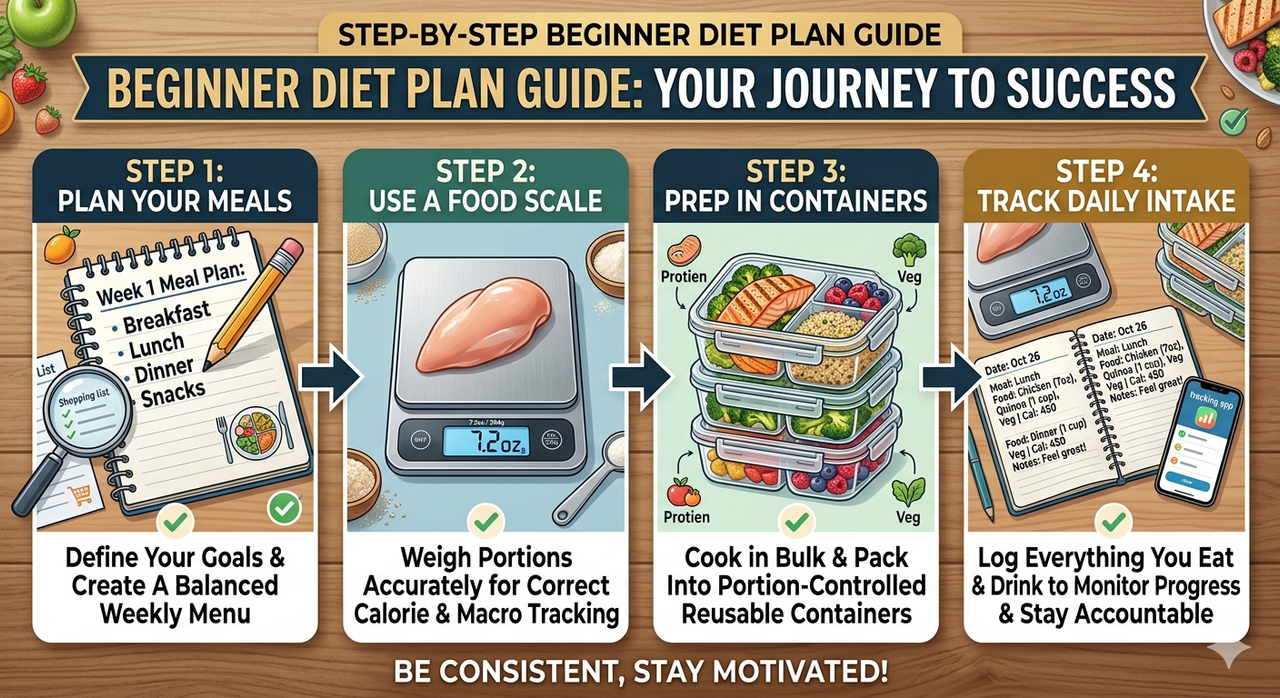
How to Build a Simple Diet Plan: Step-by-Step Beginner Guide (2026)

5 steps to build a simple diet plan infographic showing calorie calculation, protein setting, simple meals, meal repetition, and progress tracking
Image 1: Building a simple, sustainable diet plan doesn't require complexity—just a systematic approach.

⚡ TL;DR

To build a simple diet plan, follow these 5 steps: calculate your calories (TDEE using Mifflin-St Jeor), set protein intake (1.6–2.2 g/kg body weight), choose 3-5 simple meals you enjoy and can prep easily, repeat meals for consistency (reduces decision fatigue), and track progress weekly to adjust portion sizes. This beginner diet plan guide works for weight loss, muscle gain, or maintenance. Start simple—don't overcomplicate. Consistency beats perfection .

1. Why Most Diet Plans Fail (And How Yours Won't)

You've tried complicated meal plans with 20+ ingredients. You've tracked every calorie until burnout. You've followed strict rules until life got in the way. The problem isn't you—it's the approach. Learning how to build a simple diet plan that fits your lifestyle is the key to long-term success. This beginner diet plan guide provides a step-by-step system that prioritizes sustainability over perfection. Whether you want to lose fat, gain muscle, or simply eat healthier, these principles work.

How do I build a simple diet plan?

Build a simple diet plan by: calculating your calories (TDEE), setting protein intake (1.6-2.2 g/kg body weight), choosing 3-5 simple meals that you enjoy and can prepare easily, repeating meals for consistency (reduces decision fatigue), and tracking progress weekly to adjust portion sizes. Start simple—don't overcomplicate.
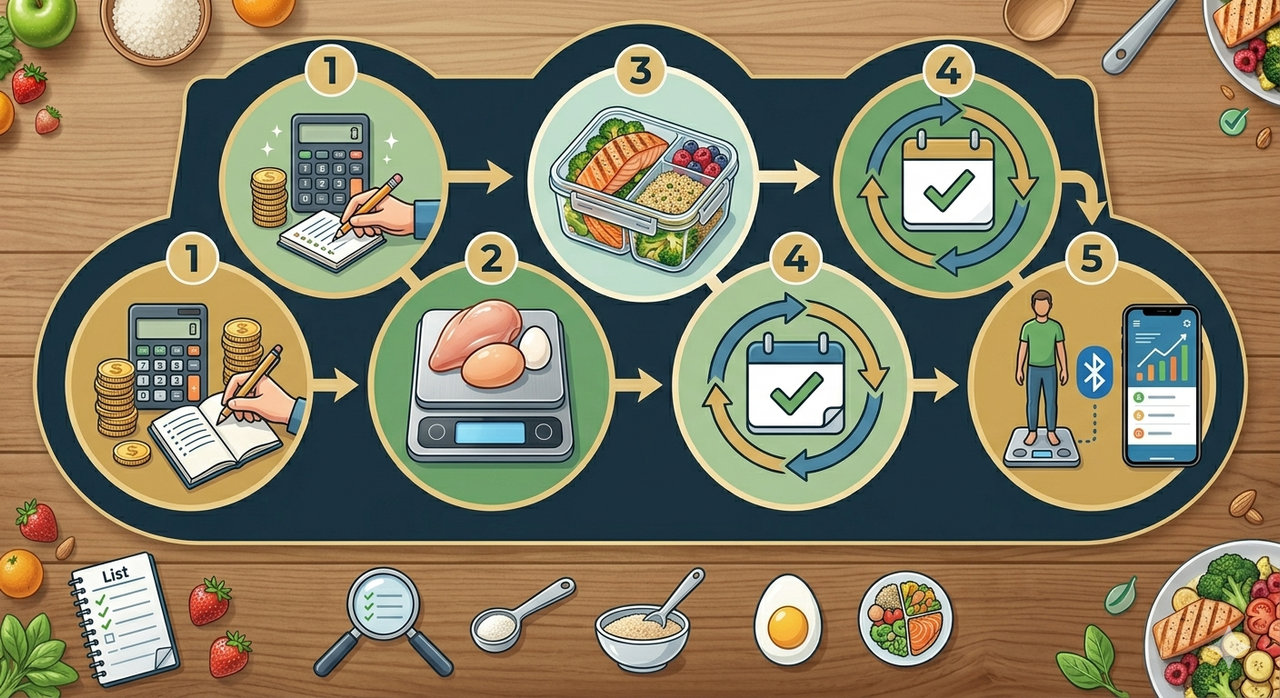
Meal prep containers with chicken, rice, vegetables for simple meal planning for fitness
Image 2: A simple 5-step system makes diet planning approachable and sustainable.

2. Step 1: Calculate Your Calorie Target

Your Total Daily Energy Expenditure (TDEE) is the number of calories you burn daily. Use the Mifflin-St Jeor equation, the most accurate for most individuals :

  • Men: (10 × weight in kg) + (6.25 × height in cm) – (5 × age) + 5
  • Women: (10 × weight in kg) + (6.25 × height in cm) – (5 × age) – 161
  • Multiply by activity factor: Sedentary (1.2), Light activity (1.375), Moderate (1.55), Very active (1.725)
💡 Example: For an 80 kg, 175 cm, 30-year-old active man: TDEE ≈ 2,800 kcal. For fat loss: 2,300-2,500 kcal. For muscle gain: 3,050-3,300 kcal.

3. Step 2: Set Your Macronutrient Targets

Macronutrients (protein, fats, carbohydrates) form your diet's foundation. Start with protein, then fats, then fill remaining calories with carbs.

📊 Macronutrient Guidelines by Goal

.= "Weight Loss (Cutting)" ? 'Weight Loss (Cutting)' : '' ?>Weight Loss (Cutting) .= "Muscle Gain (Bulking)" ? 'Muscle Gain (Bulking)' : '' ?>Muscle Gain (Bulking) .= "Maintenance" ? 'Maintenance' : '' ?>Maintenance

4. Step 3: Choose Your Simple Meals (3-5 Options)

Select 3-5 meals you enjoy and can prepare easily. This reduces decision fatigue and makes tracking simple. Examples:

  • Breakfast: Oatmeal with protein powder + berries, or eggs + whole grain toast
  • Lunch: Chicken + rice + vegetables, or turkey sandwich + side salad
  • Dinner: Salmon + sweet potato + asparagus, or lean beef + quinoa + broccoli
  • Snacks: Greek yogurt, cottage cheese, nuts, protein shake

5. Step 4: Structure Your Meals (3-5 Meals Daily)

Meal frequency is flexible—choose what fits your schedule:

📊 Sample Meal Structures

GoalProtein (g/kg)Fats (% of calories)Carbs (remaining)
1.8–2.4 g/kg20–30%Fill remaining
1.6–2.2 g/kg25–35%Fill remaining (higher)
1.6–2.0 g/kg25–30%Fill remaining

6. Sample Simple Diet Plans

Weight Loss Plan (1,900 kcal, 140g Protein)

  • Breakfast (7:30 AM): 3 eggs, 1 cup oats, ½ cup berries (500 kcal, 30g protein)
  • Lunch (12:30 PM): 150g chicken breast, 1.5 cups roasted vegetables, ½ cup quinoa (450 kcal, 40g protein)
  • Snack (3:30 PM): 170g Greek yogurt, 1 apple (200 kcal, 18g protein)
  • Dinner (7:00 PM): 150g white fish, 2 cups spinach, 1 cup sweet potato (450 kcal, 35g protein)
  • Evening (9:30 PM): 1 cup cottage cheese (200 kcal, 25g protein)
  • Total: ~1,800 kcal, ~148g protein

Muscle Gain Plan (3,000 kcal, 160g Protein)

  • Breakfast (7:30 AM): 4 eggs, 1 cup oats, 1 cup milk, 1 banana (650 kcal, 40g protein)
  • Lunch (12:30 PM): 200g chicken breast, 2 cups rice, 1 cup broccoli, 1 tbsp olive oil (700 kcal, 55g protein)
  • Snack (3:30 PM): 200g Greek yogurt, 30g almonds, 1 tbsp honey (350 kcal, 22g protein)
  • Post-Workout (6:30 PM): 2 scoops whey, 1 banana, 1 cup oats (550 kcal, 48g protein)
  • Dinner (8:30 PM): 200g lean beef or salmon, 1.5 cups sweet potato, 1 tbsp olive oil (700 kcal, 45g protein)
  • Total: ~2,950 kcal, ~210g protein

Vegan/Vegetarian Plan (2,200 kcal, 120g Protein)

  • Breakfast: Tofu scramble (200g tofu), 1 cup oats, 1 banana (550 kcal, 30g protein)
  • Lunch: 1.5 cups lentils, 1 cup quinoa, 2 cups spinach, 1 tbsp olive oil (550 kcal, 28g protein)
  • Snack: 1 cup edamame, 1 apple (200 kcal, 11g protein)
  • Dinner: 200g tempeh, 1.5 cups brown rice, 2 cups broccoli, 1 tbsp olive oil (600 kcal, 35g protein)
  • Evening: 1 scoop plant protein (120 kcal, 20g protein)
  • Total: ~2,020 kcal, ~124g protein

Gluten-Free Options

  • Use certified gluten-free oats
  • Choose rice, quinoa, buckwheat
  • Verify protein sources are gluten-free certified

7. Step 5: Track Progress and Adjust

Track these metrics weekly (not daily):

  • Weight: Same time, same day (e.g., Friday morning)
  • Measurements: Waist, hips, chest monthly
  • Progress photos: Monthly under same conditions
  • Energy and performance: How you feel and train
💡 Adjustment Rules: If weight loss stalls for 2-3 weeks, reduce calories by 100-200 or increase activity. If weight gain for bulking stalls, add 100-200 calories. If losing strength, check protein and sleep first.

8. Meal Prep: The Consistency Hack

Dedicate 1-2 hours weekly to meal prep:

  • Cook 2-3 proteins (chicken, beef, fish, tofu)
  • Prepare 2 grains (rice, quinoa, sweet potatoes)
  • Chop vegetables for the week
  • Portion snacks (nuts, yogurt, boiled eggs)
  • Store in containers for grab-and-go

9. Common Beginner Mistakes to Avoid

  • Overcomplicating: Starting with 20+ recipes leads to burnout
  • Too restrictive: Eliminating all enjoyable foods is unsustainable
  • Not tracking: Guessing portions leads to inaccurate calorie intake
  • Extreme deficits: Very low calories slow metabolism and cause binges
  • Inconsistent protein: Inadequate protein impairs muscle preservation
  • Skipping meals: Leads to extreme hunger and poor choices later

10. Frequently Asked Questions

How do I build a simple diet plan?

Build a simple diet plan by: calculating your calories (TDEE), setting protein intake (1.6-2.2 g/kg body weight), choosing 3-5 simple meals that you enjoy and can prepare easily, repeating meals for consistency (reduces decision fatigue), and tracking progress weekly to adjust portion sizes. Start simple—don't overcomplicate.

How many calories should I eat daily?

Calculate your Total Daily Energy Expenditure (TDEE) using the Mifflin-St Jeor equation. For weight loss: TDEE - 300-500 kcal. For muscle gain: TDEE + 250-500 kcal. For maintenance: TDEE. Adjust based on weekly progress.

What macronutrient ratios should I use?

General macronutrient guidelines: Protein: 1.6-2.2 g/kg body weight, Fats: 20-35% of total calories (0.8-1.2 g/kg), Carbohydrates: remaining calories (40-55% of total). Adjust based on goals: higher carbs for bulking, lower carbs for cutting.

How many meals should I eat per day?

Meal frequency is flexible—total daily calories matter more. Options include: 3 main meals, 3 meals + 2 snacks, or 4-5 smaller meals. Choose what fits your schedule and appetite. Research shows no metabolic advantage to frequent meals.

Do I need to track calories forever?

No. Track calories for 2-4 weeks initially to learn portion sizes and food composition. After that, many people succeed with simpler methods: hand portion guide, plate method, or tracking only protein. The goal is building habits, not lifelong tracking.

What's the easiest way to stick to a diet plan?

Stick to a diet plan by: keeping meals simple (3-5 rotating recipes), meal prepping on weekends, allowing flexible foods (80/20 rule), tracking progress weekly (not daily), and forgiving slip-ups immediately. Consistency over perfection is key.

11. Related Resources

12. Scientific References

  1. Mifflin, M. D., et al. (1990). A new predictive equation for resting energy expenditure in healthy individuals. American Journal of Clinical Nutrition, 51(2), 241–247. PubMed
  2. Morton, R. W., et al. (2018). A systematic review, meta-analysis and meta-regression of the effect of protein supplementation on resistance training-induced gains in muscle mass and strength. British Journal of Sports Medicine, 52(6), 376–384. PubMed
  3. Schoenfeld, B. J., & Aragon, A. A. (2018). How much protein can the body use in a single meal for muscle-building? Implications for daily protein distribution. Journal of the International Society of Sports Nutrition, 15, 10. PubMed
  4. Helms, E. R., et al. (2014). Evidence-based recommendations for natural bodybuilding contest preparation. Journal of the International Society of Sports Nutrition, 11(1), 20. PubMed
  5. ACSM. (2021). Nutrition and Athletic Performance. Medicine & Science in Sports & Exercise, 53(3), 600–618. PubMed
FitForge Lab. Created by Techly420
FitForge Lab Welcome to WhatsApp chat
Hi! Need help with fitness or diet? 💪
Type here...
StructureTimingBest For
.= "3 Main Meals" ? '3 Main Meals' : '' ?>3 Main MealsBreakfast, Lunch, DinnerThose who prefer larger meals
.= "3 Meals + 2 Snacks" ? '3 Meals + 2 Snacks' : '' ?>3 Meals + 2 SnacksB, Snack, L, Snack, DManaging hunger, active individuals
.= "4-5 Smaller Meals" ? '4-5 Smaller Meals' : '' ?>4-5 Smaller MealsEvery 3-4 hoursThose who prefer smaller portions