What Happens If You Eat Too Much Protein? (Side Effects & Truth)
What Happens If You Eat Too Much Protein? Side Effects & Truth (2026)
⚡ TL;DR
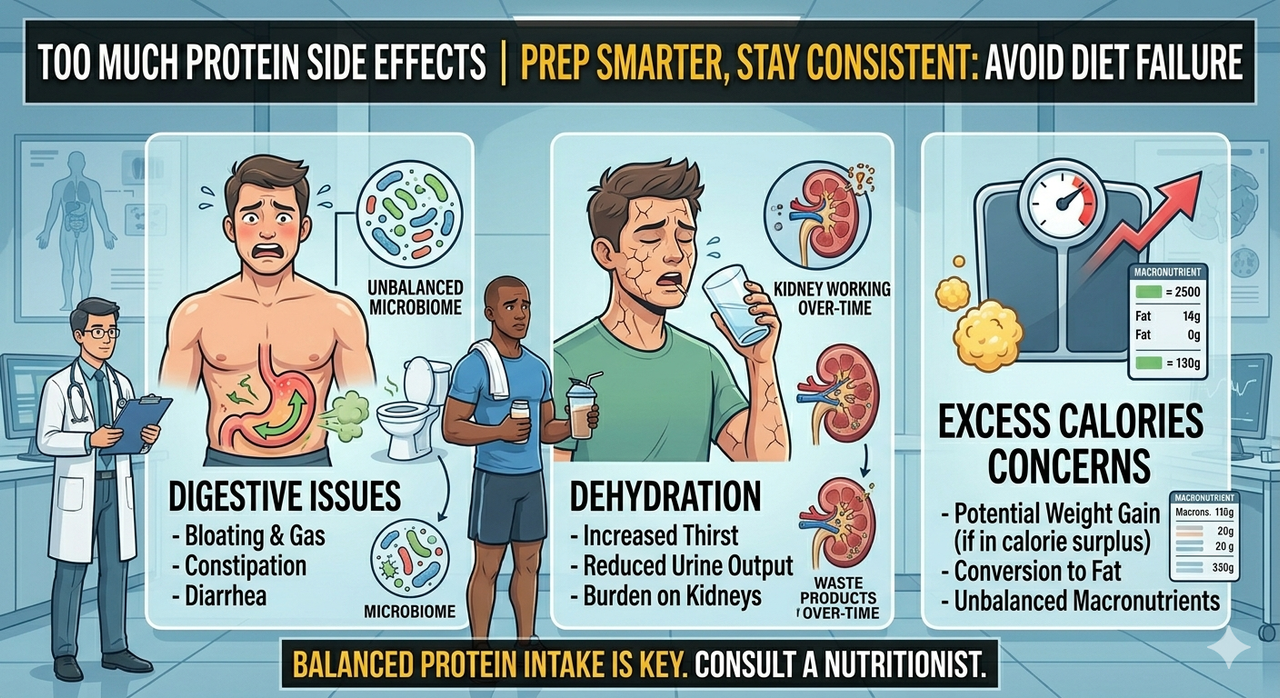
What happens if you eat too much protein? In healthy individuals, moderate excess (up to 2.5 g/kg body weight) is generally safe. However, extreme overconsumption (3+ g/kg) can cause too much protein side effects: digestive issues (bloating, constipation), dehydration (increased urination), excess calorie intake leading to fat gain, and potential kidney stress in people with pre-existing kidney disease. For healthy people, high protein diet risks are minimal within recommended ranges (1.6–2.2 g/kg for active individuals). The real concern is crowding out other nutrients—not protein toxicity .
1. The Protein Obsession: Can You Have Too Much of a Good Thing?
Protein is essential for muscle growth, repair, and countless bodily functions. But with the rise of high-protein diets and supplements, many wonder: what happens if you eat too much protein? Is there a point where benefits turn to risks? This evidence-based guide separates fact from fiction, exploring too much protein side effects, safe upper limits, and who should be cautious. Understanding how much protein is too much helps you optimize intake without unnecessary risks.
Is eating too much protein bad?
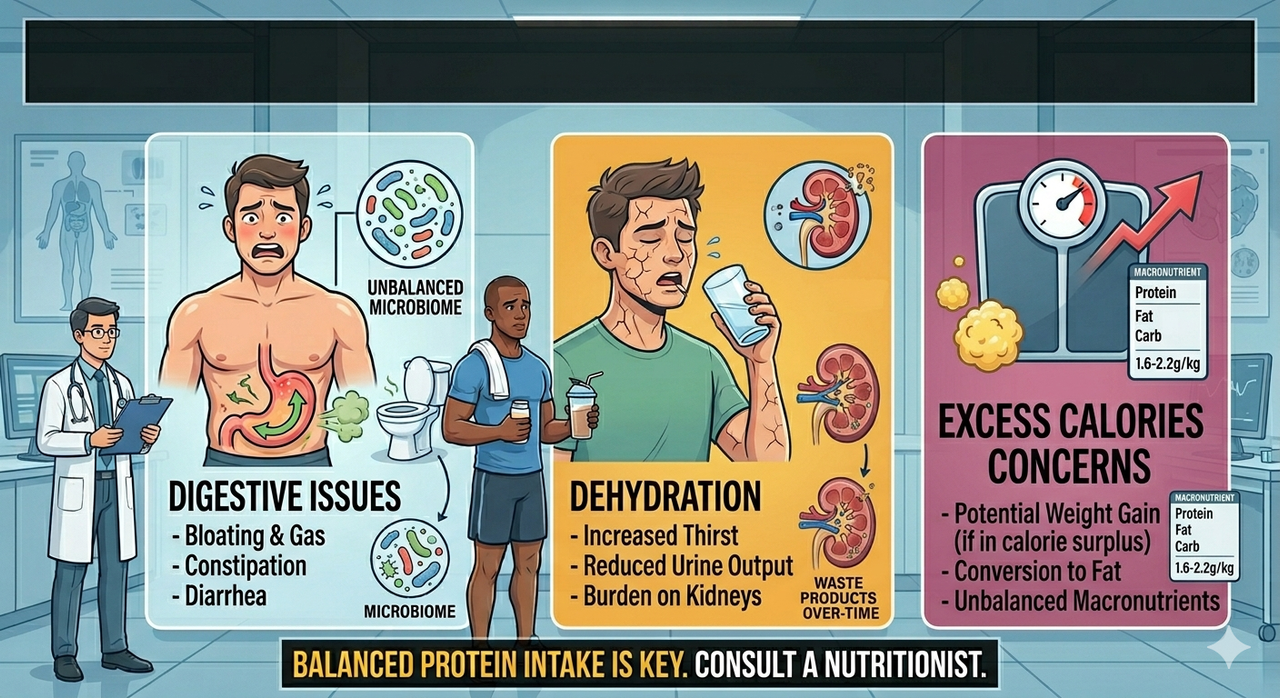
Is eating too much protein bad? Eating too much protein can cause: digestive issues (bloating, constipation, diarrhea), dehydration (increased nitrogen excretion requiring more water), excess calorie intake leading to fat gain, kidney stress (in individuals with pre-existing kidney disease), and nutrient imbalance (crowding out carbs and fats). However, for healthy individuals, moderate high protein intake (2-2.5 g/kg) is generally safe.
2. The Science: How Your Body Processes Protein
Unlike carbs and fats, protein isn't stored for energy. Excess amino acids are deaminated (nitrogen removed) in the liver. The nitrogen is converted to urea and excreted by the kidneys. This process requires water and energy, explaining some excess protein effects .
📊 Protein Intake Ranges by Goal
| Population / Goal | Recommended Intake (g/kg/day) | Example for 80 kg Person |
|---|---|---|
| 0.8 g/kg | 64 g/day | |
| 1.2–1.6 g/kg | 96–128 g/day | |
| 1.6–2.2 g/kg | 128–176 g/day | |
| 1.8–2.4 g/kg | 144–192 g/day | |
| 2.5–3.0 g/kg | 200–240 g/day | |
| 3.5+ g/kg | 280+ g/day |
3. Short-Term Side Effects of Excessive Protein
3.1. Digestive Issues
High protein intake—especially from supplements or meat—can cause bloating, constipation, or diarrhea. This often results from insufficient fiber (since protein sources lack fiber) or lactose intolerance from whey protein .
3.2. Dehydration
Your kidneys require extra water to excrete urea nitrogen from protein metabolism. Without adequate hydration, you may experience thirst, dry mouth, and darker urine. Increase water intake by 1-2 cups for every 50g protein above baseline .
3.3. Bad Breath
Very high protein, very low carb diets can induce ketosis, producing acetone breath—a sweet, fruity odor. This isn't harmful but noticeable .
3.4. Fatigue and Headaches
If protein crowds out carbohydrates, you may experience low energy, especially during workouts. Carbs are the primary fuel for high-intensity exercise .
4. Long-Term High Protein Diet Risks
4.1. Kidney Health: What the Research Says
For healthy individuals, high protein intake does NOT cause kidney damage. Multiple long-term studies show no adverse effects in people with normal kidney function . However, individuals with pre-existing kidney disease (eGFR <60) must restrict protein because damaged kidneys cannot efficiently excrete nitrogen waste .
4.2. Bone Health Myth
Old theories suggested high protein leaches calcium from bones, but modern research shows protein actually supports bone health by increasing calcium absorption and IGF-1 .
4.3. Heart Disease Risk
High protein diets heavy in red and processed meats may increase heart disease risk due to saturated fat and additives—not protein itself. Plant-based and lean animal proteins do not carry this risk .
4.4. Nutrient Imbalance
The most common high protein diet risk is crowding out other nutrients. Excess protein often means insufficient fiber, vitamins, and antioxidants from fruits, vegetables, and whole grains .
5. Does Excess Protein Turn Into Fat?
Yes, any calorie surplus—regardless of macronutrient—leads to fat storage. However, protein is less likely to be stored as fat than carbs or fats because:
- Protein has the highest thermic effect of food (20-30% of calories burned during digestion)
- De novo lipogenesis (converting protein to fat) is metabolically inefficient
- High protein increases satiety, reducing overall calorie intake
In practical terms, a protein surplus is less fattening than an equal calorie surplus from carbs or fats, but it can still contribute to weight gain over time .
6. Who Should Limit Protein Intake?
- Pre-existing kidney disease: Limit to 0.6-0.8 g/kg under medical supervision
- Gout: High purine proteins (red meat, shellfish) may trigger flares
- Liver disease: Impaired urea cycle may require protein restriction
- Certain metabolic disorders: Consult physician
7. Sample Balanced High-Protein Meal Plan (Moderate Intake)
This plan provides 2.0 g/kg (160g protein for 80kg person) without excessive intake:
Omnivore Plan (2,500 kcal, 160g Protein)
- Breakfast: 3 eggs, 1 cup oats, 1 cup milk (500 kcal, 35g protein)
- Lunch: 150g chicken breast, 1.5 cups quinoa, 2 cups vegetables (550 kcal, 40g protein)
- Snack: 170g Greek yogurt, 1 apple (200 kcal, 18g protein)
- Dinner: 150g salmon, 1.5 cups sweet potato, 2 cups spinach (550 kcal, 35g protein)
- Post-Workout: 1 scoop whey, 1 banana (200 kcal, 25g protein)
- Total: ~2,000 kcal, ~153g protein (well within safe range)
Vegan/Vegetarian Balanced Plan
- Breakfast: Tofu scramble (150g tofu), 1 cup oats, 1 cup soy milk (500 kcal, 30g protein)
- Lunch: 1.5 cups lentils, 1 cup quinoa, 2 cups vegetables, 1 tbsp olive oil (550 kcal, 25g protein)
- Snack: 1 cup edamame, 1 apple (200 kcal, 11g protein)
- Dinner: 150g tempeh, 1.5 cups brown rice, 2 cups spinach (500 kcal, 30g protein)
- Post-Workout: 1 scoop plant protein, 1 banana (200 kcal, 20g protein)
- Total: ~1,950 kcal, ~116g protein
Gluten-Free Options
- Use certified gluten-free oats
- Choose rice, quinoa, buckwheat
- Verify protein sources are gluten-free certified
8. Signs You're Eating Too Much Protein
- Persistent digestive issues (bloating, constipation, diarrhea)
- Frequent thirst and dehydration (dark urine)
- Bad breath (ketosis breath)
- Weight gain despite controlled calories
- Consistently exceeding 3g per kg body weight
- Excluding other food groups (few vegetables, low fiber)
- Fatigue or brain fog (if carbs are too low)
9. Frequently Asked Questions
Is eating too much protein bad?
Eating too much protein can cause: digestive issues (bloating, constipation, diarrhea), dehydration (increased nitrogen excretion requiring more water), excess calorie intake leading to fat gain, kidney stress in individuals with pre-existing kidney disease, and nutrient imbalance (crowding out carbs and fats). However, for healthy individuals, moderate high protein intake (2-2.5 g/kg) is generally safe.
What happens if you eat too much protein?
Eating too much protein may lead to: digestive discomfort (bloating, gas, constipation from low fiber), dehydration (excess nitrogen must be excreted via urine), weight gain (excess protein calories stored as fat), bad breath (ketosis from very low carb intake), and in severe cases over long periods, potential kidney stress in susceptible individuals.
How much protein is too much?
For healthy individuals, intakes above 2.5 g per kg of body weight daily (over 200g for an 80kg person) may cause side effects. The upper tolerable limit is around 3-3.5 g/kg. Most research shows 1.6-2.2 g/kg is optimal for active individuals, and up to 2.5 g/kg is safe. People with kidney disease should limit protein to 0.6-0.8 g/kg under medical supervision.
Can too much protein damage your kidneys?
In healthy individuals, high protein intake does NOT damage kidneys. Multiple studies show protein intake up to 2.5-3 g/kg is safe for those with normal kidney function. However, individuals with pre-existing kidney disease (reduced GFR) must restrict protein because damaged kidneys cannot efficiently excrete nitrogen waste.
Does excess protein turn into fat?
Yes, excess protein calories can be converted to fat, though the process (de novo lipogenesis) is less efficient than for carbs or fats. Any calorie surplus—regardless of macronutrient—leads to fat storage. However, protein has the highest thermic effect (20-30%), meaning more calories are burned during digestion.
What are signs you're eating too much protein?
Signs of excessive protein intake include: persistent digestive issues (bloating, constipation, diarrhea), frequent thirst and dehydration, bad breath, weight gain despite controlled calories, consistently exceeding 3g per kg body weight, and excluding other food groups (few vegetables, low fiber).
10. Related Resources
- Best Pre-Bed Meals for Muscle Growth (Overnight Recovery Foods)
- How to Control Portion Sizes Easily (Simple Diet Tips That Work)
- What to Eat When Cutting vs Bulking (Complete Diet Guide)
- How to Plan Your Weekly Meals for Fitness (Easy Meal Prep Guide)
- Best Foods to Boost Metabolism Naturally (Fat-Burning Foods Guide)
- How to Stop Sugar Cravings Naturally (Proven Tips That Work)
11. Scientific References
- Morton, R. W., et al. (2018). A systematic review, meta-analysis and meta-regression of the effect of protein supplementation on resistance training-induced gains in muscle mass and strength. British Journal of Sports Medicine, 52(6), 376–384. PubMed
- Antonio, J., et al. (2016). A high protein diet (3.4 g/kg/d) combined with a heavy resistance training program improves body composition in healthy trained men and women. Journal of the International Society of Sports Nutrition, 13, 18. PubMed
- Martin, W. F., et al. (2005). Dietary protein intake and renal function. Nutrition & Metabolism, 2, 25. PubMed
- Devries, M. C., & Phillips, S. M. (2015). Supplemental protein in support of muscle mass and health: advantage whey. Journal of Food Science, 80(S1), A8–A15. PubMed
- ACSM. (2021). Nutrition and Athletic Performance. Medicine & Science in Sports & Exercise, 53(3), 600–618. PubMed
Join the conversation