High Protein Breakfast Ideas for Muscle Gain (Quick & Healthy Meals)
High Protein Breakfast Ideas for Muscle Gain: Quick & Healthy Meals (2026)
⚡ TL;DR
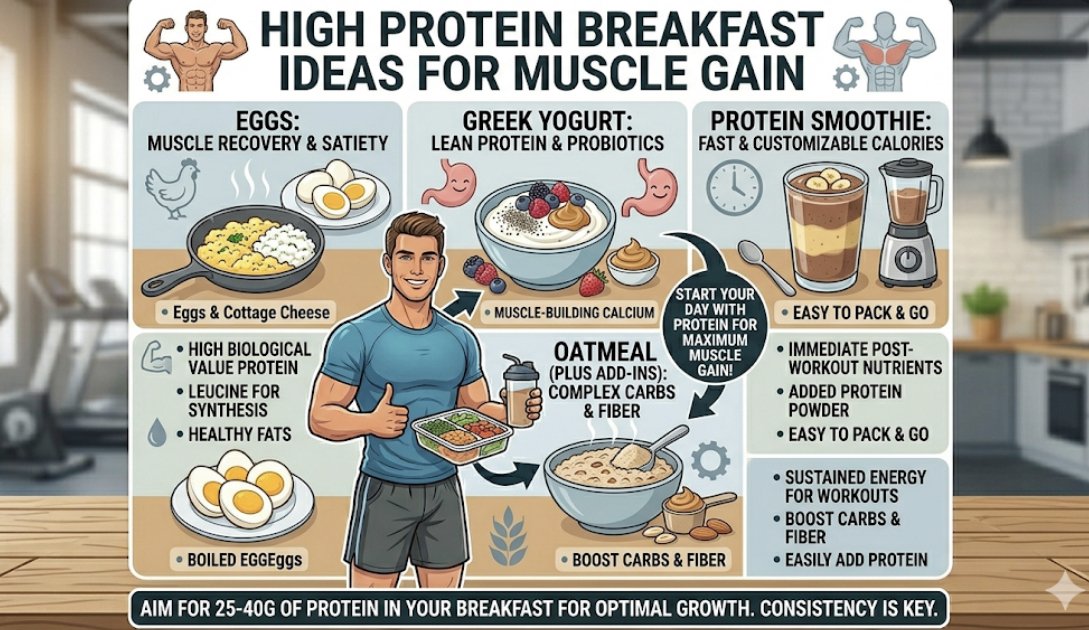
High protein breakfast ideas for muscle gain should provide 30-40g protein to maximize muscle protein synthesis (MPS). Top choices: eggs with whole grain toast (25-30g protein), Greek yogurt with oats (30-35g), protein smoothie (35-40g), oatmeal with peanut butter and protein powder (30-35g), and cottage cheese with fruit (25-30g). These breakfast for muscle gain options support recovery, satiety, and training performance. Research shows consuming 0.4g protein per kg body weight at breakfast optimizes MPS .
1. Why Breakfast Matters for Muscle Growth
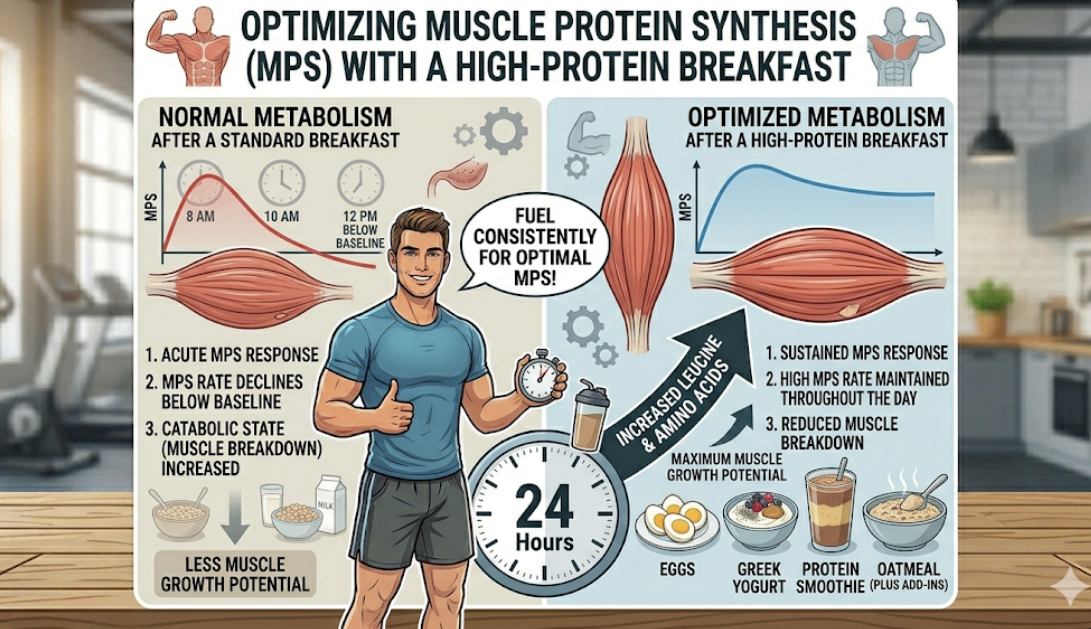
After 7-9 hours of sleep, your body is in a catabolic state—muscle protein breakdown exceeds synthesis. A high protein breakfast reverses this by providing amino acids to muscles. Research shows that consuming 30-40g protein at breakfast significantly increases muscle protein synthesis (MPS) compared to skipping breakfast or eating low-protein meals . This guide provides protein rich breakfast meals that are quick, delicious, and effective for healthy breakfast for bodybuilding.
What are the best high protein breakfasts for muscle gain?
The best high protein breakfasts for muscle gain include: eggs and whole grain toast (25-30g protein), Greek yogurt with oats (30-35g protein), protein smoothie (35-40g protein), oatmeal with peanut butter and protein powder (30-35g protein), and cottage cheese with fruit (25-30g protein).
2. The Science: How Much Protein at Breakfast?
Research shows the optimal protein intake per meal for muscle growth is 0.4 g per kg body weight. For an 80 kg (176 lb) person, that's 32g protein per meal . Spreading protein evenly across 3-4 meals (breakfast, lunch, dinner, snack) maximizes daily MPS.
📊 Optimal Protein at Breakfast by Body Weight
3. Top High-Protein Breakfast Options
3.1. Eggs & Whole Grain Toast (25-30g protein)
- 4 large eggs (24g protein)
- 2 slices whole grain bread (6g protein)
- 1 tbsp olive oil or butter
- Total: 30g protein, 500 kcal
3.2. Greek Yogurt Power Bowl (30-35g protein)
- 200g Greek yogurt (20g protein)
- ½ cup oats (5g protein)
- 1 scoop whey protein (25g protein - adjust yogurt to avoid excess)
- 1 tbsp chia seeds (2g protein)
- Berries for flavor
- Total: 32g protein, 450 kcal
3.3. Protein Smoothie (35-40g protein)
- 2 scoops whey or plant protein (50g protein - use 1.5 scoops for 35g)
- 1 cup milk (8g protein)
- 1 banana
- 1 tbsp peanut butter (4g protein)
- Total: 35-40g protein, 500-600 kcal
3.4. Oatmeal with Peanut Butter & Protein (30-35g protein)
- 1 cup oats (10g protein)
- 1 scoop protein powder (25g protein)
- 2 tbsp peanut butter (8g protein)
- 1 cup milk (8g protein)
- Total: 35g protein, 650 kcal
3.5. Cottage Cheese Breakfast Bowl (25-30g protein)
- 1 cup cottage cheese (25g protein)
- ½ cup berries
- 1 tbsp honey
- 1 tbsp chia seeds (2g protein)
- Total: 27g protein, 350 kcal
4. Quick High-Protein Breakfasts (5-10 Minutes)
Quick high protein breakfast options for busy mornings:
- Overnight oats: Mix 1 cup oats, 1 scoop protein, 1 cup milk, refrigerate overnight. 35g protein. Prep: 2 minutes night before.
- Greek yogurt cup: 200g Greek yogurt + 2 tbsp peanut butter + 1 banana. 30g protein. Time: 2 minutes.
- Protein shake: 2 scoops protein + 2 cups milk + 1 banana. 50g protein. Time: 2 minutes.
- Pre-made egg muffins: Bake 12 eggs with vegetables in muffin tin. Reheat 2-3 muffins. 18-27g protein. Time: 60 seconds reheat.
- Cottage cheese & fruit: 1 cup cottage cheese + 1 apple. 25g protein. Time: 2 minutes.
5. Vegan & Vegetarian High-Protein Breakfasts
Muscle gain breakfast ideas for plant-based diets:
- Tofu scramble: 200g firm tofu (15g protein) + 2 tbsp nutritional yeast (5g) + 1 cup soy milk (8g) + 2 slices whole grain bread (6g) = 34g protein
- Plant protein smoothie: 2 scoops pea/rice protein (50g) + 1 cup oat milk (3g) + 1 banana + 2 tbsp peanut butter (8g) = 40g protein (use 1.5 scoops for 35g)
- Soy yogurt bowl: 200g soy yogurt (10g) + 1 scoop plant protein (25g) + ¼ cup granola (3g) + 2 tbsp hemp seeds (7g) = 45g protein
- Chickpea scramble: 1 cup chickpeas (15g) + ¼ cup hummus (5g) + 2 slices toast (6g) = 26g protein
Gluten-Free Options
- Use certified gluten-free oats
- Choose gluten-free bread or rice cakes
- Verify protein powders are gluten-free certified
6. Breakfast Timing: Before or After Workout?
- Morning training (within 1-2 hours of waking): Eat a light breakfast (20-30g protein, 30-50g carbs) 60-90 minutes before training. Examples: banana + protein shake, or 2 eggs + 1 slice toast.
- Fasted training: Train on empty stomach, then consume a high-protein breakfast (30-40g) within 2 hours post-workout.
- Afternoon/evening training: Eat a substantial high-protein breakfast regardless, as it sets up daily MPS.
7. Sample High-Protein Breakfast Meal Prep
Prep these on Sunday for grab-and-go breakfasts all week:
- Egg muffins (12 muffins): 12 eggs, 1 cup cottage cheese, vegetables. Bake 20 min at 375°F. Each muffin: 8g protein. Eat 3-4 muffins = 24-32g protein.
- Protein pancake mix (dry): Mix 2 cups oats, 4 scoops protein powder, 2 tbsp baking powder. Store in container. Morning: ½ cup mix + 1 egg + ½ cup milk = 30g protein.
- Overnight oats jars (4 jars): 1 cup oats, 1 scoop protein, 1 cup milk per jar. Refrigerate. Grab and eat.
8. Common Breakfast Mistakes for Muscle Gain
- Skipping breakfast: Misses opportunity to stimulate MPS after overnight fast
- Too little protein: Cereal or toast alone (<10g protein) insufficient for MPS
- Too much fat, too little protein: Bacon-heavy breakfasts lack protein-to-calorie ratio
- Relying on processed carbs: Pastries, sugary cereals spike insulin without providing protein
- Not eating enough: Under-eating breakfast leads to hunger and poor energy later
9. Quick Recipes for High-Protein Breakfast
Egg & Cheese Wrap (30g protein, 5 minutes)
- 3 eggs (18g protein)
- 1 slice cheese (7g protein)
- 1 whole grain wrap (5g protein)
- Spinach
- Scramble eggs, add cheese, wrap in tortilla.
Protein Oatmeal (35g protein, 3 minutes)
- 1 cup oats (10g protein)
- 1 scoop protein powder (25g protein)
- 1 cup milk (8g protein)
- 1 tbsp peanut butter (4g protein)
- Microwave oats and milk, stir in protein powder and peanut butter.
Greek Yogurt Parfait (30g protein, 3 minutes)
- 200g Greek yogurt (20g protein)
- ½ cup granola (5g protein)
- 1 scoop protein powder (25g protein - adjust yogurt to avoid excess)
- Berries
- Layer yogurt, granola, berries, and protein powder.
10. Frequently Asked Questions
What are the best high protein breakfasts for muscle gain?
The best high protein breakfasts for muscle gain include: eggs and whole grain toast (25-30g protein), Greek yogurt with oats (30-35g protein), protein smoothie (35-40g protein), oatmeal with peanut butter and protein powder (30-35g protein), and cottage cheese with fruit (25-30g protein).
How much protein should I eat for breakfast to build muscle?
Aim for 30-40 grams of protein at breakfast to maximize muscle protein synthesis (MPS). Research shows 0.4 g per kg body weight per meal (30-40g for an 80kg person) optimally stimulates MPS. This amount also keeps you full and supports muscle repair.
Is breakfast important for muscle growth?
Yes, breakfast is important for muscle growth because it breaks the overnight fast, providing amino acids to muscles when protein synthesis is naturally lower. A high-protein breakfast also improves satiety and energy levels for training. Skipping breakfast may lead to muscle breakdown.
What are quick high protein breakfasts for busy mornings?
Quick high protein breakfasts include: overnight oats with protein powder (prepare night before), Greek yogurt cups with nuts (2 minutes), protein shake with milk and banana (2 minutes), pre-made egg muffins (reheat in 60 seconds), and cottage cheese with berries (2 minutes).
Can vegetarians get enough protein at breakfast?
Yes, vegetarians can get 30-40g protein from: Greek yogurt (20g) + 2 tbsp peanut butter (8g) + 1 cup milk (8g) = 36g, or tofu scramble (150g tofu = 15g) + 2 eggs (12g) + cheese (7g) = 34g, or protein shake with plant protein (25g) + soy milk (8g) = 33g.
Should I eat breakfast before or after a workout?
If training in the morning, eat a light breakfast (20-30g protein, 30-50g carbs) 60-90 minutes before training. If you train fasted, consume a high-protein breakfast within 2 hours post-workout. Both approaches work; choose based on your preference and digestion tolerance.
11. Related Resources
- How to Build a Simple Diet Plan (Step-by-Step Beginner Guide)
- What Happens If You Eat Too Much Protein? (Side Effects & Truth)
- How to Stay Consistent With Your Diet (Simple Habits That Work)
- Best Pre-Bed Meals for Muscle Growth (Overnight Recovery Foods)
- How to Control Portion Sizes Easily (Simple Diet Tips That Work)
- What to Eat When Cutting vs Bulking (Complete Diet Guide)
12. Scientific References
- Schoenfeld, B. J., & Aragon, A. A. (2018). How much protein can the body use in a single meal for muscle-building? Implications for daily protein distribution. Journal of the International Society of Sports Nutrition, 15, 10. PubMed
- Morton, R. W., et al. (2018). A systematic review, meta-analysis and meta-regression of the effect of protein supplementation on resistance training-induced gains in muscle mass and strength. British Journal of Sports Medicine, 52(6), 376–384. PubMed
- Phillips, S. M., & Van Loon, L. J. (2011). Dietary protein for athletes: from requirements to optimum adaptation. Journal of Sports Sciences, 29(sup1), S29–S38. PubMed
- Helms, E. R., et al. (2014). Evidence-based recommendations for natural bodybuilding contest preparation. Journal of the International Society of Sports Nutrition, 11(1), 20. PubMed
- ACSM. (2021). Nutrition and Athletic Performance. Medicine & Science in Sports & Exercise, 53(3), 600–618. PubMed
Join the conversation