How Much Water Should You Drink for Fitness? (Daily Hydration Guide)

Learn how much water you should drink for fitness to improve performance, recovery, and overall health.
How Much Water Should You Drink for Fitness? Daily Hydration Guide (2026)
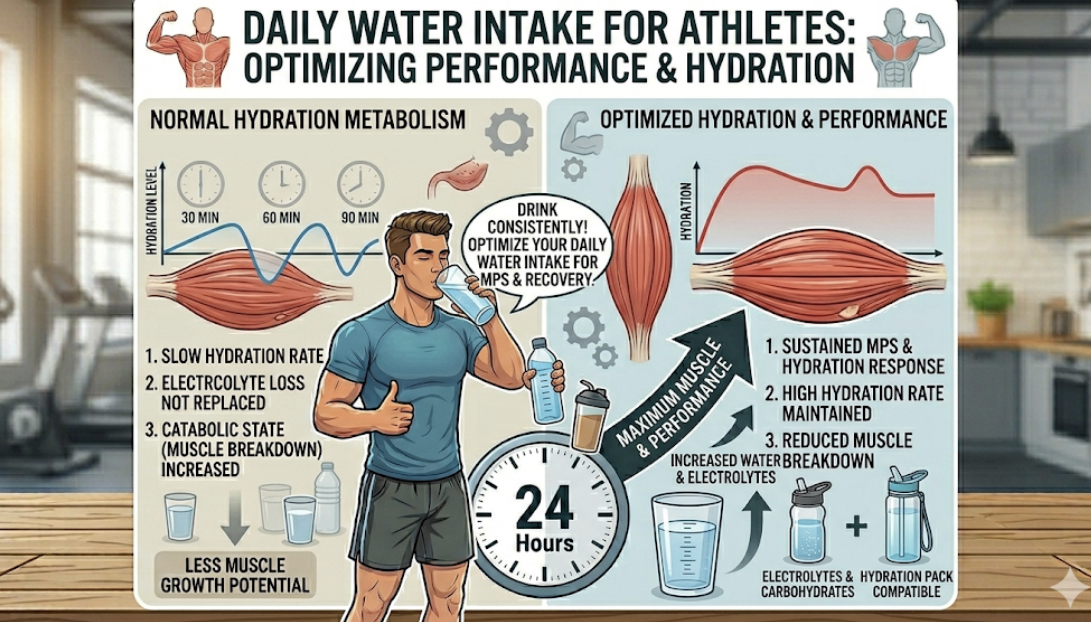
How Much Water Should You Drink for Fitness? Daily Hydration Guide (2026)

Water bottle and glass for daily water intake for athletes and fitness hydration
Image 1: Proper hydration is essential for muscle growth, performance, and recovery.

⚡ TL;DR

How much water to drink for fitness? Baseline: 2-3 liters (8-12 cups) daily for active adults. Daily water intake for athletes should increase by 500-1000 ml per hour of exercise. Hydration for muscle growth is critical because muscles are 75% water. Use body weight formula: 30-40 ml per kg. For an 80 kg person: 2.4-3.2 liters baseline + workout hydration. Monitor urine color (pale yellow = hydrated). Even 2% dehydration reduces performance by 10-20% .

1. The Hydration Foundation: Why Water Is Your Most Important Nutrient

You track protein, carbs, and fats meticulously. But how much water per day fitness requires is often overlooked. Water is involved in every bodily function related to exercise: nutrient transport, temperature regulation, joint lubrication, and waste removal. Water intake for gym performance directly affects strength, endurance, and recovery. This hydration tips workout guide provides evidence-based recommendations for optimal hydration.

How much water should you drink per day for fitness?

How much water should you drink per day for fitness? Baseline: 2-3 liters (8-12 cups) daily for most active adults. During exercise: add 500-1000 ml (17-34 oz) per hour of training. Adjust based on body weight (30-40 ml per kg), sweat rate, and climate. For an 80 kg person: 2.4-3.2 liters baseline + workout hydration.
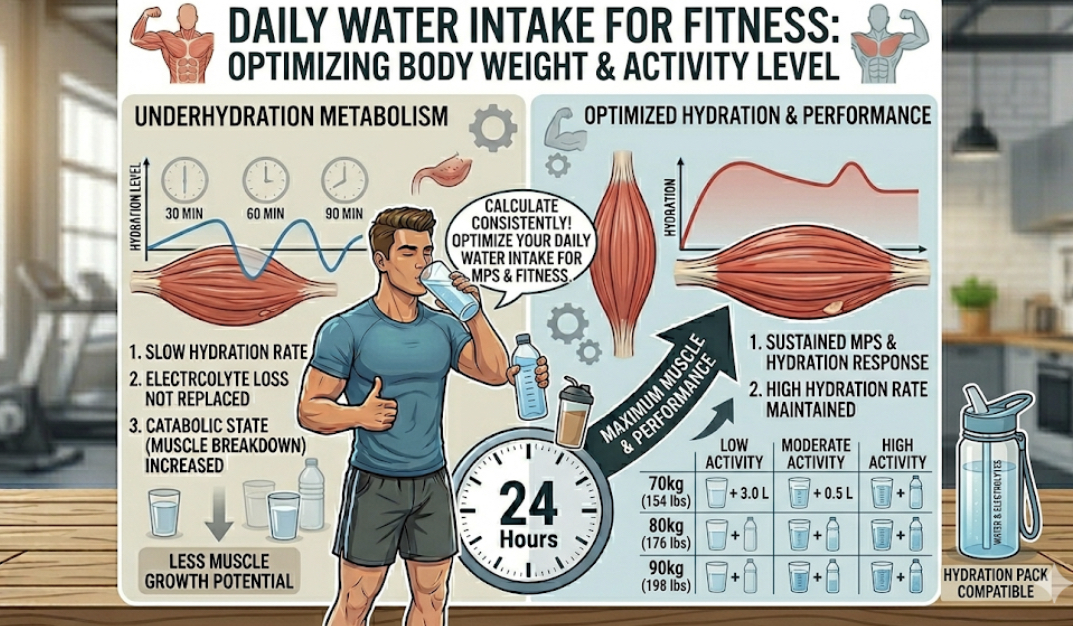
Urine color hydration chart showing how much water to drink for fitness based on hydration levels
Image 2: Water needs vary by body weight, activity level, and climate.

2. The Science: How Water Affects Muscle Growth and Performance

Hydration for muscle growth is critical because:

  • Muscle composition: Muscles are 75% water; dehydration reduces muscle volume
  • Protein synthesis: Water supports amino acid transport and MPS
  • Strength output: Even 2% dehydration reduces strength by 10-20%
  • Recovery: Water removes metabolic waste products
  • Joint health: Synovial fluid requires adequate hydration

📊 Water's Role in Athletic Performance

.= "Strength" ? 'Strength' : '' ?>Strength .= "Endurance" ? 'Endurance' : '' ?>Endurance .= "Recovery" ? 'Recovery' : '' ?>Recovery .= "Body temperature" ? 'Body temperature' : '' ?>Body temperature .= "Mental focus" ? 'Mental focus' : '' ?>Mental focus

3. How to Calculate Your Personal Water Needs

Use these methods to determine how much water to drink for fitness:

  • Body weight method: 30-40 ml per kg body weight. For 80 kg: 2.4-3.2 liters daily
  • Urine color test: Pale yellow = hydrated; dark yellow = dehydrated
  • Thirst: By the time you're thirsty, you're already dehydrated
  • Sweat rate: Weigh before and after exercise; 1 kg lost = 1 liter water needed
💡 Pro Tip: Weigh yourself before and after a workout. For every 0.5 kg (1 lb) lost, drink 500-750 ml water. This accounts for individual sweat rates.

4. Daily Water Intake for Athletes by Activity Level

📊 Recommended Daily Water Intake by Activity

FunctionEffect of DehydrationHydration Benefit
10-20% reductionMaintains muscle contractility
30-50% reduction in time to fatigueSustains cardiovascular function
Slower muscle repairFaster waste removal
Overheating, heat illnessEffective thermoregulation
Impaired concentration, reaction timeMaintains cognitive function
.= "Sedentary" ? 'Sedentary' : '' ?>Sedentary .= "Moderate (60-90 min)" ? 'Moderate (60-90 min)' : '' ?>Moderate (60-90 min) .= "Intense (90+ min)" ? 'Intense (90+ min)' : '' ?>Intense (90+ min) .= "Hot/humid conditions" ? 'Hot/humid conditions' : '' ?>Hot/humid conditions

5. Hydration Timing: Before, During, and After Workouts

Pre-Workout (2-3 hours before)

  • Drink 500-600 ml (17-20 oz) water
  • Urine should be pale yellow before starting
  • Avoid overhydrating immediately before (causes discomfort)

During Workout

  • Drink 150-250 ml (5-8 oz) every 15-20 minutes
  • For sessions under 60 minutes: water is sufficient
  • For longer sessions: add electrolytes

Post-Workout

  • Replace 125-150% of fluid lost (weigh before/after)
  • For every 0.5 kg lost: drink 600-750 ml
  • Include sodium to aid rehydration

6. Signs of Dehydration to Watch For

  • Mild (1-2% loss): Thirst, dry mouth, darker urine, fatigue
  • Moderate (2-4% loss): Headache, dizziness, muscle cramps, decreased performance
  • Severe (4-6% loss): Nausea, confusion, chills, inability to sweat, heat exhaustion
  • Urine color guide: Pale yellow = hydrated; dark yellow/amber = dehydrated

7. Can You Drink Too Much Water? (Hyponatremia)

Overhydration (hyponatremia) occurs when drinking excessive water without electrolytes, diluting blood sodium. This is rare but dangerous. Symptoms: nausea, headache, confusion, seizures. Prevention:

  • Limit to 1-1.5 liters per hour during intense exercise
  • Include electrolytes for sessions over 90 minutes
  • Drink to thirst plus planned amounts
  • Use sports drinks for prolonged exercise

8. Hydration and Weight Loss: Does Water Help?

Water aids weight loss through multiple mechanisms:

  • Increases metabolism: Drinking 500ml water increases metabolic rate by 24-30% for 60-90 minutes
  • Reduces calorie intake: Drinking water before meals fills stomach, reducing intake by 75-90 kcal per meal
  • Replaces high-calorie drinks: Substituting soda/juice with water saves 200-300 kcal daily
  • Improves exercise performance: Better hydration allows harder training, burning more calories

9. Sample Daily Hydration Schedule (Active Adult)

  • 7:00 AM (wake up): 500ml water
  • 9:00 AM: 300ml water
  • 12:00 PM (lunch): 400ml water
  • 2:00 PM: 300ml water
  • 4:00 PM (pre-workout, 2 hours before): 500ml water
  • 6:00 PM (during workout, 60 min): 500-750ml water or electrolyte drink
  • 7:30 PM (post-workout): 500ml water (plus more if sweated heavily)
  • 9:00 PM: 300ml water
  • Total: ~3.8-4.0 liters

10. Quick Hydration Recipes & Tips

DIY Electrolyte Water (for workout days)

  • 1 liter water
  • ¼ tsp salt (500mg sodium)
  • Squeeze of lemon or lime
  • Optional: 1 tbsp honey for energy (15g carbs)
  • Drink during or after workouts.

Infused Water (for daily hydration)

  • 1 liter water
  • Cucumber slices + mint leaves
  • Or lemon + ginger
  • Or berries + basil
  • Refrigerate 2 hours before drinking.

Vegan/Vegetarian Options

  • All above recipes are plant-based
  • Coconut water is excellent natural electrolyte source
  • Herbal teas count toward fluid intake

Gluten-Free Options

  • All water and DIY electrolyte drinks are naturally gluten-free
  • Verify any flavored additives are certified gluten-free

11. Common Hydration Mistakes

  • Relying on thirst: Thirst indicates already dehydrated
  • Drinking only during workouts: Daily baseline is equally important
  • Ignoring electrolytes: Long sessions require sodium replacement
  • Overhydrating without electrolytes: Risk of hyponatremia
  • Underestimating sweat rate: Weigh before/after to know your needs
  • Drinking too much at once: Sip throughout the day, don't chug

12. Frequently Asked Questions

How much water should you drink per day for fitness?

Baseline: 2-3 liters (8-12 cups) daily for most active adults. During exercise: add 500-1000 ml (17-34 oz) per hour of training. Adjust based on body weight (30-40 ml per kg), sweat rate, and climate. For an 80 kg person: 2.4-3.2 liters baseline + workout hydration.

Why is water important for muscle growth?

Water is crucial for muscle growth because: muscles are 75% water, hydration supports protein synthesis, water transports nutrients to muscles, removes waste products, maintains joint lubrication, and regulates body temperature during training. Even 2% dehydration reduces performance by 10-20% and impairs recovery.

How much water should I drink during a workout?

Drink 150-250 ml (5-8 oz) every 15-20 minutes during exercise. Total: 0.5-1 liter per hour depending on sweat rate and intensity. For workouts under 60 minutes, water is sufficient. For longer sessions, add electrolytes. Pre-hydrate: 500ml 2-3 hours before training.

Can drinking water help with weight loss?

Yes, water aids weight loss by: increasing metabolism by 24-30% for 60-90 minutes after drinking, reducing calorie intake when consumed before meals (fills stomach), replacing high-calorie beverages, and improving exercise performance for more calories burned. Drink 500ml before meals for best results.

What are signs of dehydration during exercise?

Signs of dehydration include: dark yellow urine, dry mouth, headache, dizziness, muscle cramps, fatigue, decreased performance, increased heart rate, and thirst (thirst appears when already dehydrated). Severe signs: confusion, nausea, chills, inability to sweat.

Is it possible to drink too much water?

Yes, overhydration (hyponatremia) occurs when drinking excessive water without electrolytes, diluting blood sodium levels. This is rare but dangerous. Symptoms: nausea, headache, confusion, seizures. For most people, drinking to thirst plus extra during exercise is safe. Limit to 1-1.5 liters per hour during intense exercise.

13. Related Resources

14. Scientific References

  1. Sawka, M. N., et al. (2007). American College of Sports Medicine position stand: Exercise and fluid replacement. Medicine & Science in Sports & Exercise, 39(2), 377–390. PubMed
  2. Popkin, B. M., et al. (2010). Water, hydration, and health. Nutrition Reviews, 68(8), 439–458. PubMed
  3. Maughan, R. J., & Shirreffs, S. M. (2010). Dehydration and rehydration in competitive sport. Scandinavian Journal of Medicine & Science in Sports, 20(s3), 40–47. PubMed
  4. Morton, R. W., et al. (2018). A systematic review, meta-analysis and meta-regression of the effect of protein supplementation on resistance training-induced gains in muscle mass and strength. British Journal of Sports Medicine, 52(6), 376–384. PubMed
  5. ACSM. (2021). Nutrition and Athletic Performance. Medicine & Science in Sports & Exercise, 53(3), 600–618. PubMed
FitForge Lab. Created by Techly420
FitForge Lab Welcome to WhatsApp chat
Hi! Need help with fitness or diet? 💪
Type here...
Activity LevelBaseline Water (liters)During Exercise (per hour)Total Daily (liters)
2.0-2.5 LN/A2.0-2.5 L
.= "Light activity (30-60 min)" ? 'Light activity (30-60 min)' : '' ?>Light activity (30-60 min)2.5-3.0 L0.3-0.5 L2.8-3.5 L
3.0-3.5 L0.5-0.8 L3.5-4.3 L
3.5-4.0 L0.8-1.0 L4.3-5.0 L
4.0+ L1.0-1.5 L5.0+ L