Foods That Keep You Full Longer (Best Satiety Foods for Fat Loss)
Foods That Keep You Full Longer: Best Satiety Foods for Fat Loss (2026)

⚡ TL;DR
Foods that keep you full longer are the secret to sustainable fat loss. This guide reveals the best satiety foods – foods to reduce hunger naturally. Learn the top filling foods for weight loss that maximize satiety per calorie. Discover high satiety low calorie foods and appetite control foods backed by science. These foods for fat loss will help you stay full, control cravings, and lose weight without suffering. Protein + fiber = longer fullness.
1. Why Satiety Is the Secret to Fat Loss
The #1 reason diets fail is hunger. When you're constantly hungry, willpower eventually breaks. The solution isn't more willpower – it's choosing foods that keep you full longer. Satiety is the scientific term for fullness between meals.
This guide covers the best satiety foods for fat loss. Learn which foods to reduce hunger naturally and the most filling foods for weight loss. These high satiety low calorie foods will help you control appetite and lose weight comfortably.
What foods keep you full the longest?
What foods keep you full the longest? Oats, eggs, potatoes, lean protein (chicken, fish), high-fiber vegetables (broccoli, spinach), and legumes (beans, lentils). These foods score highest on the satiety index. Protein + fiber = longer fullness. They trigger satiety hormones (CCK, PYY, GLP-1) and delay gastric emptying.
2. The Science of Satiety: How Fullness Works
Appetite control foods work through several mechanisms:
- Hormonal response: Protein triggers CCK, PYY, and GLP-1 (satiety hormones), while reducing ghrelin (hunger hormone) by 50-60%.
- Gastric emptying: Fiber and protein slow stomach emptying, keeping you full longer.
- Volume and stretch: High-volume, low-calorie foods (vegetables) stretch the stomach, triggering fullness signals.
- Blood sugar stability: Low-glycemic foods prevent blood sugar crashes that trigger hunger.
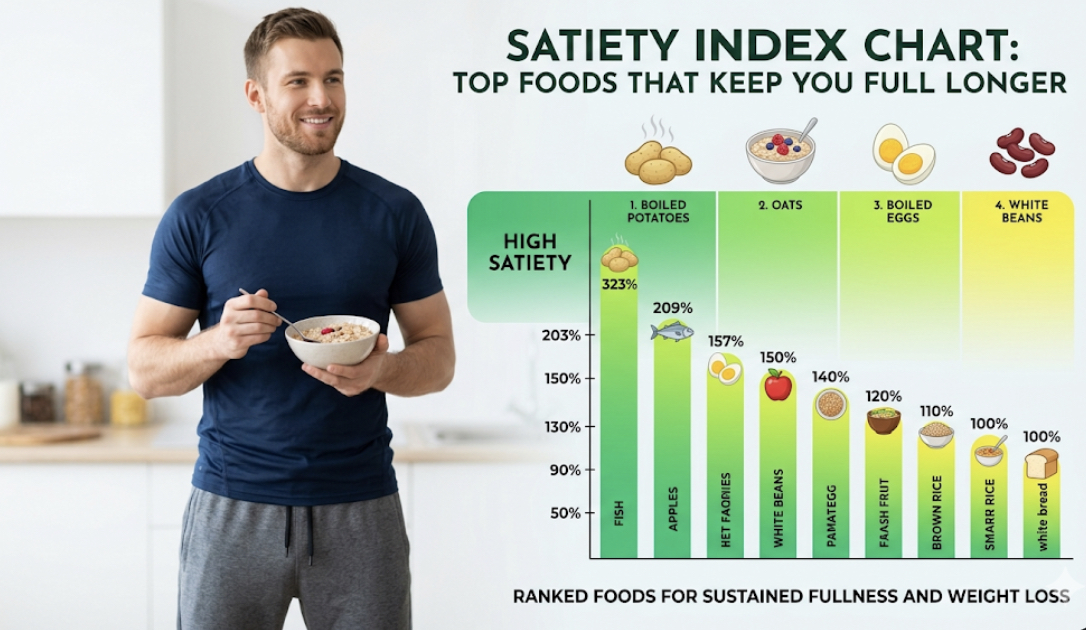
The Satiety Index (Holt et al., 1995) ranks foods by how full they keep you. Boiled potatoes score 323 (highest), while a croissant scores 47 (lowest). Choosing high-satiety foods can reduce daily calorie intake by 300-500 calories without feeling hungry.
📊 Top 15 Satiety Foods Ranked (Satiety Index Score)
| Rank | Food | Satiety Score | Why It Works | Best For |
|---|---|---|---|---|
| 1 | Boiled Potatoes | 323 | High volume, low calorie, resistant starch | Meals, side dishes |
| 2 | Oatmeal | 209 | Soluble fiber (beta-glucan), slow digestion | Breakfast |
| 3 | Oranges | 202 | High water content, fiber | Snacks |
| 4 | Apples | 197 | Pectin fiber, high water | Snacks |
| 5 | Whole Grain Bread | 157 | Fiber, complex carbs | Sandwiches, toast |
| 6 | Eggs | 150 | High-quality protein | Breakfast, meals |
| 7 | Beans/Lentils | 133 | Fiber + protein | Meals, soups |
| 8 | Fish | 130 | Lean protein, omega-3s | Dinner |
| 9 | Chicken Breast | 127 | Lean protein | Lunch, dinner |
| 10 | Grapes | 120 | High water content | Snacks |
3. Best High-Protein Satiety Foods
Protein is the most satiating macronutrient. It reduces ghrelin by 50-60% and increases CCK, PYY, and GLP-1 (satiety hormones).
- Eggs: 6g protein per egg, satiety score 150. Whole eggs keep you fuller than egg whites alone (yolk contains satiety-promoting nutrients).
- Greek yogurt (non-fat): 20g protein per cup, high in casein protein (slow-digesting). Keeps you full for 4-5 hours.
- Cottage cheese: 25g protein per cup, also rich in casein. Excellent pre-bed snack for overnight satiety.
- Chicken breast: 31g protein per 100g, low fat. Extremely satiating per calorie.
- Fish (salmon, tuna, cod): 20-25g protein per 100g. Fatty fish (salmon) adds omega-3s, which may further reduce appetite.
- Lean beef: 26g protein per 100g (95/5 lean). Rich in iron and B12.
- Whey protein: 25g per scoop. Fast-digesting, excellent post-workout for satiety and muscle recovery.
4. Best High-Fiber Satiety Foods
Fiber slows digestion, increases stomach stretch, and feeds gut bacteria that produce satiety signals.
- Oats (steel-cut or rolled): 4g fiber per 1/2 cup dry. Beta-glucan soluble fiber forms a gel in stomach, delaying hunger.
- Beans and lentils: 8-15g fiber per cup. Also high in protein (15-18g per cup). The ultimate satiety food combination.
- Broccoli and cauliflower: 2-3g fiber per cup, very low calories (30-50 calories per cup). High volume, low calorie.
- Spinach and leafy greens: 1-2g fiber per cup, virtually no calories. Add to every meal for volume.
- Berries (raspberries, blackberries): 8g fiber per cup. Highest fiber fruits, low sugar.
- Avocado: 10g fiber per avocado, healthy fats. Use in moderation (high calorie).
- Chia seeds: 10g fiber per 2 tbsp. Absorb water, expand in stomach. Add to yogurt or smoothies.
- Popcorn (air-popped): 4g fiber per 3 cups, only 100 calories. High volume snack.
5. Best High-Volume Low-Calorie Satiety Foods
These high satiety low calorie foods fill your stomach with minimal calories:
- Potatoes (boiled or baked): 77 calories per 100g. Highest satiety score (323). Avoid frying and heavy toppings.
- Non-starchy vegetables (broccoli, cauliflower, zucchini, spinach, peppers): 15-50 calories per cup. Add to every meal.
- Soups (broth-based, vegetable): 50-150 calories per cup. Liquid volume triggers stretch receptors.
- Watermelon, cantaloupe, berries: 30-50 calories per cup. High water content fills stomach.
- Rice cakes: 35 calories per cake. Light, crispy, can top with protein.
6. Sample High-Satiety Meal Plan (1,600 kcal)
Breakfast (8:00 AM) – 400 kcal, 30g protein, 10g fiber
- 1 cup cooked oatmeal (150 kcal, 5g protein, 4g fiber)
- 3 eggs (210 kcal, 18g protein)
- 1 cup spinach (7 kcal, 1g protein, 1g fiber)
- 1/2 cup berries (40 kcal, 1g protein, 4g fiber)
Lunch (12:30 PM) – 400 kcal, 35g protein, 12g fiber
- 150g chicken breast (250 kcal, 45g protein)
- 1.5 cups roasted broccoli (75 kcal, 5g protein, 6g fiber)
- 1 medium baked potato (160 kcal, 4g protein, 4g fiber)
Afternoon Snack (3:30 PM) – 200 kcal, 20g protein, 4g fiber
- 1 cup Greek yogurt (150 kcal, 20g protein)
- 1/2 cup raspberries (35 kcal, 1g protein, 4g fiber)
Dinner (7:00 PM) – 500 kcal, 40g protein, 15g fiber
- 150g salmon or lean fish (350 kcal, 35g protein)
- 2 cups mixed vegetables (zucchini, bell peppers, cauliflower) (100 kcal, 5g protein, 8g fiber)
- 1/2 cup lentils (115 kcal, 9g protein, 8g fiber)
Evening Snack (9:30 PM – optional) – 100 kcal, 15g protein
- 1 scoop whey protein + water (120 kcal, 25g protein)
Daily Total: ~1,600 kcal, ~140g protein, ~40g fiber
For more meal ideas, check out full day of eating for fat loss and best low-calorie high-protein foods.
7. High-Satiety Snacks for Hunger Control
- Greek yogurt + berries: 200 kcal, 20g protein, 5g fiber
- Apple + 1 tbsp peanut butter: 200 kcal, 5g protein, 5g fiber
- Hard-boiled eggs (2): 140 kcal, 12g protein
- Cottage cheese + cucumber slices: 150 kcal, 15g protein
- Protein shake: 120 kcal, 25g protein
- Air-popped popcorn (3 cups): 100 kcal, 4g fiber
- Rice cake + turkey slice: 100 kcal, 10g protein
- Edamame (1 cup shelled): 120 kcal, 11g protein, 8g fiber
8. Foods to Avoid (Low Satiety, High Hunger)
- Refined carbohydrates (white bread, white rice, pasta, crackers): Low fiber, rapid blood sugar spikes and crashes → hunger
- Sugary foods (candy, cookies, pastries, soda): Very low satiety per calorie, cause blood sugar rollercoaster
- Fruit juice and smoothies (commercial): Removes fiber, concentrated sugar → low satiety
- High-fat processed foods (croissants, pastries, fried foods): High calories, low volume, poor satiety (croissant scores 47 on satiety index)
- Most breakfast cereals (even "healthy" ones): Low fiber, high sugar, low protein
- Low-fat processed snacks (pretzels, rice cakes without protein): Low satiety despite low calories
9. Special Diets: High-Satiety Options
Vegan High-Satiety Meals
- Breakfast: Oatmeal + chia seeds + berries + soy milk (400 kcal, 15g protein, 15g fiber)
- Lunch: Lentil soup + whole grain bread + side salad (450 kcal, 20g protein, 20g fiber)
- Dinner: Tofu stir-fry + quinoa + broccoli (500 kcal, 25g protein, 15g fiber)
- Snacks: Edamame, apple, hummus + carrots
Vegetarian High-Satiety Meals
- Breakfast: 3 eggs + oatmeal + berries (450 kcal, 25g protein, 10g fiber)
- Lunch: Greek yogurt bowl + nuts + seeds + berries (400 kcal, 25g protein, 8g fiber)
- Dinner: Lentil + bean chili + cottage cheese (500 kcal, 30g protein, 18g fiber)
Gluten-Free High-Satiety Options
- Carb sources: Potatoes, sweet potatoes, rice, quinoa, gluten-free oats, buckwheat
- Sample meal: Chicken + sweet potato + broccoli (450 kcal, 35g protein, 12g fiber)
- Avoid: Wheat-based bread, pasta, cereals, crackers
10. Common Satiety Mistakes
- Skipping protein at breakfast: Low-protein breakfast (cereal, toast, fruit) leaves you hungry by 10 AM. Aim for 25-35g protein at breakfast.
- Not eating enough fiber: Most people eat only 10-15g fiber daily. Target 25-35g from whole foods.
- Drinking calories: Liquid calories don't trigger satiety like solid food. Stick to water, coffee, tea.
- Avoiding all carbs: Low-carb diets can be satiating initially, but adding high-fiber carbs (oats, potatoes, beans) increases satiety.
- Eating too fast: Takes 20 minutes for fullness signals to reach brain. Slow down, chew thoroughly.
- Not eating enough volume: Small portions of calorie-dense foods leave you hungry. Add low-calorie vegetables to every meal.
11. Frequently Asked Questions
What foods keep you full the longest?
Oats, eggs, potatoes, lean protein (chicken, fish), high-fiber vegetables (broccoli, spinach), and legumes (beans, lentils). These foods score highest on the satiety index. Protein + fiber = longer fullness. They trigger satiety hormones (CCK, PYY, GLP-1) and delay gastric emptying.
What is the most filling food for weight loss?
Boiled potatoes rank highest on the satiety index (323 out of 100). Other top filling foods: oatmeal (209), oranges (202), apples (197), whole grain bread (157), eggs (150), and beans (133). These foods have high fiber, water content, and protein, which increase satiety hormones.
How do high-protein foods reduce hunger?
High-protein foods reduce hunger by: increasing satiety hormones (CCK, PYY, GLP-1), reducing ghrelin (hunger hormone) by 50-60%, having a higher thermic effect of food (20-30% of calories burned during digestion), and slowing gastric emptying. Protein keeps you full 3-5 hours longer than carbs or fats.
Can high-fiber foods help with weight loss?
Yes, high-fiber foods are excellent for weight loss. Fiber slows digestion, increases satiety, and reduces calorie absorption. Soluble fiber forms a gel in the stomach, delaying gastric emptying. Aim for 25-35g fiber daily. Each 10g increase in daily fiber reduces calorie intake by 3-5% and supports fat loss.
Are potatoes good for weight loss?
Yes, boiled or baked potatoes are very filling and can support weight loss. Potatoes have the highest satiety score of any food (323 on the satiety index). They're low in calories (100g = 77 calories) and high in volume. However, avoid frying or adding high-calorie toppings (butter, cheese, sour cream).
Does drinking water before meals reduce hunger?
Yes, drinking 16-20 oz (500-600 ml) of water 30 minutes before meals reduces calorie intake by 13-15%. Water activates stomach stretch receptors, signaling fullness to the brain. Aim for 2-3 liters of water daily, especially before meals. For best results, combine water with high-fiber, high-protein meals.
12. Related Resources
- How to Read Food Labels for Fitness Goals (Beginner-Friendly Guide)
- Healthy Grocery List for Fitness Beginners (Complete Shopping Guide)
- Best Post-Workout Meals for Muscle Recovery (Fast Recovery Foods Guide)
- How Much Water Should You Drink for Fitness? (Daily Hydration Guide)
- What to Drink During Workout for Better Performance (Hydration Guide)
- High Protein Breakfast Ideas for Muscle Gain (Quick & Healthy Meals)
13. Scientific References
- Holt, S. H., et al. (1995). A satiety index of common foods. European Journal of Clinical Nutrition, 49(9), 675-690. PubMed
- Leidy, H. J., et al. (2015). The role of protein in weight loss and maintenance. American Journal of Clinical Nutrition, 101(6), 1320S-1329S. PubMed
- Slavin, J. L. (2005). Dietary fiber and body weight. Nutrition, 21(3), 411-418. PubMed
- Dennis, E. A., et al. (2010). Water consumption increases weight loss during a hypocaloric diet intervention in middle-aged and older adults. Obesity, 18(2), 300-307. PubMed
- Morton, R. W., et al. (2018). A systematic review, meta-analysis and meta-regression of the effect of protein supplementation on resistance training-induced gains in muscle mass and strength. British Journal of Sports Medicine, 52(6), 376-384. PubMed
- Clark, M. J., & Slavin, J. L. (2013). The effect of fiber on satiety and food intake: a systematic review. Journal of the American College of Nutrition, 32(3), 200-211. PubMed
- Helms, E. R., et al. (2014). Evidence-based recommendations for natural bodybuilding contest preparation. Journal of the International Society of Sports Nutrition, 11(1), 20. PubMed
Join the conversation