How to Avoid Bloating While Bulking (Clean Bulking Tips Guide)
How to Avoid Bloating While Bulking: Clean Bulking Tips Guide (2026)

⚡ TL;DR
To avoid bloating while bulking, focus on clean bulking tips that prioritize digestion. Learn bulking without bloating through proper food choices, meal timing, and portion control. These digestion tips bulking help you bulk without stomach issues. Master how to bulk without stomach issues and reduce bloating bodybuilding with science-based strategies. This bulking diet tips guide covers everything from food selection to meal frequency. Build muscle comfortably – no more painful bloat.
1. Why Bloating Is a Common Bulking Problem
Bloating during a bulk is incredibly common. Eating significantly more food than your body is used to can overwhelm your digestive system, leading to gas, distension, and discomfort. Many lifters accept bloating as "part of bulking" – but it doesn't have to be.
This guide teaches you how to avoid bloating while bulking with practical clean bulking tips. Learn bulking without bloating through proper food selection, meal timing, and digestive support. These digestion tips bulking will help you bulk without stomach issues.
How can I avoid bloating while bulking?
How can I avoid bloating while bulking? Avoid overeating in one meal (spread calories across 4-6 smaller meals), choose easy-to-digest foods (white rice, lean meats, ripe bananas), reduce processed foods (limit junk food bulking), eat slowly and chew thoroughly, and stay hydrated (drink water between meals, not with meals).
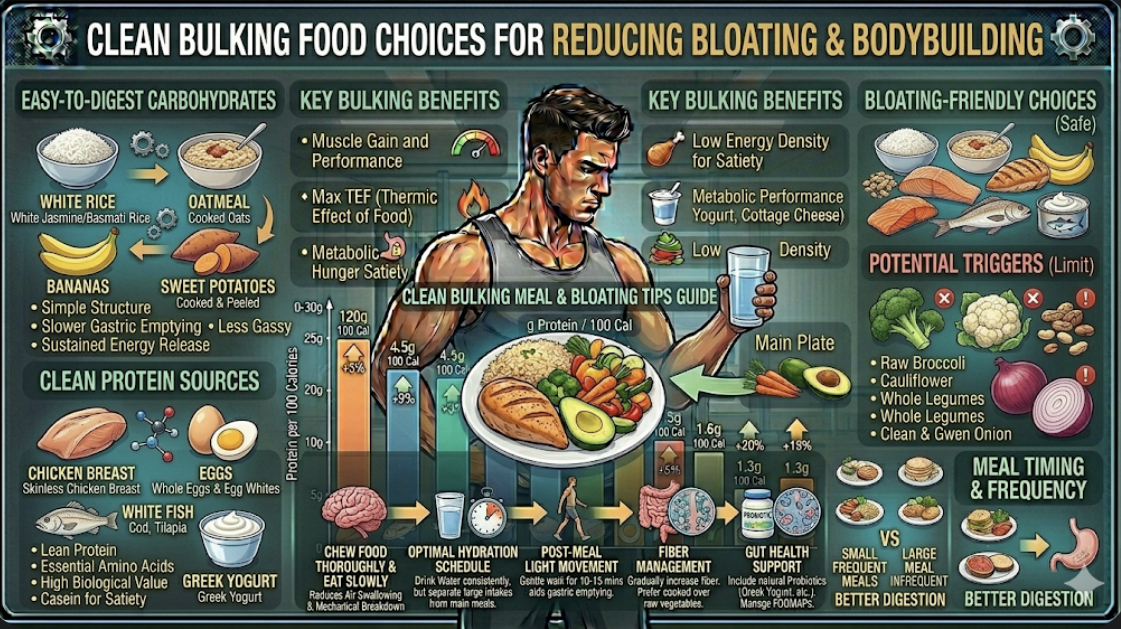
2. Clean Bulking vs Dirty Bulking: The Bloating Difference
Clean bulking vs dirty bulking dramatically affects digestion and bloating:
- Clean bulking: Nutrient-dense whole foods (lean meats, rice, potatoes, oats, vegetables) in moderate surplus (+300-500 calories). Minimizes bloating and fat gain.
- Dirty bulking: Calorie-dense processed foods (pizza, ice cream, fast food, sugary cereals) in large surplus (+500-1000 calories). Causes bloating, digestive distress, and excess fat gain.
For bulking without bloating, choose clean bulking. Your digestion will thank you, and you'll gain less fat.
📊 Clean Bulking vs Dirty Bulking: Digestion Impact
| Factor | Clean Bulking | Dirty Bulking | Winner for Digestion |
|---|---|---|---|
| Food Quality | Whole, nutrient-dense | Processed, high sugar/fat | Clean |
| Fiber Content | Moderate (from vegetables, oats) | Low (or high from beans – can bloat) | Clean (if fiber managed) |
| Dairy/Lactose | Optional (choose lactose-free if needed) | Often high (ice cream, cheese pizza) | Clean |
| Artificial Ingredients | None | Common (preservatives, sweeteners) | Clean |
| Fat Content | Moderate, healthy fats | High saturated/trans fats | Clean |
3. Best Easy-to-Digest Foods for Bulking
To avoid bloating while bulking, prioritize these easy-to-digest foods:
Carbohydrates (Easy-to-Digest)
- White rice / jasmine rice: Very low fiber, digests quickly – best bulking carb
- White potatoes (without skin): Easy to digest when cooked thoroughly
- Sweet potatoes (peeled, cooked): More nutrients, still digestible
- White bread / sourdough: Low fiber, good for quick energy
- Rice cakes: Very easy to digest, great for snacking
- Oats (well-cooked): Softer than raw oats, easier on digestion
- Ripe bananas: Easier to digest than unripe (less resistant starch)
Proteins (Easy-to-Digest)
- Chicken breast (lean): Low fat, easy to digest
- Turkey breast: Similar to chicken
- Eggs (cooked): Scrambled or hard-boiled – well-cooked eggs digest better
- Whey protein isolate: Lower lactose than concentrate, digests faster
- Greek yogurt (if tolerated): Probiotics may help digestion
- White fish (cod, tilapia): Very lean, easy to digest
- Salmon: Healthy fats, still digestible for most
Fats (Easy-to-Digest – Use Moderately)
- Olive oil: Easy to digest, add to rice or vegetables
- Avocado (small amounts): Healthy fats, but high fiber – limit if bloating
- Nut butters (smooth, small amounts): Avoid chunky if digestion is sensitive
Vegetables (Lower Bloating Options)
- Zucchini, yellow squash: Well-cooked, low fiber
- Spinach (cooked): Easier to digest than raw
- Carrots (cooked): Soft, digestible
- Asparagus (cooked): Mild diuretic, may reduce bloat
- Avoid raw cruciferous vegetables (broccoli, cauliflower, cabbage) if bloating – they contain raffinose, which causes gas.
4. Foods That Commonly Cause Bloating During Bulking
- High-fiber foods (beans, lentils, chickpeas): Contain raffinose – undigestible carbs that ferment in the gut, causing gas. Introduce gradually.
- Cruciferous vegetables (broccoli, cauliflower, Brussels sprouts, cabbage): Also contain raffinose. Cook thoroughly or avoid if sensitive.
- Dairy (if lactose intolerant): Many adults have some lactose intolerance. Choose lactose-free milk, hard cheeses, or whey isolate.
- Carbonated drinks (soda, sparkling water, beer): Carbonation directly causes gas and bloating.
- Artificial sweeteners (sorbitol, xylitol, maltitol): Found in sugar-free protein bars, protein ice cream, diet sodas. Poorly absorbed and cause gas.
- Fried and fatty foods: Slow gastric emptying, leading to fullness and discomfort.
- Large portions of raw vegetables: Harder to digest than cooked vegetables.
- Gluten (if sensitive): Wheat-based foods may cause bloating in sensitive individuals.
5. Meal Timing and Frequency to Prevent Bloating
How to bulk without stomach issues often comes down to meal timing:
- Eat 4-6 smaller meals instead of 2-3 large meals: Large meals distend the stomach and overload digestive capacity. Smaller, frequent meals are easier to digest.
- Wait 3-4 hours between meals: Allows stomach to empty before next meal.
- Stop eating 2-3 hours before bed: Lying down with a full stomach slows digestion and increases reflux.
- Don't drink large amounts of liquid with meals: Liquids dilute stomach acid and can cause distension. Drink water between meals, not during.
- Take a 10-15 minute walk after meals: Gentle movement aids digestion and reduces gas.
6. Sample Clean Bulking Meal Plan (3,000 kcal, Minimal Bloating)
Meal 1: Breakfast (8:00 AM) – 650 kcal
- 4 eggs (280 kcal, 24g protein)
- 1.5 cups cooked oats (450 kcal, 15g protein)
- 1 ripe banana (105 kcal, 1g protein)
- Total: ~835 kcal, ~40g protein
Meal 2: Mid-Morning Snack (11:00 AM) – 350 kcal
- 2 rice cakes + 2 tbsp peanut butter (250 kcal, 8g protein)
- 1 scoop whey isolate + water (120 kcal, 25g protein)
- Total: ~370 kcal, ~33g protein
Meal 3: Lunch (1:30 PM) – 700 kcal
- 200g chicken breast (330 kcal, 60g protein)
- 2 cups cooked jasmine rice (400 kcal, 8g protein)
- 1 cup cooked zucchini (30 kcal, 2g protein)
- Total: ~760 kcal, ~70g protein
Meal 4: Pre-Workout Snack (4:00 PM) – 300 kcal
- 2 slices white bread + 1 tbsp honey (200 kcal, 5g protein)
- 1 scoop whey isolate (120 kcal, 25g protein)
- Total: ~320 kcal, ~30g protein
Meal 5: Post-Workout Dinner (7:00 PM) – 750 kcal
- 200g lean beef or salmon (400 kcal, 40g protein)
- 400g white potatoes (280 kcal, 8g protein)
- 1 cup cooked spinach (40 kcal, 5g protein)
- Total: ~720 kcal, ~53g protein
Meal 6: Before Bed Snack (10:00 PM) – 250 kcal
- 1 cup Greek yogurt (150 kcal, 20g protein)
- 1/2 cup rice krispies cereal (50 kcal, 1g protein)
- Total: ~200 kcal, ~21g protein
Daily Total: ~3,200 kcal, ~247g protein
For more meal plans, check out 7-day meal plan for muscle gain and full day of eating for muscle gain.
7. Supplements to Reduce Bloating While Bulking
- Digestive enzymes: Take with meals to help break down fats, carbs, and protein. Particularly helpful for high-protein or high-fat meals.
- Probiotics: Support gut bacteria balance. Look for Lactobacillus and Bifidobacterium strains.
- Betaine HCl: Increases stomach acid for better protein digestion. Consult a doctor first.
- Peppermint oil capsules: May reduce gas and bloating. Take 30 minutes before meals.
- Ginger: Tea or capsules – promotes gastric emptying and reduces nausea.
- Activated charcoal: May reduce gas, but take separately from medications/supplements (2 hours apart).
8. Lifestyle Tips for Better Digestion During Bulking
- Eat slowly and chew thoroughly: Digestion starts in the mouth. Chew each bite 20-30 times.
- Don't lie down after eating: Wait 2-3 hours before lying down to prevent reflux and slow digestion.
- Manage stress: High cortisol impairs digestion. Practice deep breathing, meditation, or light walking.
- Stay hydrated (between meals): Aim for 2-3 liters water daily. Drink between meals, not during.
- Regular exercise: Physical activity promotes gut motility. Even light walking helps.
- Identify trigger foods: Keep a food-symptom diary. Everyone has different sensitivities.
9. Special Diets: Vegan, Vegetarian, Gluten-Free Bulking Without Bloating
Vegan Bulking Without Bloating
- Protein sources: Tofu, tempeh (fermented – easier to digest), pea protein isolate, rice protein
- Carb sources: White rice, rice cakes, gluten-free oats, potatoes, sweet potatoes, ripe bananas
- Avoid if bloating: Large portions of beans, lentils, chickpeas, raw cruciferous vegetables
- Tip: Soak beans overnight and cook thoroughly to reduce gas-producing compounds.
Vegetarian Bulking Without Bloating
- Protein sources: Eggs, Greek yogurt (if tolerated), cottage cheese, whey isolate, tofu, tempeh
- Carb sources: White rice, potatoes, oats, white bread, rice cakes
- Lactose management: Use lactose-free dairy or lactase enzyme pills
Gluten-Free Bulking Without Bloating
- Carb sources: White rice, rice cakes, gluten-free oats, potatoes, sweet potatoes, quinoa
- Avoid: Wheat, barley, rye, seitan (wheat gluten)
- Protein sources: All animal proteins, tofu, tempeh, pea/rice protein powders
- Tip: Many gluten-free processed foods contain additives – stick to whole foods.
10. Common Bulking Bloating Mistakes
- Eating too much in one sitting: 1,200+ calorie meals overwhelm digestion. Spread calories across 4-6 meals.
- Ignoring food intolerances: Dairy, gluten, or FODMAP sensitivity causes bloating. Identify and eliminate triggers.
- Dirty bulking: Processed foods, artificial sweeteners, and excess fat cause digestive distress.
- Drinking calories with meals: Shakes, smoothies, and soda add volume without satiety signals. Drink between meals instead.
- Not cooking vegetables: Raw vegetables are harder to digest. Steam, roast, or sauté them.
- Eating too fast: Swallowing air (aerophagia) contributes to bloating. Slow down, chew thoroughly.
11. Frequently Asked Questions
How can I avoid bloating while bulking?
Avoid overeating in one meal (spread calories across 4-6 smaller meals), choose easy-to-digest foods (white rice, lean meats, ripe bananas), reduce processed foods (limit junk food bulking), eat slowly and chew thoroughly, and stay hydrated (drink water between meals, not with meals).
What foods cause bloating during bulking?
Common bloating triggers: high-fiber foods (beans, lentils, broccoli, cauliflower), dairy (if lactose intolerant), carbonated drinks, artificial sweeteners (sorbitol, xylitol), fried/fatty foods, and large portions of raw vegetables. Gradually increase fiber intake and identify personal trigger foods.
What is clean bulking vs dirty bulking?
Clean bulking: eating nutrient-dense whole foods (lean meats, rice, potatoes, oats, vegetables) in a moderate calorie surplus (+300-500). Dirty bulking: eating calorie-dense processed foods (pizza, ice cream, fast food) in a large surplus (+500-1000). Clean bulking minimizes bloating and fat gain; dirty bulking causes bloating, digestive distress, and excess fat gain.
How can I reduce bloating from high-calorie meals?
Reduce bloating by: spreading calories across 4-6 smaller meals instead of 2-3 large meals, adding digestive enzymes (lipase, amylase, protease), taking probiotics, walking 10-15 minutes after meals, drinking peppermint or ginger tea, and avoiding lying down for 2-3 hours after eating.
What are the best easy-to-digest foods for bulking?
Best easy-to-digest bulking foods: white rice, jasmine rice, potatoes (without skin), sweet potatoes, ripe bananas, white bread, lean chicken breast, turkey, eggs, Greek yogurt (if tolerated), whey protein isolate, salmon, rice cakes, and well-cooked vegetables (zucchini, spinach, carrots).
How long does bulking bloat last?
Acute bloating from a single large meal usually resolves within 2-6 hours as food moves through the digestive tract. Chronic bloating during a bulk may persist for days or weeks if dietary triggers aren't addressed. After switching to clean bulking principles, most people notice improvement within 3-7 days.
12. Related Resources
- How to Read Food Labels for Fitness Goals (Beginner-Friendly Guide)
- Healthy Grocery List for Fitness Beginners (Complete Shopping Guide)
- Best Post-Workout Meals for Muscle Recovery (Fast Recovery Foods Guide)
- How Much Water Should You Drink for Fitness? (Daily Hydration Guide)
- What to Drink During Workout for Better Performance (Hydration Guide)
- High Protein Breakfast Ideas for Muscle Gain (Quick & Healthy Meals)
13. Scientific References
- Gibson, P. R., & Shepherd, S. J. (2010). Evidence-based dietary management of functional gastrointestinal symptoms: The FODMAP approach. Journal of Gastroenterology and Hepatology, 25(2), 252-258. PubMed
- Slavin, J. (2013). Fiber and prebiotics: mechanisms and health benefits. Nutrients, 5(4), 1417-1435. PubMed
- Di Stefano, M., et al. (2000). Fructose and lactose malabsorption: clinical characteristics and dietary management. Digestive and Liver Disease, 32(8), 695-701. PubMed
- Morton, R. W., et al. (2018). A systematic review, meta-analysis and meta-regression of the effect of protein supplementation on resistance training-induced gains in muscle mass and strength. British Journal of Sports Medicine, 52(6), 376-384. PubMed
- Helms, E. R., et al. (2014). Evidence-based recommendations for natural bodybuilding contest preparation. Journal of the International Society of Sports Nutrition, 11(1), 20. PubMed
- Schoenfeld, B. J., & Aragon, A. A. (2018). How much protein can the body use in a single meal for muscle-building? Journal of the International Society of Sports Nutrition, 15(1), 10. PubMed
- Jäger, R., et al. (2017). International Society of Sports Nutrition Position Stand: protein and exercise. Journal of the International Society of Sports Nutrition, 14(1), 20. PubMed
Join the conversation