How to Balance Macros for Fitness Goals (Protein, Carbs & Fats Guide)
How to Balance Macros for Fitness Goals: Protein, Carbs & Fats Guide (2026)
⚡ TL;DR
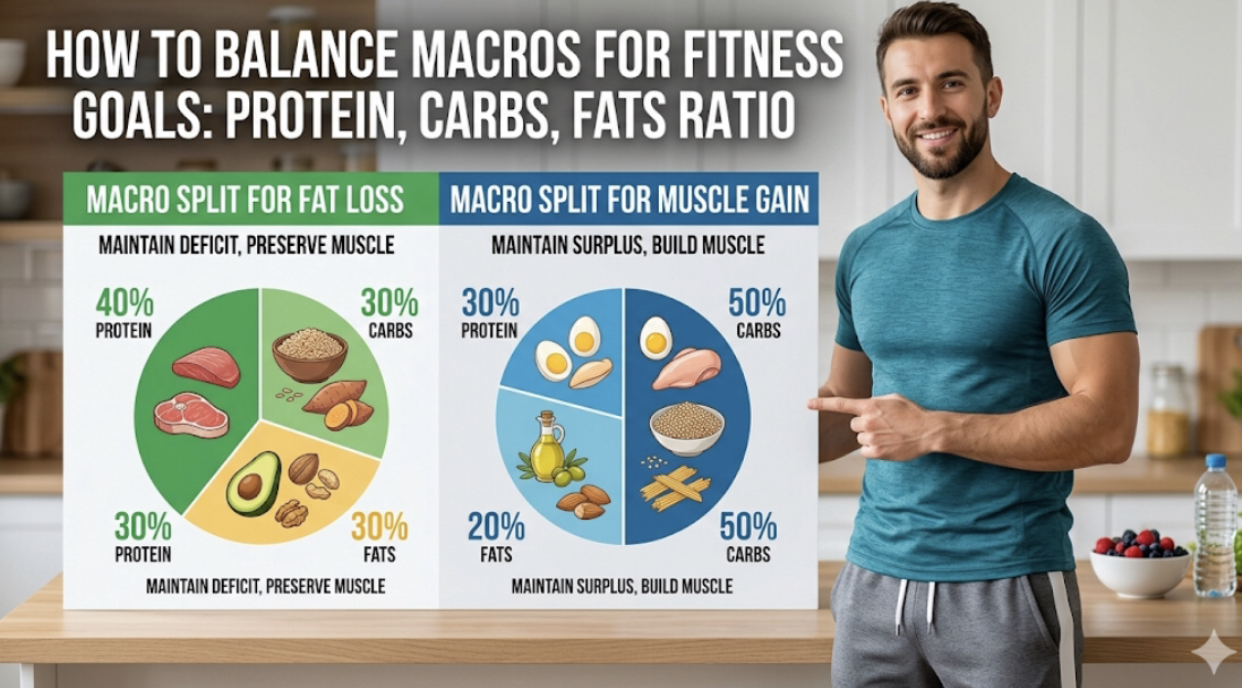
Learning how to balance macros is the key to achieving your macros for fitness goals. This guide explains the optimal protein carbs fats ratio for fat loss, muscle gain, and maintenance. Discover the right macro split for fat loss and macro diet for muscle gain. Learn how to track macros and the best macro ratio bodybuilding for your specific goal. Stop guessing – use science-based macro recommendations to transform your body.
1. Why Macronutrient Balance Matters
Calories matter, but where those calories come from matters just as much. The three macronutrients – protein, carbohydrates, and fats – each play unique roles in your body. Getting the right protein carbs fats ratio can mean the difference between building muscle or storing fat, between steady energy or afternoon crashes.
This guide teaches you how to balance macros for any fitness goal. Whether you need a macro split for fat loss or a macro diet for muscle gain, you'll find evidence-based recommendations. Learn how to track macros and discover the best macro ratio bodybuilding for your needs.
How do you balance macros for fitness goals?
How do you balance macros for fitness goals? Protein: 1.6-2.2g per kg body weight (muscle gain and preservation). Carbs: main energy source (3-5g per kg for fat loss, 4-7g per kg for muscle gain). Fats: hormone support (0.8-1.2g per kg). Adjust based on goal: bulking vs cutting. A general starting macro split is 40% carbs, 30% protein, 30% fats.
2. The Science: What Each Macronutrient Does
Understanding macros for fitness goals starts with knowing the role of each nutrient:
- Protein (4 calories per gram): Builds and repairs muscle tissue, produces enzymes and hormones, supports immune function. Highest thermic effect (20-30% of calories burned during digestion).
- Carbohydrates (4 calories per gram): Primary energy source for high-intensity exercise, fuels the brain, replenishes glycogen stores. Fastest energy source.
- Fats (9 calories per gram): Supports hormone production (including testosterone), absorbs fat-soluble vitamins (A, D, E, K), provides energy for low-intensity activity, protects organs.
All three are essential. The key is finding the right protein carbs fats ratio for your specific goal.
3. How to Calculate Your Macros (Step-by-Step)
Follow these steps to how to balance macros for your body and goals:
- Step 1: Calculate TDEE (Total Daily Energy Expenditure). Use online calculators or formula: BMR x activity factor.
- Step 2: Set calorie goal. Fat loss: TDEE - 300-500 calories. Muscle gain: TDEE + 300-500 calories. Maintenance: TDEE.
- Step 3: Set protein intake. 1.6-2.2g per kg body weight (0.7-1g per lb).
- Step 4: Set fat intake. 0.8-1.2g per kg body weight (0.35-0.55g per lb).
- Step 5: Remaining calories for carbs. Subtract protein and fat calories from total calories, divide by 4 for carb grams.
📊 Sample Macro Calculations for Different Goals (75 kg / 165 lb person)
| Goal | Calories | Protein (g) | Fat (g) | Carbs (g) | Protein % | Fat % | Carbs % |
|---|---|---|---|---|---|---|---|
| Fat Loss | 1,800 | 150 | 50 | 165 | 33% | 25% | 37% |
| Maintenance | 2,200 | 150 | 65 | 235 | 27% | 27% | 43% |
| Muscle Gain | 2,700 | 165 | 75 | 340 | 24% | 25% | 50% |
4. Best Macro Split for Fat Loss
The optimal macro split for fat loss prioritizes protein to preserve muscle, moderate carbs for energy, and sufficient fats for hormone function.
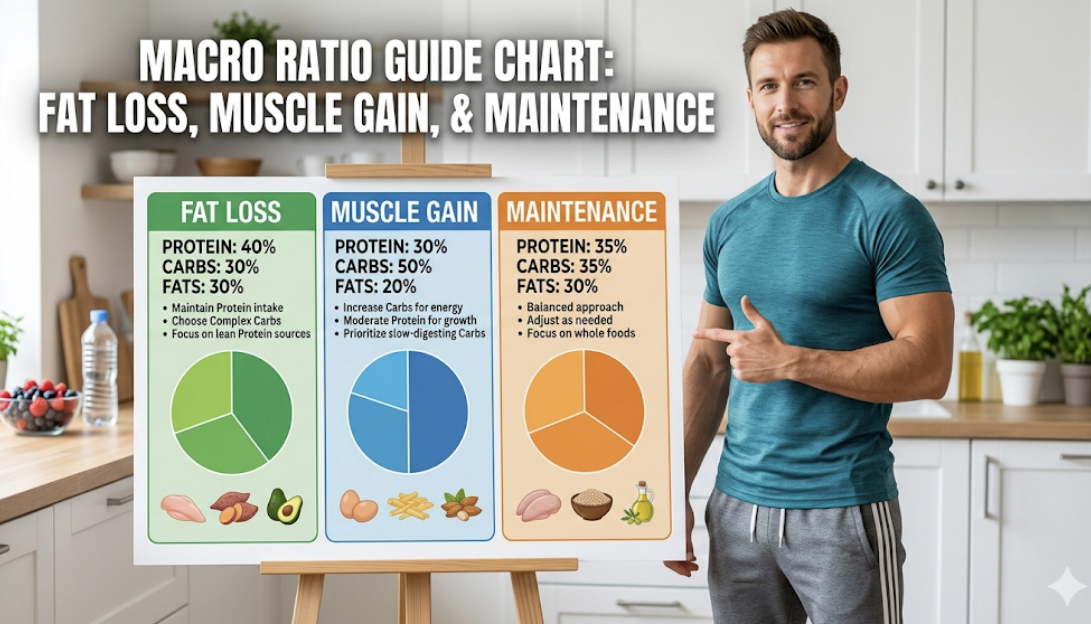
- Protein: 1.8-2.4 g/kg body weight (30-40% of calories) – highest satiety, preserves muscle
- Carbs: 3-5 g/kg (30-40% of calories) – fuel for training, choose high-fiber sources
- Fats: 0.6-0.9 g/kg (20-30% of calories) – hormone support, don't go too low
- Example (1,800 calories): 135-180g protein, 135-180g carbs, 40-60g fat
For more fat loss nutrition strategies, check out full day of eating for fat loss and best low-calorie high-protein foods.
5. Best Macro Split for Muscle Gain
The macro diet for muscle gain requires a calorie surplus with higher carbs to fuel training and support recovery.
- Protein: 1.6-2.2 g/kg body weight (25-30% of calories) – supports muscle protein synthesis
- Carbs: 4-7 g/kg (45-55% of calories) – fuels intense training, replenishes glycogen
- Fats: 0.8-1.2 g/kg (20-30% of calories) – supports testosterone production
- Example (2,800 calories): 160-200g protein, 315-385g carbs, 60-85g fat
For more muscle gain nutrition, see full day of eating for muscle gain and 7-day meal plan for muscle gain.
6. Best Macro Split for Maintenance (Body Recomposition)
For maintenance or body recomposition (losing fat while gaining muscle), use a balanced approach:
- Protein: 1.8-2.2 g/kg (30-35% of calories) – higher protein supports both goals
- Carbs: 3-5 g/kg (35-45% of calories) – adjust based on activity level
- Fats: 0.8-1.0 g/kg (25-30% of calories) – moderate fat intake
- Example (2,200 calories): 150-180g protein, 190-250g carbs, 55-70g fat
7. Sample Meal Plan by Macro Split
Fat Loss Macro Plan (1,800 calories: 150g Protein, 50g Fat, 165g Carbs)
- Breakfast (7:00 AM): 4 eggs + 1 cup spinach + 1 slice whole grain toast (400 kcal, 30g protein, 20g carbs, 25g fat)
- Lunch (12:00 PM): 150g chicken breast + 2 cups mixed vegetables + 1/2 cup quinoa (450 kcal, 45g protein, 35g carbs, 10g fat)
- Snack (3:30 PM): 1 cup Greek yogurt + 1/2 cup berries (180 kcal, 20g protein, 15g carbs, 0g fat)
- Dinner (7:00 PM): 150g white fish + 2 cups roasted broccoli + 1/2 cup brown rice (450 kcal, 40g protein, 45g carbs, 10g fat)
- Evening Snack (9:30 PM): 1 cup cottage cheese (180 kcal, 25g protein, 8g carbs, 5g fat)
Muscle Gain Macro Plan (2,800 calories: 170g Protein, 75g Fat, 360g Carbs)
- Breakfast (7:00 AM): 4 eggs + 1.5 cups oatmeal + 1 cup milk + 1 banana (700 kcal, 35g protein, 95g carbs, 25g fat)
- Snack (10:00 AM): 2 rice cakes + 2 tbsp peanut butter + 1 scoop whey (400 kcal, 30g protein, 35g carbs, 18g fat)
- Lunch (1:00 PM): 200g chicken breast + 2 cups jasmine rice + 1 cup mixed vegetables (700 kcal, 55g protein, 90g carbs, 15g fat)
- Pre-workout Snack (4:00 PM): 2 slices white bread + 1 tbsp honey (250 kcal, 5g protein, 55g carbs, 2g fat)
- Post-workout Shake (6:00 PM): 2 scoops whey + 1 banana (300 kcal, 50g protein, 30g carbs, 5g fat)
- Dinner (7:30 PM): 200g lean beef + 400g white potatoes + 2 cups asparagus (650 kcal, 45g protein, 70g carbs, 25g fat)
- Before Bed (10:00 PM): 1 cup Greek yogurt (150 kcal, 20g protein, 8g carbs, 0g fat)
8. How to Track Macros (Tools & Tips)
How to track macros effectively:
- Use a food scale: Most accurate way to measure portions. Weigh solids in grams, liquids in ml.
- Use tracking apps: MyFitnessPal, Cronometer, or MacroFactor. Scan barcodes, log meals.
- Track for 2-4 weeks initially: This builds awareness of portion sizes. After that, you can track intermittently.
- Pre-log meals: Log your day in the morning to see if adjustments are needed.
- Don't forget cooking oils, sauces, drinks: These add significant calories (1 tbsp oil = 120 calories, 14g fat).
9. Macro Adjustments for Special Diets
Vegan Macro Balance
- Protein sources: Tofu, tempeh, seitan, edamame, lentils, chickpeas, black beans, pea protein, soy protein
- Carb sources: Oats, quinoa, rice, potatoes, sweet potatoes, beans, lentils, fruits
- Fat sources: Avocado, olive oil, nuts, seeds, nut butters, coconut milk
- Tip: Combine complementary proteins (rice + beans) for complete amino acid profile. Consider leucine supplementation.
Vegetarian Macro Balance (including eggs/dairy)
- Protein sources: Eggs, Greek yogurt, cottage cheese, whey protein, paneer, tofu, tempeh, lentils, beans
- Example meal: 4 eggs + 1 cup Greek yogurt + 1.5 cups oats (700 kcal, 55g protein, 85g carbs, 25g fat)
Gluten-Free Macro Balance
- Carb sources: Rice, quinoa, gluten-free oats, buckwheat, sweet potatoes, potatoes, corn tortillas
- Avoid: Wheat, barley, rye, seitan
- Sample meal: 200g chicken + 2 cups quinoa + vegetables (600 kcal, 50g protein, 70g carbs, 15g fat)
10. Common Macro Tracking Mistakes
- Not weighing food: Eyeballing portions leads to 30-50% underestimation. Use a food scale for 2 weeks.
- Forgetting oils and sauces: 1 tbsp olive oil = 120 calories, 14g fat. Measure everything.
- Ignoring drinks: Juice, soda, sweetened coffee, alcohol add significant calories. Track them.
- Inconsistent tracking: Tracking weekdays but not weekends leads to overestimation of deficit. Track 7 days.
- Not adjusting over time: As you lose weight, your calorie needs decrease. Recalculate macros every 5-10 lbs lost.
11. Sample Macro Adjustment Scenarios
- Not losing weight after 2 weeks: Reduce calories by 200 (mostly from carbs or fats). Keep protein same.
- Losing weight too fast (>1% body weight weekly): Add 200-300 calories (carbs around workouts) to prevent muscle loss.
- Hungry all the time: Increase protein (1.8-2.4 g/kg) and fiber (vegetables, legumes). Reduce simple carbs.
- Poor workout energy: Increase carbs around workouts (pre and post). Add 30-50g carbs before training.
- Low libido or mood changes (cutting): Fats may be too low. Increase healthy fats to at least 0.8 g/kg.
12. Frequently Asked Questions
How do you balance macros for fitness goals?
Protein: 1.6-2.2g per kg body weight (muscle gain and preservation). Carbs: main energy source (3-5g per kg for fat loss, 4-7g per kg for muscle gain). Fats: hormone support (0.8-1.2g per kg). Adjust based on goal: bulking vs cutting. A general starting macro split is 40% carbs, 30% protein, 30% fats.
What is the best macro ratio for fat loss?
Best macro split for fat loss: Protein 30-40%, Carbs 30-40%, Fats 20-30%. Higher protein preserves muscle during deficit. Example: 1,800 calorie diet = 135-180g protein, 135-180g carbs, 40-60g fat. Adjust based on hunger and energy levels. Prioritize protein and fiber for satiety.
What is the best macro ratio for muscle gain?
Best macro split for muscle gain: Protein 25-30%, Carbs 45-55%, Fats 20-30%. Example: 2,800 calorie diet = 175-210g protein, 315-385g carbs, 60-90g fat. Higher carbs fuel intense training and replenish glycogen. Protein supports muscle protein synthesis. Fats support hormone production.
How do I calculate my macros?
Step 1: Calculate TDEE (Total Daily Energy Expenditure). Step 2: Set calorie goal (fat loss: TDEE - 300-500; muscle gain: TDEE + 300-500). Step 3: Set protein: 1.6-2.2g per kg body weight. Step 4: Set fat: 0.8-1.2g per kg. Step 5: Remaining calories for carbs. Use a food scale and app to track.
Do I need to track macros to see results?
Tracking macros is helpful but not strictly necessary for beginners. However, tracking for 1-2 weeks provides valuable awareness of portion sizes and nutrient balance. Many people significantly underestimate calorie intake (by 30-50%) when not tracking. Use an app like MyFitnessPal or Cronometer for 2-4 weeks to learn proper portions.
What are the best sources of each macronutrient?
Best protein sources: eggs, chicken breast, Greek yogurt, cottage cheese, fish, lean beef, whey protein, tofu, lentils. Best carb sources: oats, quinoa, brown rice, sweet potatoes, beans, berries, apples, vegetables. Best fat sources: olive oil, avocado, nuts, seeds, fatty fish (salmon), nut butters.
13. Related Resources
- How to Read Food Labels for Fitness Goals (Beginner-Friendly Guide)
- Healthy Grocery List for Fitness Beginners (Complete Shopping Guide)
- Best Post-Workout Meals for Muscle Recovery (Fast Recovery Foods Guide)
- How Much Water Should You Drink for Fitness? (Daily Hydration Guide)
- What to Drink During Workout for Better Performance (Hydration Guide)
- High Protein Breakfast Ideas for Muscle Gain (Quick & Healthy Meals)
14. Scientific References
- Morton, R. W., et al. (2018). A systematic review, meta-analysis and meta-regression of the effect of protein supplementation on resistance training-induced gains in muscle mass and strength. British Journal of Sports Medicine, 52(6), 376-384. PubMed
- Schoenfeld, B. J., & Aragon, A. A. (2018). How much protein can the body use in a single meal for muscle-building? Journal of the International Society of Sports Nutrition, 15(1), 10. PubMed
- Helms, E. R., et al. (2014). Evidence-based recommendations for natural bodybuilding contest preparation. Journal of the International Society of Sports Nutrition, 11(1), 20. PubMed
- Jäger, R., et al. (2017). International Society of Sports Nutrition Position Stand: protein and exercise. Journal of the International Society of Sports Nutrition, 14(1), 20. PubMed
- Slater, G. J., et al. (2019). Is an energy surplus required to maximize skeletal muscle hypertrophy associated with resistance training? Frontiers in Nutrition, 6, 131. PubMed
- Leidy, H. J., et al. (2015). The role of protein in weight loss and maintenance. American Journal of Clinical Nutrition, 101(6), 1320S-1329S. PubMed
- Hector, A. J., et al. (2015). Protein supplementation augments muscle fiber hypertrophy but does not modulate satellite cell content during prolonged resistance training. American Journal of Physiology, 309(1), E72-E83. PubMed
Join the conversation