How to Break a Muscle Growth Plateau Fast (Proven Strategies That Work)
How to Break a Muscle Growth Plateau Fast: Proven Strategies That Work (2026)
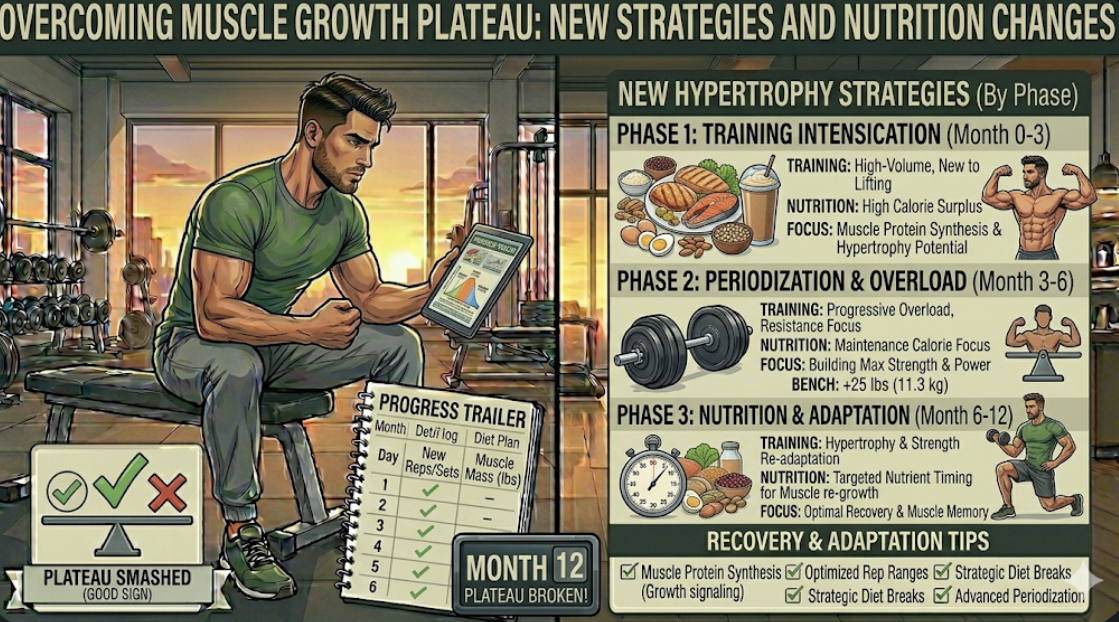
⚡ TL;DR
To break a muscle growth plateau, implement these proven strategies: increase training intensity (add weight or reps weekly), change your workout routine (new exercises or split), improve nutrition (more calories, protein 1.6–2.2 g/kg), focus on progressive overload, and optimize recovery (7–9 hours sleep, deload weeks). Also vary rep ranges, address weak points, and ensure adequate volume (10–20 sets per muscle group weekly). Most plateaus break within 2–4 weeks of consistent adjustments .
1. The Plateau Frustration: Why Your Gains Have Stopped
You've been consistent. You train hard. You eat well. Yet for weeks—maybe months—nothing changes. No new muscle. No strength increases. This frustrating experience—a muscle growth plateau—hits every lifter eventually. Understanding why muscle growth stopped is the first step to breaking through. This guide provides science-backed muscle plateau solutions to restart progress and increase muscle growth fast.
How do I break a muscle growth plateau?
How do I break a muscle growth plateau? Increase training intensity (add weight or reps), change workout routine (new exercises or split), improve nutrition (more calories/protein 1.6-2.2 g/kg), focus on progressive overload, and get better sleep and recovery (7-9 hours). Also consider deload weeks, varying rep ranges, and addressing weak points.
2. The Science: Why Plateaus Happen
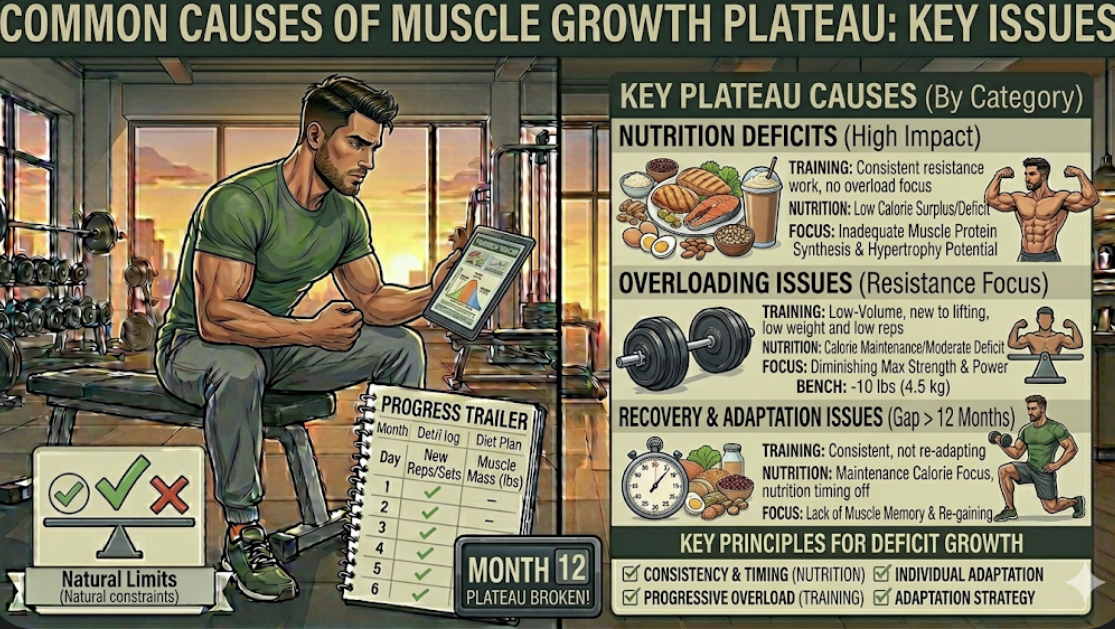
Muscle growth plateaus occur when your body adapts to training stress and no longer needs to adapt further. Key reasons:
- No progressive overload: Same weights, reps, sets weekly = no growth stimulus
- Insufficient protein/calories: Without building blocks, muscle can't grow
- Poor recovery: Sleep deprivation, high stress, no deload weeks
- Overtraining: Accumulated fatigue exceeds recovery capacity
- Adaptation: Body has fully adapted to current routine
📊 Plateau Diagnosis Checklist
3. Strategy 1: Increase Training Intensity (Progressive Overload)
The most common progressive overload plateau fix is increasing intensity:
- Add weight: 2.5-5 kg (5-10 lbs) weekly to compound lifts
- Add reps: Increase from 8 → 10 → 12 before adding weight
- Add sets: 3 → 4 → 5 sets per exercise
- Reduce rest: 90 sec → 60 sec → 45 sec between sets
- Improve tempo: 3-5 second lowering phase (increase time under tension)
4. Strategy 2: Change Your Workout Routine
How to overcome plateau gym often requires routine changes:
- New exercises: Swap barbell bench for dumbbell, squat for leg press
- Change split: Full body → Upper/Lower → Push/Pull/Legs
- Vary rep ranges: 8-12 reps (hypertrophy) → 5-8 reps (strength focus)
- Add intensity techniques: Drop sets, supersets, rest-pause
- Address weak points: Add accessory work for lagging muscles
5. Strategy 3: Optimize Nutrition for Growth
Muscle plateau solutions often start in the kitchen:
- Protein: 1.6-2.2 g per kg body weight (128-176g for 80kg person)
- Calories: 250-500 kcal surplus above maintenance
- Carbs: 4-7 g/kg for energy and glycogen replenishment
- Fats: 0.8-1.2 g/kg for hormone production
- Timing: 20-40g protein post-workout within 2 hours
Sample Plateau-Breaking Meal Plan (3,000 kcal, 180g Protein)
- Breakfast: 4 eggs, 1 cup oats, 1 banana, 1 cup milk (650 kcal, 40g protein)
- Lunch: 200g chicken breast, 2 cups rice, 1 cup broccoli, 1 tbsp olive oil (700 kcal, 55g protein)
- Pre-Workout: 1 apple + 2 tbsp peanut butter (250 kcal, 8g protein)
- Post-Workout: 2 scoops whey + 1 banana (350 kcal, 48g protein)
- Dinner: 200g lean beef or salmon, 1.5 cups sweet potato, 1 tbsp olive oil (700 kcal, 45g protein)
- Evening: 1 cup cottage cheese (200 kcal, 25g protein)
- Total: ~2,850 kcal, ~221g protein
Vegan/Vegetarian Plateau-Breaking Plan
- Breakfast: Tofu scramble (200g tofu), 1.5 cups oats, 2 tbsp peanut butter, banana (700 kcal, 40g protein)
- Lunch: 200g tempeh, 1.5 cups quinoa, 1 cup edamame, 1 tbsp olive oil (700 kcal, 48g protein)
- Snack: 1 cup soy yogurt, 1 scoop pea protein, 30g almonds (400 kcal, 32g protein)
- Dinner: 1.5 cups cooked lentils, 2 cups brown rice, 1 tbsp coconut oil, spinach (650 kcal, 28g protein)
- Post-Workout: 1 scoop plant protein, 1 banana (200 kcal, 20g protein)
- Total: ~2,650 kcal, ~168g protein
Gluten-Free Options
- Use certified gluten-free oats
- Choose rice, quinoa, buckwheat
- Verify protein sources are gluten-free certified
6. Strategy 4: Improve Recovery (Deload & Sleep)
Sometimes the gym plateau fix is more rest, not more work:
- Deload week: Every 8-10 weeks, reduce volume by 40-50% for one week
- Sleep: 7-9 hours nightly (sleep deprivation increases cortisol, reduces testosterone)
- Stress management: High cortisol impairs muscle growth
- Active recovery: Walking, stretching, foam rolling on rest days
7. Strategy 5: Increase Training Volume
Research shows 10-20 working sets per muscle group weekly optimizes growth . If you're below this range, add volume:
- Beginners: 8-10 sets per muscle group weekly
- Intermediates: 12-15 sets
- Advanced: 15-20 sets
- Add 1-2 sets per exercise weekly until you reach target volume
8. Strategy 6: Vary Rep Ranges
Sticking to the same rep range leads to adaptation. Periodize:
- Weeks 1-4: Strength focus (3-5 reps, heavy weight)
- Weeks 5-8: Hypertrophy focus (8-12 reps, moderate weight)
- Weeks 9-12: Endurance focus (15-20 reps, lighter weight)
- Repeat or cycle every 4 weeks
9. Sample 4-Week Plateau-Breaking Protocol
- Week 1 (Deload): Reduce weight by 40-50%, focus on form. Sleep 8+ hours.
- Week 2 (Increase intensity): Return to previous weights, add 2.5-5 kg to compound lifts.
- Week 3 (Volume increase): Add 1-2 sets per exercise. Increase protein to 2.2 g/kg.
- Week 4 (Technique focus): Add tempo work (3 sec lowering). Ensure calorie surplus.
10. Frequently Asked Questions
How do I break a muscle growth plateau?
Break a muscle growth plateau by: increasing training intensity (add weight or reps), changing workout routine (new exercises or split), improving nutrition (more calories or protein 1.6-2.2 g/kg), focusing on progressive overload, and getting better sleep and recovery (7-9 hours). Also consider deload weeks, varying rep ranges, and addressing weak points.
Why has my muscle growth stopped?
Muscle growth stops due to: no progressive overload (same weights every week), insufficient protein or calories, poor sleep (less than 7 hours), overtraining (no deload weeks), doing the same exercises for too long, or unrealistic expectations (growth naturally slows as you advance).
How long does a muscle plateau last?
Muscle plateaus can last 2-6 weeks without intervention. With proper adjustments (increasing calories, changing routine, adding volume), you can break through in 2-4 weeks. If plateau persists beyond 8 weeks despite changes, reassess nutrition, sleep, and training variables.
Should I take a break from training during a plateau?
Yes, taking a deload week (reduce volume by 40-50%) or complete rest for 3-7 days can help break plateaus. This allows full recovery, reduces accumulated fatigue, and often leads to strength gains when you return. Overtraining is a common cause of plateaus.
How much protein to break a plateau?
Ensure protein intake at 1.6-2.2 g per kg body weight daily (0.73-1 g per lb). For an 80 kg person, that's 128-176g protein. Spread across 3-5 meals with 20-40g per meal. Also check calorie intake—ensure you're in a slight surplus (250-500 kcal above maintenance) for muscle growth.
How can I increase muscle growth quickly?
Increase muscle growth quickly by: adding 2.5-5 kg to compound lifts weekly, increasing training volume (10-20 sets per muscle group weekly), improving protein timing (20-40g post-workout), sleeping 8+ hours, and using techniques like drop sets or rest-pause sets. Consistency over 4-6 weeks yields visible results.
11. Related Resources
- How to Train for Size Instead of Strength (Hypertrophy Training Guide)
- Best Bulking Routine for Skinny Guys (Fast Muscle Gain Plan)
- Why Beginners Gain Muscle Faster (Newbie Gains Explained)
- How to Stay Lean While Gaining Muscle (Lean Bulking Guide)
- Best Snacks for Bulking and Muscle Growth (High-Protein & High-Calorie)
- How to Increase Appetite for Bulking (Proven Natural Tips)
12. Scientific References
- Schoenfeld, B. J., et al. (2017). Effects of different weekly sets-equated resistance training frequencies on muscular strength, muscle hypertrophy, and body composition. Journal of Strength and Conditioning Research, 31(12), 3271–3278. PubMed
- Morton, R. W., et al. (2018). A systematic review, meta-analysis and meta-regression of the effect of protein supplementation on resistance training-induced gains in muscle mass and strength. British Journal of Sports Medicine, 52(6), 376–384. PubMed
- Fullagar, H. H., et al. (2015). Sleep and athletic performance: the effects of sleep loss on exercise performance, and physiological and cognitive responses to exercise. Sports Medicine, 45(2), 161–186. PubMed
- Helms, E. R., et al. (2014). Evidence-based recommendations for natural bodybuilding contest preparation. Journal of the International Society of Sports Nutrition, 11(1), 20. PubMed
- ACSM. (2021). Nutrition and Athletic Performance. Medicine & Science in Sports & Exercise, 53(3), 600–618. PubMed
Join the conversation