How to Train for Size Instead of Strength (Hypertrophy Training Guide)
How to Train for Size Instead of Strength: Hypertrophy Training Guide (2026)

⚡ TL;DR
To train for size not strength, follow this hypertrophy training guide: use moderate weights with 8–12 reps, increase time under tension (2–3 second eccentrics), focus on muscle contraction, take sets to 1–3 reps from failure, use shorter rest periods (30–90 seconds), and accumulate 10–20 working sets per muscle group weekly. Unlike strength training (heavy loads, long rests), hypertrophy training emphasizes metabolic stress and volume. This muscle size vs strength training distinction is crucial for achieving aesthetic goals .
1. Size vs Strength: Understanding the Difference
You've seen them: the powerlifter who can deadlift 600 lbs but doesn't look "huge," and the bodybuilder who looks massive but might not lift as heavy. This illustrates the fundamental difference between muscle size vs strength training. While they overlap, how to build muscle size requires specific training variables distinct from maximizing strength. This hypertrophy training guide breaks down the science and practical application of train for size not strength.
What is the best way to train for muscle size?
The best way to train for muscle size is to: use moderate weights with 8-12 repetitions, increase time under tension with controlled eccentrics (2-3 seconds), focus on muscle contraction and mind-muscle connection, use shorter rest periods (30-90 seconds), apply progressive overload by adding weight or reps over time, and train each muscle group 2 times per week with 10-20 sets weekly.
📊 Strength Training vs Hypertrophy Training: Key Differences
| Variable | Strength Training | Hypertrophy Training |
|---|---|---|
| Rep Range | 1–5 reps | 6–15 reps (optimal 8–12) |
| Load (% 1RM) | 80–100% | 60–80% |
| Rest Periods | 2–5 minutes | 30–90 seconds |
| Time Under Tension | Short, explosive | Moderate (2–3 sec eccentrics) |
| Volume (sets/week) | 4–8 per muscle group | 10–20 per muscle group |
| Primary Driver | Neural adaptations | Metabolic stress, mechanical tension |

2. The Science of Hypertrophy: How Muscles Grow
Muscle growth (hypertrophy) occurs through three primary mechanisms: mechanical tension, metabolic stress, and muscle damage. Best reps for muscle growth target these mechanisms effectively .
2.1. Mechanical Tension
Generated by lifting moderate to heavy loads (60–80% 1RM) with controlled tempo. This activates mTOR signaling, the primary pathway for muscle protein synthesis .
2.2. Metabolic Stress
The "pump" sensation from blood pooling and metabolite accumulation (lactate, hydrogen ions) triggers anabolic signaling and cell swelling, promoting growth .
2.3. Muscle Damage
Micro-tears from eccentric loading stimulate satellite cell activation and remodeling. However, excessive damage impairs recovery—balance is key .
3. Optimal Rep Ranges for Muscle Growth
Research shows best reps for muscle growth span 5–30 reps, as long as sets are taken close to failure. However, the 8–12 rep range is most efficient for balancing:
- Muscle fiber recruitment: Activates both Type I and Type II fibers
- Metabolic stress: Sufficient time under tension to accumulate metabolites
- Joint safety: Less joint stress than very heavy loads
- Practicality: Manageable for consistent training
4. Volume: How Many Sets for Size?
Volume is the primary driver of hypertrophy. Research indicates 10–20 working sets per muscle group per week is the sweet spot . Beginners start at 8–10 sets; advanced lifters may require 15–20 sets. Volume should be spread across 2–3 sessions per week for optimal recovery and stimulation .
📊 Weekly Volume Guidelines by Experience
| Experience Level | Sets per Muscle Group/Week | Frequency |
|---|---|---|
| Beginner (0-12 months) | 8–10 sets | 2x/week |
| Intermediate (1-3 years) | 12–15 sets | 2x/week |
| Advanced (3+ years) | 15–20 sets | 2-3x/week |
5. Rest Periods: Shorter for Size
For hypertrophy training, rest periods of 30–90 seconds are optimal. Shorter rest increases metabolic stress, which promotes anabolic signaling. Longer rest (2–3 minutes) allows greater force output but reduces metabolic stress .
6. Time Under Tension: Control the Movement
Controlling the eccentric (lowering) phase for 2–3 seconds increases time under tension and muscle damage, both hypertrophy drivers. Avoid bouncing or using momentum. Focus on a 2-1-2 tempo: 2 seconds lowering, 1 second pause, 2 seconds lifting .
7. Sample Hypertrophy Workout Plan (4-Day Upper/Lower Split)
Upper Body A (Monday)
- Incline Dumbbell Press: 3×10–12
- Lat Pulldown: 3×10–12
- Seated Dumbbell Shoulder Press: 3×10–12
- Seated Cable Row: 3×10–12
- Lateral Raises: 3×12–15
- Tricep Pushdown: 3×12–15
- Barbell Curl: 3×12–15
Lower Body A (Tuesday)
- Barbell Squat: 3×8–10
- Romanian Deadlift: 3×10–12
- Leg Press: 3×12–15
- Leg Curl: 3×12–15
- Calf Raises: 3×15–20
- Hanging Knee Raises: 3×12–15
Upper Body B (Thursday)
- Flat Dumbbell Press: 3×10–12
- Pull-ups: 3×8–12
- Machine Chest Press: 3×10–12
- Machine Row: 3×10–12
- Rear Delt Fly: 3×12–15
- Skull Crushers: 3×12–15
- Incline Dumbbell Curl: 3×12–15
Lower Body B (Friday)
- Deadlift (conventional or sumo): 3×5–8
- Hack Squat or Leg Press: 3×12–15
- Walking Lunges: 3×12/leg
- Leg Extension: 3×12–15
- Seated Calf Raises: 3×15–20
- Cable Crunches: 3×15–20
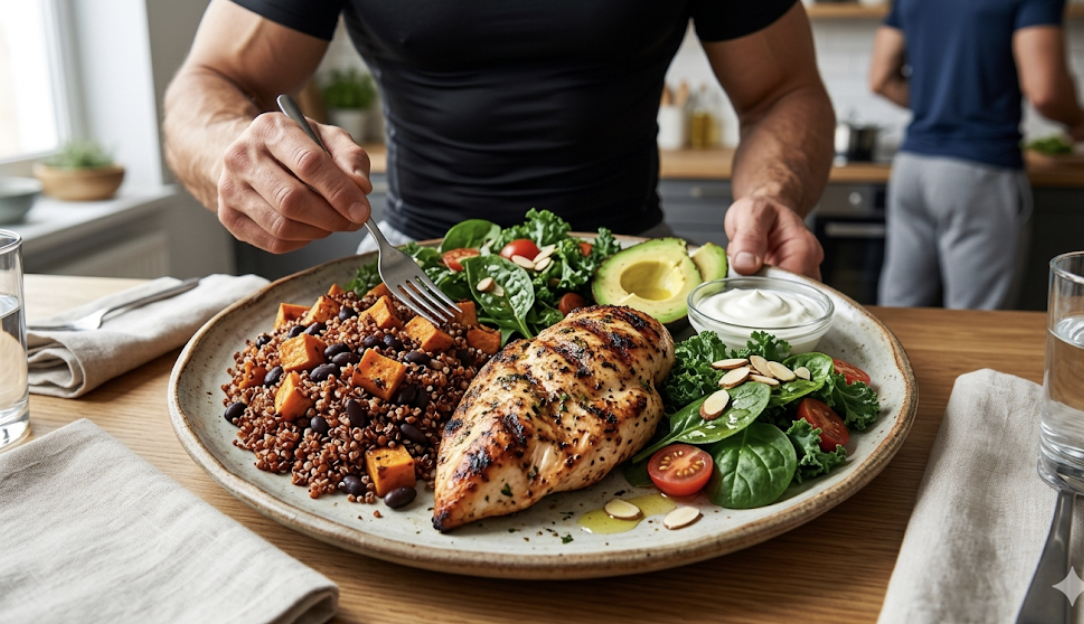
8. Nutrition for Muscle Size
Training stimulus is only half the equation. To maximize how to build muscle size, nutrition must support hypertrophy.
8.1. Caloric Surplus
Maintain a 250–500 kcal surplus to support muscle synthesis. For an 80 kg individual: 2,800–3,200 kcal/day depending on activity .
8.2. Protein Intake
Consume 1.6–2.2 g protein per kg body weight daily. Spread across 3–5 meals with 20–40 g per meal .
8.3. Sample Hypertrophy Meal Plan (3,000 kcal, 180g Protein)
- Breakfast: 4 eggs, 1 cup oats, 1 banana, 1 cup milk (650 kcal, 42g protein)
- Lunch: 200g chicken breast, 2 cups rice, 1 tbsp olive oil, 1 cup broccoli (700 kcal, 52g protein)
- Pre-Workout: 1 cup Greek yogurt, 1 apple, 1 tbsp honey (300 kcal, 22g protein)
- Post-Workout: 2 scoops whey, 1 banana, 1 cup oats (550 kcal, 48g protein)
- Dinner: 200g lean beef or salmon, 1.5 cups sweet potato, 1 tbsp olive oil, asparagus (700 kcal, 45g protein)
Vegan/Vegetarian Hypertrophy Plan
- Replace chicken with 200g tempeh or seitan
- Replace whey with pea/rice protein blend
- Replace eggs with tofu scramble (200g firm tofu)
- Include edamame, lentils, quinoa for protein
Gluten-Free Options
- Use certified gluten-free oats
- Choose rice, quinoa, buckwheat
- Verify protein powders are gluten-free certified
9. Common Mistakes When Training for Size
- Lifting too heavy with poor form: Sacrifices muscle activation and increases injury risk
- Insufficient volume: Less than 10 sets per muscle group weekly limits growth
- Too much volume: Exceeding 20-25 sets can impair recovery and cause overtraining
- Rushing reps: Using momentum reduces time under tension
- Resting too long: >2 minutes reduces metabolic stress
- Not training close to failure: Leaving 5+ reps in reserve provides insufficient stimulus
- Neglecting progressive overload: Same weights/reps weekly leads to plateaus
10. Frequently Asked Questions
What is the best way to train for muscle size?
The best way to train for muscle size is to: use moderate weights with 8-12 repetitions, increase time under tension with controlled eccentrics (2-3 seconds), focus on muscle contraction and mind-muscle connection, use shorter rest periods (30-90 seconds), apply progressive overload by adding weight or reps over time, and train each muscle group 2 times per week with 10-20 sets weekly.
What rep range is best for muscle growth?
The optimal rep range for muscle hypertrophy is 8-12 repetitions per set. However, muscle growth can occur across a wide range (5-30 reps) as long as sets are taken close to failure (within 1-3 reps). The 8-12 range balances mechanical tension, metabolic stress, and muscle damage effectively.
What is the difference between strength training and hypertrophy training?
Strength training focuses on heavy loads (1-5 reps), low volume, longer rest periods (2-5 minutes), and neural adaptations. Hypertrophy training uses moderate loads (6-15 reps), higher volume, shorter rest periods (30-90 seconds), and emphasizes metabolic stress and time under tension.
How many sets per muscle group for muscle growth?
Research shows 10-20 working sets per muscle group per week is optimal for hypertrophy. Beginners start at 8-10 sets, advanced lifters may need 15-20 sets. Volume should be spread across 2-3 training sessions per week.
Should I lift heavy or light for muscle growth?
Both heavy and light loads can build muscle if taken close to failure. However, moderate loads (60-80% 1RM, 8-15 reps) are most efficient, balancing muscle fiber recruitment, metabolic stress, and joint safety. Very light loads (>20 reps) require more sets to achieve similar growth.
How long should rest between sets for hypertrophy?
For hypertrophy training, rest periods of 30-90 seconds are optimal. Shorter rest increases metabolic stress, which promotes muscle growth. Longer rest (2-3 minutes) is better for strength training but can reduce metabolic stress for size gains.
11. Related Resources
- How to Fix a Failed Bulking Phase (Step-by-Step Recovery Guide)
- Signs Your Bulk Is Working (Or Failing): How to Track Progress Correctly
- How Many Calories Do You Need to Build Muscle? (Complete Guide)
- Why Your Muscles Are Not Growing (Even If You Train Hard)
- Best Meal Timing for Muscle Growth Beginners (When to Eat for Results)
- Can You Build Muscle Without Supplements? (Natural Muscle Growth Guide)
- How to Know If You’re Gaining Muscle or Fat (Simple Tracking Guide)
12. Scientific References
- Schoenfeld, B. J. (2010). The mechanisms of muscle hypertrophy and their application to resistance training. Journal of Strength and Conditioning Research, 24(10), 2857–2872. PubMed
- Schoenfeld, B. J., et al. (2017). Effects of different weekly sets-equated resistance training frequencies on muscular strength, muscle hypertrophy, and body composition. Journal of Strength and Conditioning Research, 31(12), 3271–3278. PubMed
- Schoenfeld, B. J., & Grgic, J. (2020). Effects of range of motion on muscle development during resistance training interventions: A systematic review. SAGE Open Medicine, 8. PubMed
- Morton, R. W., et al. (2018). A systematic review, meta-analysis and meta-regression of the effect of protein supplementation on resistance training-induced gains in muscle mass and strength. British Journal of Sports Medicine, 52(6), 376–384. PubMed
- Helms, E. R., et al. (2014). Evidence-based recommendations for natural bodybuilding contest preparation. Journal of the International Society of Sports Nutrition, 11(1), 20. PubMed
- Kerksick, C. M., et al. (2018). ISSN exercise & sports nutrition review update. Journal of the International Society of Sports Nutrition, 15(1), 38. PubMed
- ACSM. (2021). Nutrition and Athletic Performance. Medicine & Science in Sports & Exercise, 53(3), 600–618. PubMed
Join the conversation