How to Eat Clean Without Feeling Hungry (Simple & Sustainable Guide)
How to Eat Clean Without Feeling Hungry: Simple & Sustainable Guide (2026)

⚡ TL;DR
You can eat clean without feeling hungry by focusing on satiety, not just calories. This clean eating guide provides clean eating tips for fat loss that actually work. Learn how to stay full on clean diet using protein, fiber, and volume. These strategies for healthy eating without hunger make appetite control clean eating simple and sustainable. Follow this clean diet plan for beginners and create a sustainable healthy diet you can stick to for life. No more suffering – eat clean and feel satisfied.
1. Why "Eating Clean" Often Leads to Hunger
Many people fail at clean eating because they associate it with deprivation – tiny portions of bland food, constant hunger, and relentless cravings. But clean eating shouldn't mean suffering. The problem isn't clean eating itself; it's the approach.
This guide teaches you how to eat clean without feeling hungry. You'll learn clean eating tips for fat loss that prioritize satiety. Discover how to stay full on clean diet using science-based strategies. These appetite control clean eating methods will transform your relationship with food.
How can I eat clean without feeling hungry?
How can I eat clean without feeling hungry? Focus on high protein foods (eggs, chicken, Greek yogurt, fish), eat more fiber (vegetables, oats, beans, lentils), choose whole foods over processed (they digest slower), drink enough water (2-3 liters daily, especially before meals), and eat balanced meals (protein + fiber + healthy fats at every meal).
2. What Is Clean Eating? (A Simple Definition)
Clean eating means choosing whole, minimally processed foods and avoiding or limiting processed foods with added sugars, artificial ingredients, and unhealthy fats.
- Eat more: Lean proteins, vegetables, fruits, whole grains, nuts, seeds, healthy fats, water
- Eat less: Added sugars, refined grains (white bread, white rice, pasta), processed meats, artificial sweeteners, trans fats, excess sodium
Clean eating isn't about perfection or elimination – it's about making better choices most of the time. A clean diet plan for beginners should be sustainable, not extreme.
3. The #1 Secret: Protein at Every Meal
Protein is the most satiating macronutrient. It reduces ghrelin (hunger hormone) by 50-60% and increases satiety hormones (CCK, PYY, GLP-1) (Leidy et al., 2015).
- Target: 25-40g protein per meal, 4-5 meals daily
- Best clean protein sources: Eggs, Greek yogurt, cottage cheese, chicken breast, turkey, fish, lean beef, tofu, tempeh, lentils, beans, whey protein
- Breakfast example: 4 eggs + 1/2 cup oats = 35g protein, keeps you full until lunch
- Lunch example: 150g chicken breast + vegetables = 45g protein
- Dinner example: 150g salmon + lentils = 40g protein
For more high-protein options, see best low-calorie high-protein foods.
4. Fiber: The Appetite Control Powerhouse
Fiber slows digestion, increases stomach stretch, and feeds gut bacteria that produce satiety signals (Slavin, 2005).
- Target: 25-35g fiber daily (most people eat only 10-15g)
- Best clean fiber sources: Oats (4g per 1/2 cup), beans/lentils (8-15g per cup), berries (8g per cup), broccoli (2-3g per cup), chia seeds (10g per 2 tbsp), flax seeds, apples, pears
- Tip: Add vegetables to every meal – they add volume with minimal calories
- Example: Add 2 cups of spinach to your eggs (+2g fiber, 14 calories)
5. Volume Eating: Fill Your Stomach with Fewer Calories
Healthy eating without hunger relies heavily on volume – foods that take up space in your stomach without many calories.
- Best volume foods: Non-starchy vegetables (broccoli, cauliflower, zucchini, spinach, lettuce, peppers, cucumbers), berries, broth-based soups, watermelon
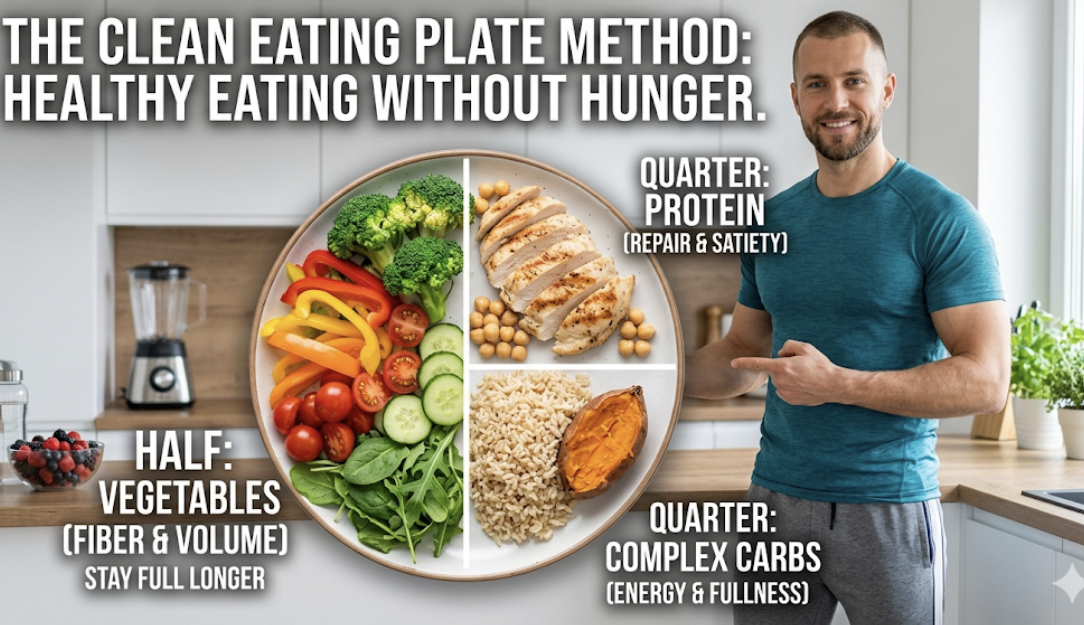
- Strategy: Fill half your plate with vegetables at every meal
- Example: 2 cups of broccoli = 60 calories, 6g fiber. Compare to 1/2 cup of rice = 100 calories, 0.5g fiber
- Tip: Start meals with a salad or broth-based soup to reduce hunger before the main course
6. Clean Carbs: Choose Wisely for Steady Energy
You don't need to eliminate carbs to eat clean without feeling hungry. Choose complex, high-fiber carbs that digest slowly.
- Best clean carbs: Oats, quinoa, brown rice, sweet potatoes, beans, lentils, whole grain bread, potatoes (with skin), berries, apples
- Avoid or limit: White bread, white rice, sugary cereals, pastries, candy, soda, fruit juice
- Portion guide: Fill 1/4 of your plate with clean carbs (about 1/2-1 cup cooked)
7. Sample Clean Eating Meal Plan (1,800 kcal, Satisfying & Sustainable)
Breakfast (7:00 AM) – 450 kcal, 35g protein, 10g fiber
- 4 eggs (280 kcal, 24g protein)
- 1/2 cup dry oats cooked with water (150 kcal, 5g protein, 4g fiber)
- 1 cup spinach (7 kcal, 1g protein, 1g fiber)
- 1/2 cup berries (40 kcal, 1g protein, 4g fiber)
Morning Snack (10:00 AM) – 200 kcal, 20g protein, 2g fiber
- 1 cup Greek yogurt (150 kcal, 20g protein)
- 1 tbsp chia seeds (60 kcal, 2g protein, 4g fiber)
Lunch (1:00 PM) – 450 kcal, 40g protein, 12g fiber
- 150g grilled chicken breast (250 kcal, 45g protein)
- 2 cups mixed greens + cucumber + tomatoes (50 kcal, 2g protein, 3g fiber)
- 1/2 cup quinoa (110 kcal, 4g protein, 3g fiber)
- 1 tbsp olive oil + lemon juice (120 kcal, 0g protein)
Afternoon Snack (4:00 PM) – 150 kcal, 15g protein, 3g fiber
- 1 cup cottage cheese (1% fat) (150 kcal, 25g protein)
- 1/2 cup cucumber slices (10 kcal, 0g protein, 0.5g fiber)
Dinner (7:00 PM) – 500 kcal, 40g protein, 15g fiber
- 150g salmon or white fish (350 kcal, 35g protein)
- 2 cups roasted broccoli + cauliflower (100 kcal, 5g protein, 8g fiber)
- 1 medium baked sweet potato (150 kcal, 3g protein, 4g fiber)
Evening Snack (9:30 PM – optional) – 100 kcal, 10g protein
- 1 scoop whey protein + water (120 kcal, 25g protein)
Daily Total: ~1,850 kcal, ~160g protein, ~45g fiber
For more meal ideas, check out full day of eating for fat loss and foods that keep you full longer.
8. Hydration: The Forgotten Hunger Controller
Thirst is often mistaken for hunger. Drinking water before meals reduces calorie intake by 13-15% (Dennis et al., 2010).
- Target: 2-3 liters (8-12 cups) of water daily
- Best timing: Drink 16-20 oz (500-600 ml) of water 30 minutes before meals
- Other options: Herbal tea, sparkling water, black coffee (caffeine may suppress appetite)
- Avoid: Sugary drinks, fruit juice, sweetened coffee (add calories without satiety)
9. Clean Eating for Special Diets
Vegan Clean Eating (Without Hunger)
- Protein sources: Tofu, tempeh, edamame, lentils, chickpeas, black beans, pea protein, seitan
- Fiber sources: Beans, lentils, oats, chia seeds, flax seeds, berries, broccoli
- Sample meal: Tofu scramble (1.5 cups) + spinach + 1/2 cup oats + berries (500 kcal, 35g protein, 20g fiber)
- Tip: Combine beans + rice for complete protein
Vegetarian Clean Eating (Including Eggs/Dairy)
- Protein sources: Eggs, Greek yogurt, cottage cheese, whey protein, tofu, tempeh, lentils, beans
- Sample meal: 4 eggs + 1 cup Greek yogurt + 1/2 cup oats + spinach (600 kcal, 50g protein, 12g fiber)
- Tip: Cottage cheese and Greek yogurt are excellent for satiety (high casein protein)
Gluten-Free Clean Eating
- Carb sources: Rice, quinoa, gluten-free oats, buckwheat, sweet potatoes, potatoes, corn tortillas
- Avoid: Wheat bread, pasta, cereals, crackers, seitan (wheat gluten)
- Sample meal: Chicken + quinoa + roasted vegetables (500 kcal, 40g protein, 10g fiber)
- Tip: Many gluten-free processed foods are high in sugar and low in nutrients – stick to whole foods
10. Common Clean Eating Mistakes That Cause Hunger
- Not eating enough protein: Low-protein meals digest quickly, leaving you hungry. Aim for 25-35g per meal.
- Avoiding all fats: Healthy fats increase satiety. Add avocado, olive oil, nuts, or seeds to meals.
- Cutting calories too aggressively: Extreme deficits (<1,500 kcal for men, <1,200 for women) increase hunger hormones. Aim for moderate deficit (300-500 calories).
- Not eating enough volume: Small portions of calorie-dense clean foods (nuts, seeds, oils) don't fill your stomach. Add vegetables to every meal.
- Skipping meals: Leads to extreme hunger and overeating later. Eat regular meals every 3-4 hours.
- Drinking calories: Smoothies, juice, and sweetened coffee don't trigger satiety like solid food. Eat your calories, don't drink them.
11. How to Transition to Clean Eating Without Hunger
- Week 1: Replace one processed meal per day with a clean meal (e.g., breakfast: sugary cereal → eggs + oats).
- Week 2: Add vegetables to lunch and dinner (fill half your plate). Drink water before meals.
- Week 3: Replace refined carbs with clean carbs (white rice → brown rice or quinoa; white bread → whole grain bread).
- Week 4: Eliminate sugary drinks (soda, juice, sweetened coffee). Focus on protein at every meal.
- Week 5+: Refine based on hunger levels. If hungry, add more protein or vegetables. If not losing weight, slightly reduce portions.
12. Frequently Asked Questions
How can I eat clean without feeling hungry?
Focus on high protein foods (eggs, chicken, Greek yogurt, fish), eat more fiber (vegetables, oats, beans, lentils), choose whole foods over processed (they digest slower), drink enough water (2-3 liters daily, especially before meals), and eat balanced meals (protein + fiber + healthy fats at every meal).
What is clean eating?
Clean eating means choosing whole, minimally processed foods and avoiding or limiting processed foods with added sugars, artificial ingredients, and unhealthy fats. It focuses on lean proteins, vegetables, fruits, whole grains, healthy fats, and water. Clean eating supports weight loss, better energy, and improved health without extreme restriction.
How do I start a clean diet without getting hungry?
Start gradually: replace one processed meal per day with a clean meal (e.g., swap sugary cereal for eggs + oats). Add vegetables to every meal for volume. Prioritize protein at every meal (25-35g). Drink water before meals. Don't cut calories too aggressively – aim for a moderate deficit of 300-500 calories.
What are the best clean foods for staying full?
Best clean foods for satiety: eggs, Greek yogurt, cottage cheese, chicken breast, fish, beans, lentils, oats, quinoa, potatoes, sweet potatoes, broccoli, spinach, berries, apples, nuts (small portions), and seeds (chia, flax). These foods are nutrient-dense and high in protein or fiber.
Can I eat carbs on a clean diet and still lose weight?
Yes, you can eat carbs on a clean diet and still lose weight. Choose complex, high-fiber carbs like oats, quinoa, brown rice, sweet potatoes, beans, and lentils. These digest slowly, stabilize blood sugar, and keep you full. Avoid refined carbs (white bread, sugary cereals, pastries). Portion control still matters – aim for 1/4 of your plate.
Is clean eating expensive?
Clean eating doesn't have to be expensive. Budget-friendly clean foods: eggs, oats, potatoes, frozen vegetables, canned beans and lentils, cottage cheese, Greek yogurt (buy in bulk), chicken thighs (cheaper than breast), canned tuna, seasonal fruits, and brown rice. Avoid expensive "health" products and pre-packaged clean meals – whole foods are naturally cheaper.
13. Related Resources
- How to Read Food Labels for Fitness Goals (Beginner-Friendly Guide)
- Healthy Grocery List for Fitness Beginners (Complete Shopping Guide)
- Best Post-Workout Meals for Muscle Recovery (Fast Recovery Foods Guide)
- How Much Water Should You Drink for Fitness? (Daily Hydration Guide)
- What to Drink During Workout for Better Performance (Hydration Guide)
- High Protein Breakfast Ideas for Muscle Gain (Quick & Healthy Meals)
14. Scientific References
- Leidy, H. J., et al. (2015). The role of protein in weight loss and maintenance. American Journal of Clinical Nutrition, 101(6), 1320S-1329S. PubMed
- Slavin, J. L. (2005). Dietary fiber and body weight. Nutrition, 21(3), 411-418. PubMed
- Dennis, E. A., et al. (2010). Water consumption increases weight loss during a hypocaloric diet intervention in middle-aged and older adults. Obesity, 18(2), 300-307. PubMed
- Morton, R. W., et al. (2018). A systematic review, meta-analysis and meta-regression of the effect of protein supplementation on resistance training-induced gains in muscle mass and strength. British Journal of Sports Medicine, 52(6), 376-384. PubMed
- Holt, S. H., et al. (1995). A satiety index of common foods. European Journal of Clinical Nutrition, 49(9), 675-690. PubMed
- Clark, M. J., & Slavin, J. L. (2013). The effect of fiber on satiety and food intake: a systematic review. Journal of the American College of Nutrition, 32(3), 200-211. PubMed
- Helms, E. R., et al. (2014). Evidence-based recommendations for natural bodybuilding contest preparation. Journal of the International Society of Sports Nutrition, 11(1), 20. PubMed
Join the conversation