How to Reduce Hunger While Dieting (Proven Tips to Stay Full Longer)
How to Reduce Hunger While Dieting: Proven Tips to Stay Full Longer (2026)

⚡ TL;DR
Learning how to reduce hunger while dieting is the key to sustainable weight loss. This guide provides proven strategies for how to stay full on a diet, control hunger weight loss, and achieve dieting without hunger. Discover appetite control tips and fat loss hunger management strategies that actually work. Learn how to stop feeling hungry while maintaining a calorie deficit. Master these techniques and lose weight without suffering.
1. Why Hunger Is the #1 Diet Killer
Hunger is the primary reason people abandon their diets. When you're constantly hungry, willpower eventually fails. But hunger isn't just about willpower – it's about biology. Ghrelin (the hunger hormone) increases during calorie restriction, making you feel hungry even when you don't need calories (Cummings et al., 2002).
This guide teaches you how to reduce hunger while dieting through evidence-based strategies. Learn how to stay full on a diet without suffering. These appetite control tips will help you control hunger weight loss effectively.
How can I reduce hunger while dieting?
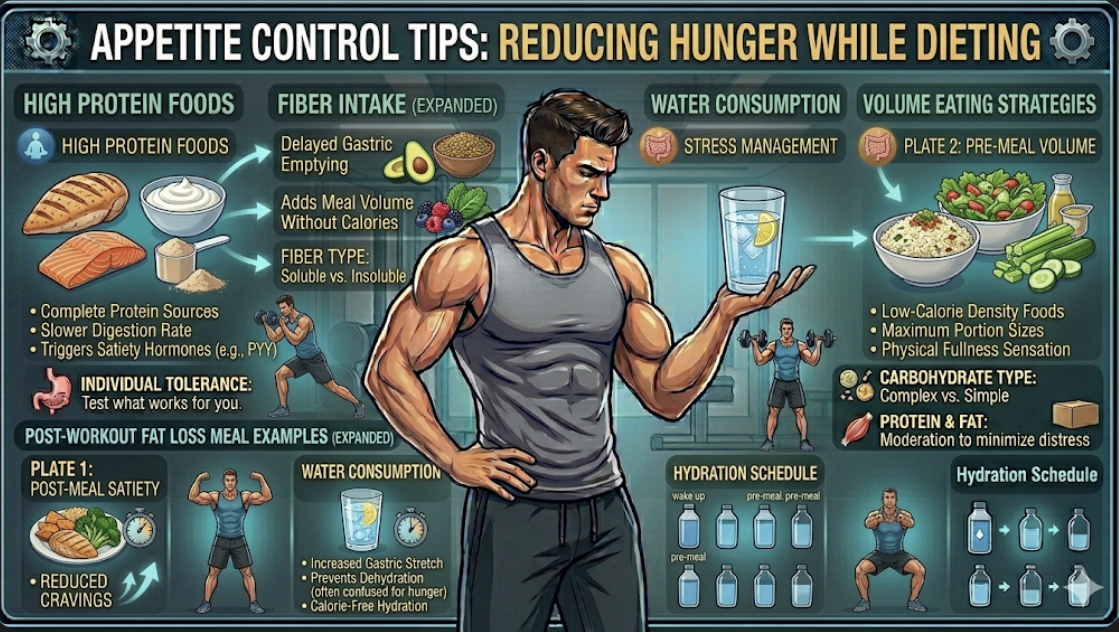
How can I reduce hunger while dieting? Eat high protein foods (increases satiety by 30-50%), increase fiber intake (vegetables, legumes, whole grains), drink more water before meals (reduces calorie intake by 13%), eat low calorie high volume foods (leafy greens, berries), and avoid sugary foods (blood sugar crashes trigger hunger).
2. The Science of Hunger: Ghrelin, Leptin, and Satiety
Understanding fat loss hunger management requires knowing the hormones involved:
- Ghrelin (the hunger hormone): Increases before meals, decreases after eating. Calorie restriction elevates ghrelin, making you hungrier (Cummings et al., 2002).
- Leptin (the satiety hormone): Signals fullness to the brain. Low leptin levels (from fat loss) increase hunger.
- CCK and PYY: Gut hormones released after eating that signal fullness. Protein and fiber trigger these hormones strongly.
The key to how to stop feeling hungry is choosing foods that maximize satiety hormone release while minimizing calorie intake. This is called the satiety index – some foods keep you full 3x longer than others (Holt et al., 1995).
📊 Satiety Index: How Long Foods Keep You Full
3. Protein: The Most Satiating Macronutrient
Protein is the most effective nutrient for controlling hunger weight loss. Research shows that increasing protein intake from 15% to 30% of calories reduces daily calorie intake by 441 calories (Leidy et al., 2015).
- Target: 1.6-2.2 g protein per kg body weight daily (30-35% of calories)
- Per meal: 25-40g protein per meal for optimal satiety
- Best sources: Eggs, Greek yogurt, cottage cheese, chicken, fish, whey protein, lean beef
- Plant-based: Tofu, tempeh, lentils, chickpeas, edamame, seitan
Sample high-protein meal for satiety: 4 eggs + 1 cup spinach + 1 slice whole grain toast (400 kcal, 30g protein). This meal keeps you full for 4-5 hours.
4. Fiber and Volume Eating: Fill Your Stomach with Fewer Calories
How to stay full on a diet while eating fewer calories? Volume eating – filling your stomach with low-calorie, high-fiber foods.
- Fiber slows digestion: Soluble fiber forms gel in stomach, delaying gastric emptying (Slavin, 2005).
- Water content increases volume: Foods with high water content (vegetables, fruits, soups) fill your stomach with fewer calories.
- Target: 25-35g fiber daily
Best High-Volume, Low-Calorie Foods
- Leafy greens (spinach, kale, lettuce): 20-30 calories per cup
- Cruciferous vegetables (broccoli, cauliflower, cabbage): 30-50 calories per cup
- Zucchini, cucumber, celery: 15-20 calories per cup
- Berries (strawberries, blueberries): 50-80 calories per cup
- Broth-based soups: 50-100 calories per cup
5. Hydration: Water as an Appetite Suppressant
Drinking water before meals reduces hunger and calorie intake. Studies show drinking 16-20 oz (500-600 ml) of water 30 minutes before a meal reduces calorie intake by 13-15% (Dennis et al., 2010).
- How it works: Water activates stomach stretch receptors, signaling fullness to the brain.
- Target: 2-3 liters (8-12 cups) of water daily
- Best timing: Drink a large glass of water 30 minutes before each meal
- Other options: Herbal tea, sparkling water, black coffee (caffeine may suppress appetite temporarily)
6. Meal Timing and Frequency for Hunger Control
Dieting without hunger requires strategic meal timing:
- 3-4 meals daily: Research shows no significant difference in hunger between 3 vs 6 meals, but eating protein at each meal (25-40g) is critical.
- Eat every 3-4 hours: Prevents extreme hunger that leads to overeating.
- Front-load protein at breakfast: High-protein breakfast (30-40g) reduces hunger throughout the day (Leidy et al., 2015).
- Avoid late-night eating: Late-night calories often come from less healthy choices. Set a cutoff 2-3 hours before bed.
7. Sample High-Satiety Meal Plan (1,600 kcal)
Breakfast (7:00 AM) – 400 kcal, 35g protein
- 4 eggs (280 kcal, 24g protein)
- 1 cup spinach (7 kcal, 1g protein)
- 1 slice whole grain toast (80 kcal, 4g protein)
- 1/2 cup berries (40 kcal, 1g protein)
Lunch (12:00 PM) – 400 kcal, 40g protein
- 150g grilled chicken breast (250 kcal, 45g protein)
- 2 cups mixed greens + cucumber + tomatoes (50 kcal, 2g protein)
- 1/2 cup quinoa (110 kcal, 4g protein)
- Lemon juice + herbs (10 kcal)
Afternoon Snack (3:30 PM) – 200 kcal, 20g protein
- 1 cup Greek yogurt (150 kcal, 20g protein)
- 1/2 cup strawberries (25 kcal, 0g protein)
Dinner (7:00 PM) – 500 kcal, 45g protein
- 150g salmon (350 kcal, 35g protein)
- 2 cups roasted broccoli (100 kcal, 5g protein)
- 1/2 cup brown rice (110 kcal, 3g protein)
- 1 tbsp olive oil (120 kcal, 0g protein) – optional, adjust for calories
Evening Snack (9:30 PM – optional) – 100 kcal, 15g protein
- 1 scoop whey protein + water (120 kcal, 24g protein)
Daily Total: ~1,600 kcal, ~155g protein, ~30g fiber
For more meal ideas, check out full day of eating for fat loss.
8. Foods to Avoid That Trigger Hunger
- Refined sugars and simple carbs: White bread, candy, soda, pastries – cause blood sugar spikes followed by crashes, triggering hunger.
- Highly processed foods: Low in fiber and protein, high in calories – poor satiety per calorie.
- Liquid calories: Soda, juice, sweet coffee drinks – don't trigger satiety signals like solid food.
- Artificial sweeteners: Some research suggests they may increase hunger by confusing the brain's sugar response (although evidence is mixed).
9. Sleep and Stress: The Hidden Hunger Drivers
Poor sleep and high stress increase hunger through hormonal changes:
- Sleep deprivation: Increases ghrelin (hunger) by 15-20% and decreases leptin (satiety) by 15-20% (Spiegel et al., 2004).
- High cortisol (stress): Increases appetite, especially for high-sugar, high-fat foods.
- Target: 7-9 hours of sleep nightly. Practice stress management (meditation, walking, deep breathing).
10. Special Diets: Vegan, Vegetarian, Gluten-Free Hunger Control
Vegan High-Satiety Meals
- Breakfast: Tofu scramble (1.5 cups) + 1 cup spinach + 1/2 cup oats (450 kcal, 35g protein, 15g fiber)
- Lunch: 150g tempeh + 2 cups quinoa + 2 cups broccoli + 1 tbsp olive oil (550 kcal, 40g protein, 20g fiber)
- Snack: 1 cup edamame (200 kcal, 18g protein, 8g fiber)
- Dinner: 250g lentils + 2 cups brown rice + 2 cups roasted vegetables (600 kcal, 35g protein, 25g fiber)
Vegetarian High-Satiety Meals (including eggs/dairy)
- Breakfast: 4 eggs + 1 cup cottage cheese + 1 cup spinach + 1 slice toast (500 kcal, 45g protein, 8g fiber)
- Lunch: 1.5 cups Greek yogurt + 1 cup berries + 1/4 cup walnuts (450 kcal, 35g protein, 10g fiber)
- Dinner: 200g paneer + 2 cups quinoa + 2 cups mixed vegetables (550 kcal, 40g protein, 15g fiber)
Gluten-Free High-Satiety Meals
- Carb sources: Quinoa, brown rice, sweet potatoes, gluten-free oats, buckwheat
- Sample meal: 150g chicken + 1.5 cups quinoa + 2 cups broccoli (500 kcal, 45g protein, 12g fiber)
- Breakfast: 4 eggs + 1 cup gluten-free oats + 1 cup berries (500 kcal, 30g protein, 12g fiber)
11. Common Hunger Management Mistakes
- Skipping meals: Leads to extreme hunger and overeating later. Eat regularly.
- Not enough protein: Low-protein diets leave you hungry. Prioritize protein at every meal.
- Avoiding all fats: Healthy fats increase satiety. Add small amounts of avocado, nuts, or olive oil.
- Crash dieting: Very low-calorie diets (<1,200 kcal) are unsustainable and increase hunger hormones dramatically.
- Eating too fast: Takes 20 minutes for fullness signals to reach brain. Slow down, chew thoroughly.
12. Frequently Asked Questions
How can I reduce hunger while dieting?
Eat high protein foods (increases satiety by 30-50%), increase fiber intake (vegetables, legumes, whole grains), drink more water before meals (reduces calorie intake by 13%), eat low calorie high volume foods (leafy greens, berries), and avoid sugary foods (blood sugar crashes trigger hunger).
What foods keep you full the longest?
Protein-rich foods (eggs, Greek yogurt, chicken, fish), high-fiber foods (beans, lentils, oats, berries, broccoli), and high-volume low-calorie foods (leafy greens, zucchini, cauliflower). These foods trigger satiety hormones (leptin, CCK, PYY) and delay gastric emptying, keeping you full for 3-5 hours.
How can I stop feeling hungry on a calorie deficit?
Stop feeling hungry on a deficit by: prioritizing protein (25-30g per meal), eating high-volume vegetables with every meal (fills stomach with few calories), spacing meals every 3-4 hours, drinking water before meals, getting adequate sleep (7-9 hours), and managing stress (cortisol increases appetite).
Does drinking water reduce hunger?
Yes, drinking water before meals reduces hunger and calorie intake. Studies show drinking 16-20 oz (500-600 ml) of water 30 minutes before a meal reduces calorie intake by 13-15%. Water activates stomach stretch receptors, signaling fullness to the brain. Aim for 2-3 liters daily, especially before meals.
How long does it take for hunger to go away on a diet?
Most people adapt to reduced calorie intake within 2-4 weeks. Ghrelin (hunger hormone) levels typically decrease after 2-3 weeks of consistent dieting. During this adaptation period, focus on high-protein, high-fiber meals. After week 3, hunger often becomes more manageable as your body adjusts to the new intake level.
Can coffee or tea help with hunger?
Yes, caffeine can temporarily suppress appetite. Black coffee or green tea (without sugar/cream) contains 0 calories and may reduce hunger for 1-2 hours. However, avoid adding calories (sugar, cream, milk). Caffeine also increases alertness, which may help with diet adherence. Limit to 2-3 cups daily, and avoid late afternoon/evening to protect sleep.
13. Related Resources
- How to Read Food Labels for Fitness Goals (Beginner-Friendly Guide)
- Healthy Grocery List for Fitness Beginners (Complete Shopping Guide)
- Best Post-Workout Meals for Muscle Recovery (Fast Recovery Foods Guide)
- How Much Water Should You Drink for Fitness? (Daily Hydration Guide)
- What to Drink During Workout for Better Performance (Hydration Guide)
- High Protein Breakfast Ideas for Muscle Gain (Quick & Healthy Meals)
14. Scientific References
- Cummings, D. E., et al. (2002). Plasma ghrelin levels after diet-induced weight loss or gastric bypass surgery. New England Journal of Medicine, 346(21), 1623-1630. PubMed
- Holt, S. H., et al. (1995). A satiety index of common foods. European Journal of Clinical Nutrition, 49(9), 675-690. PubMed
- Leidy, H. J., et al. (2015). The role of protein in weight loss and maintenance. American Journal of Clinical Nutrition, 101(6), 1320S-1329S. PubMed
- Slavin, J. L. (2005). Dietary fiber and body weight. Nutrition, 21(3), 411-418. PubMed
- Dennis, E. A., et al. (2010). Water consumption increases weight loss during a hypocaloric diet intervention in middle-aged and older adults. Obesity, 18(2), 300-307. PubMed
- Spiegel, K., et al. (2004). Brief communication: Sleep curtailment in healthy young men is associated with decreased leptin levels, elevated ghrelin levels, and increased hunger and appetite. Annals of Internal Medicine, 141(11), 846-850. PubMed
- Morton, R. W., et al. (2018). A systematic review, meta-analysis and meta-regression of the effect of protein supplementation on resistance training-induced gains in muscle mass and strength. British Journal of Sports Medicine, 52(6), 376-384. PubMed
Join the conversation