Signs You Are Building Muscle (Even If the Scale Doesn’t Change)
Signs You Are Building Muscle (Even If the Scale Doesn't Change) | 2026 Guide
⚡ TL;DR
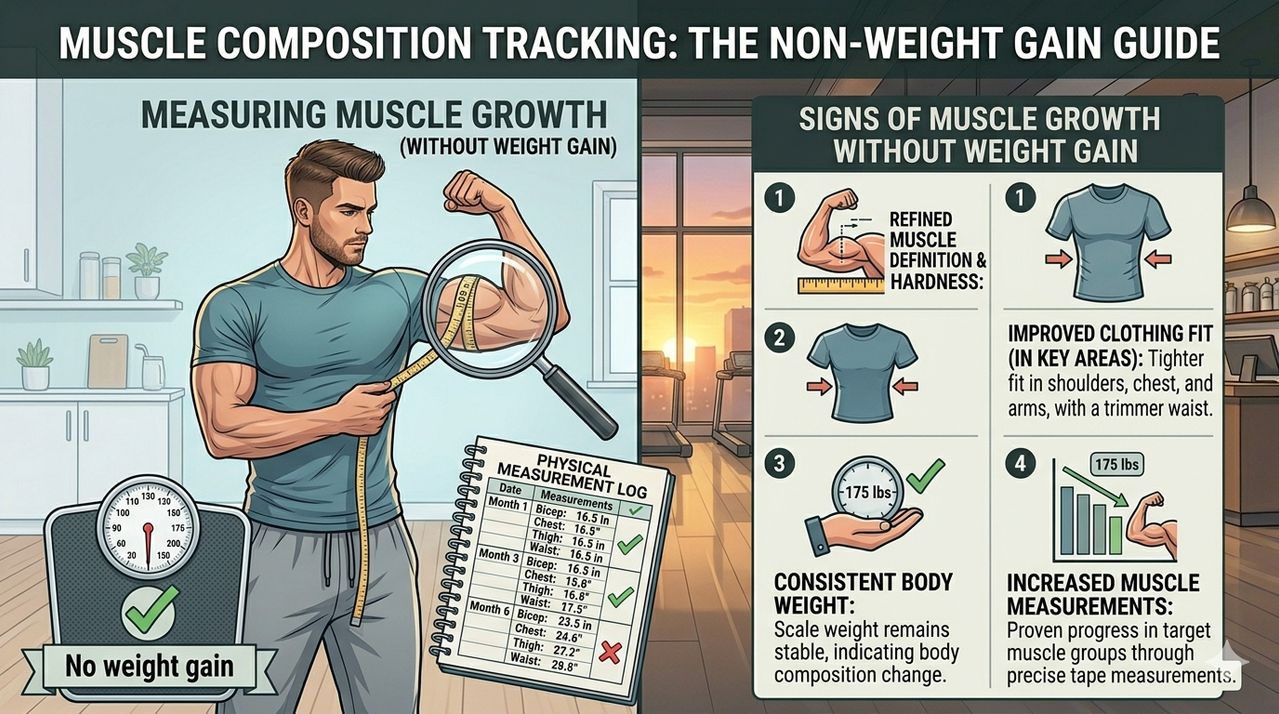
The scale isn't the only measure of progress. Signs of muscle growth include: increased strength (lifting heavier or more reps), clothes fitting tighter around muscles (shoulders, chest, thighs), improved muscle definition, better posture, and positive changes in progress photos. This is called body recomposition—gaining muscle while losing fat, resulting in stable scale weight. Muscle is denser than fat, so you can look leaner at the same weight. Track non-scale victories: strength logs, measurements, photos, and how clothes fit .
1. The Scale Lie: Why Weight Doesn't Tell the Full Story
You step on the scale. The number hasn't changed. Frustration sets in. But what if you're actually making progress? Muscle gain without scale change is real and common. This phenomenon—body recomposition signs—occurs when you build muscle while losing fat, keeping scale weight stable. Understanding how to know if you are gaining muscle requires looking beyond the scale. This guide reveals the true signs of muscle growth that prove you're transforming even when the scale doesn't budge.
How do I know if I'm building muscle without gaining weight?
Signs you're building muscle without gaining weight include: clothes fit tighter around muscles (shoulders, chest, thighs), strength is increasing (lifting heavier or more reps), body looks leaner (muscle takes less space than fat), better muscle definition (visible lines and separation), and progress photos show positive changes even when scale is stable.
2. The Science: Muscle vs. Fat Density
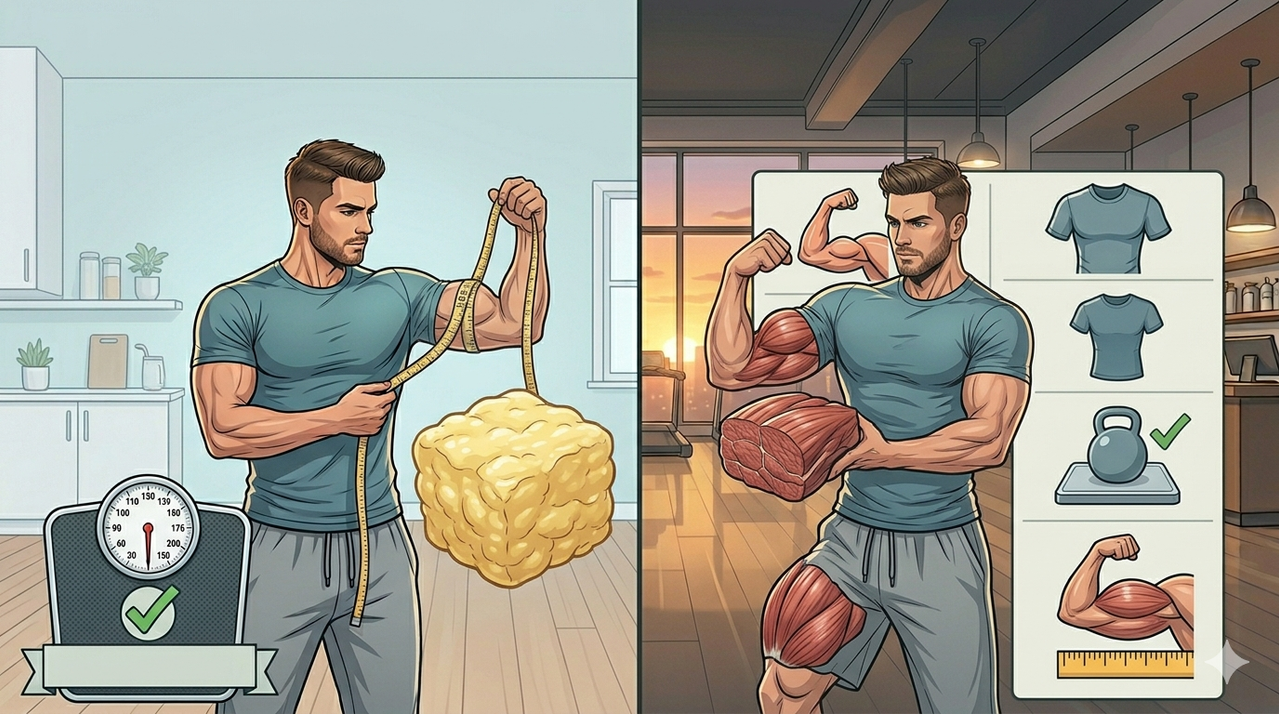
Why can you look leaner at the same weight? Muscle density: 1.1 g/mL vs fat density: 0.9 g/mL. Muscle is about 20% denser than fat, meaning 5 lbs of muscle takes up less space than 5 lbs of fat. This explains building muscle without weight gain—you're replacing fat with denser muscle tissue .
📊 5 lbs of Muscle vs 5 lbs of Fat Comparison
3. Primary Signs of Muscle Growth
3.1. Increased Strength
The most reliable sign of muscle growth is progressive overload. If you're lifting heavier weights or doing more reps than 4 weeks ago, you're building muscle—regardless of scale weight .
3.2. Clothing Fit Changes
Pay attention to how clothes fit. Shirts tighter across shoulders and chest? Pants looser at waist but tighter at thighs? These are classic body recomposition signs.
3.3. Improved Muscle Definition
Visible muscle lines, separation between muscle groups, and decreased body fat over muscles indicate you're gaining lean mass while losing fat.
3.4. Better Posture
Stronger back, core, and glutes improve posture naturally. If you stand taller and straighter, your training is working.
3.5. Increased Endurance
Can you train longer before fatigue? Do you recover faster between sets? These are muscle gain without scale change indicators.
3.6. Visible Changes in Progress Photos
Monthly photos in consistent lighting, clothes, and angles reveal changes the scale hides. Compare side-by-side.
4. How to Track Progress Without the Scale
- Weekly strength log: Record weights and reps for key lifts. Progress = growth.
- Monthly measurements: Chest, arms, thighs, waist, hips. Muscle gains increase measurements; fat loss decreases waist.
- Monthly progress photos: Front, side, back in consistent lighting and clothing.
- Clothing fit: Use a specific pair of pants or shirt as a "fit test."
- Body fat calipers: Track skinfold measurements every 4-6 weeks (more accurate than scale).
- How you feel: Energy levels, sleep quality, workout performance.
5. Body Recomposition: How It Works
Body recomposition is the process of building muscle and losing fat simultaneously while maintaining stable weight. It occurs most effectively in:
- Beginners: First 6-12 months of training (newbie gains)
- Returning lifters: Muscle memory accelerates recomposition
- Overweight individuals: Can use stored fat for energy while building muscle
- Those in slight calorie deficit or maintenance: With adequate protein (1.6-2.2 g/kg)
6. Nutrition for Body Recomposition
To maximize muscle gain without scale change, optimize nutrition:
- Protein: 1.6-2.2 g per kg body weight (critical for muscle repair)
- Calories: Maintenance or slight deficit (200-300 below maintenance)
- Carbs: Time around workouts for energy
- Fats: 0.8-1.2 g per kg for hormone function
Sample Body Recomposition Meal Plan (2,200 kcal, 150g Protein)
- Breakfast: 3 eggs, 1 cup oats, ½ cup berries (500 kcal, 28g protein)
- Lunch: 150g chicken breast, 1.5 cups roasted vegetables, ½ cup quinoa (450 kcal, 40g protein)
- Pre-Workout: 1 apple + 1 tbsp peanut butter (200 kcal, 5g protein)
- Post-Workout: 1 scoop whey + 1 banana (250 kcal, 25g protein)
- Dinner: 150g white fish or tofu, 2 cups spinach, 1 tbsp olive oil (450 kcal, 35g protein)
- Evening: 1 cup cottage cheese (200 kcal, 25g protein)
- Total: ~2,050 kcal, ~158g protein
Vegan/Vegetarian Recomposition Plan
- Breakfast: Tofu scramble (150g tofu), 1 cup oats, ½ cup berries (500 kcal, 25g protein)
- Lunch: 1.5 cups lentils, 1 cup quinoa, 2 cups spinach, 1 tbsp olive oil (550 kcal, 25g protein)
- Snack: 1 cup edamame, 1 apple (200 kcal, 11g protein)
- Post-Workout: 1 scoop plant protein, 1 banana (200 kcal, 20g protein)
- Dinner: 150g tempeh, 1.5 cups brown rice, 2 cups broccoli, 1 tbsp olive oil (550 kcal, 30g protein)
- Total: ~2,000 kcal, ~111g protein (add another shake for higher)
Gluten-Free Options
- Use certified gluten-free oats
- Choose rice, quinoa, buckwheat
- Verify protein sources are gluten-free certified
7. Common Mistakes When Scale Doesn't Move
- Abandoning training: "If scale isn't changing, nothing is working" → False. Stay consistent.
- Cutting calories too low: Starving yourself kills muscle growth potential.
- Neglecting protein: Inadequate protein prevents muscle repair.
- No progressive overload: Same weights every week = no stimulus for growth.
- Not tracking other metrics: Only watching scale misses real progress.
- Impatience: Body recomposition takes months, not weeks.
8. Sample 12-Week Body Recomposition Timeline
- Weeks 1-4: Strength increases (neural adaptations). No visible changes yet. Stay consistent.
- Weeks 5-8: First signs: clothes fit slightly different, subtle muscle definition appears.
- Weeks 9-12: Noticeable changes: better muscle definition, improved posture, friends comment. Scale may be stable or slightly lower.
9. Frequently Asked Questions
How do I know if I'm building muscle without gaining weight?
Signs you're building muscle without gaining weight include: clothes fit tighter around muscles (shoulders, chest, thighs), strength is increasing (lifting heavier or more reps), body looks leaner (muscle takes less space than fat), better muscle definition (visible lines and separation), and progress photos show positive changes even when scale is stable.
What are signs of muscle growth?
Key signs of muscle growth include: increased strength (adding weight or reps), improved muscle definition (visible lines and separation), clothes fitting differently (tighter in arms/chest, looser at waist), better posture, increased endurance, faster recovery between sets, and visible changes in progress photos.
Can you build muscle without gaining weight?
Yes, this is called body recomposition—gaining muscle while losing fat simultaneously, resulting in stable scale weight. This occurs naturally in beginners and can be achieved by intermediates with proper nutrition (adequate protein, slight deficit or maintenance) and progressive overload training.
Why is the scale not moving but I look leaner?
The scale doesn't change because muscle is denser than fat. When you build muscle and lose fat simultaneously, weight stays stable while body composition improves. Muscle takes up about 20% less space than fat per pound, so you look leaner at the same weight.
How long does it take to see muscle definition?
Beginners may see muscle definition in 4-8 weeks of consistent training. Visible changes (clothes fitting differently, improved shape) appear in 8-12 weeks. Significant definition takes 3-6 months. Take progress photos monthly—daily changes are imperceptible, but monthly progress is visible.
What is body recomposition?
Body recomposition is the process of simultaneously building muscle and losing fat while maintaining stable body weight. It requires progressive overload training, adequate protein intake (1.6-2.2 g/kg), and a slight calorie deficit or maintenance. Body recomposition is most effective for beginners and those returning from a break.
10. Related Resources
- How to Train for Size Instead of Strength (Hypertrophy Training Guide)
- Best Bulking Routine for Skinny Guys (Fast Muscle Gain Plan)
- Why Beginners Gain Muscle Faster (Newbie Gains Explained)
- How to Stay Lean While Gaining Muscle (Lean Bulking Guide)
- Best Snacks for Bulking and Muscle Growth (High-Protein & High-Calorie)
- How to Increase Appetite for Bulking (Proven Natural Tips)
11. Scientific References
- Morton, R. W., et al. (2018). A systematic review, meta-analysis and meta-regression of the effect of protein supplementation on resistance training-induced gains in muscle mass and strength. British Journal of Sports Medicine, 52(6), 376–384. PubMed
- Helms, E. R., et al. (2014). Evidence-based recommendations for natural bodybuilding contest preparation. Journal of the International Society of Sports Nutrition, 11(1), 20. PubMed
- Barakat, C., et al. (2020). Body recomposition: Can trained individuals build muscle and lose fat? Sports Medicine, 50(11), 1929–1940. PubMed
- ACSM. (2021). Nutrition and Athletic Performance. Medicine & Science in Sports & Exercise, 53(3), 600–618. PubMed
Join the conversation