What to Eat After Cardio for Fat Loss (Post-Cardio Nutrition Guide)
What to Eat After Cardio for Fat Loss: Post-Cardio Nutrition Guide (2026)

⚡ TL;DR
Knowing what to eat after cardio for fat loss is critical for preserving muscle while losing fat. This post-cardio nutrition guide explains the best post-cardio meal for fat loss and after cardio nutrition strategies. Learn the ideal fat loss post-workout meal and foods after cardio for weight loss. This guide covers timing, protein intake, carb needs, and sample meals for recovery after cardio. Maximize your cardio diet tips and achieve your fat loss goals without losing muscle.
1. Why Post-Cardio Nutrition Matters for Fat Loss
What you eat after cardio directly impacts muscle preservation, recovery, and future fat loss. Many people undereat after cardio, leading to muscle breakdown and metabolic slowdown (Hector et al., 2015).
This guide covers what to eat after cardio for fat loss, optimal timing, and post-cardio meal for fat loss examples. Whether you're doing steady-state or HIIT, these after cardio nutrition strategies will help you preserve muscle while shedding fat.
What should I eat after cardio for fat loss?
What should I eat after cardio for fat loss? Lean protein (chicken, eggs, fish), vegetables (low calories, high volume), Greek yogurt, protein shake, fruit (in moderation). Focus on protein + low calories. Avoid high-carb, high-sugar recovery drinks unless doing intense endurance training. The goal is muscle preservation, not glycogen replenishment.
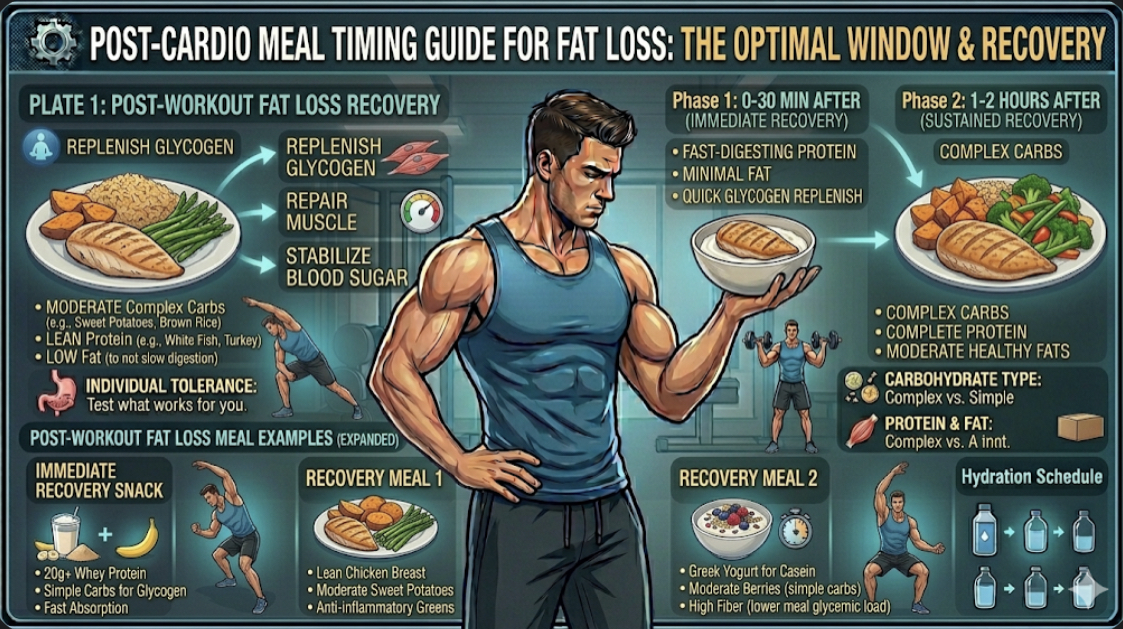
2. The Science: Protein, Carbs, and Fat Post-Cardio
After cardio nutrition for fat loss differs from post-strength training nutrition:
- Protein (most important): Prevents muscle breakdown during calorie deficit. Consume 20-40g protein after cardio to support muscle protein synthesis (Moore et al., 2014).
- Carbohydrates (moderate need): For moderate cardio (30-60 min), glycogen replenishment isn't critical for fat loss. Save carbs for pre-workout or other meals. For long cardio (90+ min), add 20-40g carbs.
- Fat (minimal post-cardio): Fat slows digestion and adds calories. Keep fat low (under 10g) in your immediate post-cardio meal.
For fat loss, prioritize protein and fiber for satiety, keep total calories moderate (200-400 calories post-cardio).
📊 Post-Cardio Nutrition for Fat Loss by Cardio Type
| Cardio Type | Duration | Protein (g) | Carbs (g) | Fat (g) | Calories | Example Meal |
|---|---|---|---|---|---|---|
| LISS (walking, incline walking) | 30-60 min | 20-30 | 0-15 | 0-5 | 150-250 | Greek yogurt or protein shake |
| Moderate cardio (jogging, cycling) | 30-60 min | 25-35 | 10-20 | 5-10 | 250-350 | Chicken + vegetables |
| HIIT (sprints, intervals) | 15-25 min | 25-35 | 15-25 | 5-10 | 300-400 | Eggs + fruit |
| Endurance cardio (running, swimming) | 60-90+ min | 30-40 | 30-50 | 10-15 | 400-600 | Salmon + sweet potato |
3. Best Post-Cardio Foods for Fat Loss
Best Protein Sources (Priority #1)
- Greek yogurt (non-fat or low-fat): 20g protein per cup, 150 calories – perfect post-cardio
- Whey or plant protein shake: 25g protein, 120-150 calories – fast-digesting, convenient
- Eggs or egg whites: 6g protein per egg, 70 calories – whole eggs or 5 egg whites (18g protein, 85 calories)
- Chicken breast: 30g protein per 100g, 165 calories – lean, filling
- White fish (cod, tilapia): 20g protein per 100g, 90 calories – very lean
- Cottage cheese (1-2%): 25g protein per cup, 180 calories – slow-digesting casein
- Tuna (canned in water): 25g protein per can, 120 calories – convenient
Best Carbohydrate Sources (Use Sparingly for Fat Loss)
- Berries (strawberries, blueberries, raspberries): 15g carbs per cup, 60-80 calories – high fiber, low calorie
- Green vegetables (broccoli, spinach, zucchini): 5-10g carbs per cup, 30-50 calories – high volume, very low calorie
- Apple or pear: 25g carbs, 95 calories – moderate sugar, good fiber
- Sweet potato (small): 25g carbs, 100 calories – best for longer cardio sessions
- Oats (1/2 cup dry): 27g carbs, 150 calories – good for morning cardio
Best Fat Sources (Keep Minimal Post-Cardio)
- Save healthy fats (avocado, nuts, olive oil) for other meals. Keep post-cardio fat under 10g to avoid slowing digestion and adding unnecessary calories.
4. Best Post-Cardio Meals for Fat Loss (With Recipes)
Quick & Easy (5 minutes or less)
- Protein shake: 1 scoop whey/plant protein + water or unsweetened almond milk (120-150 kcal, 25g protein)
- Greek yogurt cup: 1 cup plain non-fat Greek yogurt (150 kcal, 20g protein)
- Cottage cheese + berries: 1 cup low-fat cottage cheese + 1/2 cup berries (250 kcal, 28g protein, 15g carbs)
- Hard-boiled eggs (2-3): 140-210 kcal, 12-18g protein
- Tuna pouch: Single-serve tuna pouch (120 kcal, 25g protein)
Light Meal (10-15 minutes)
- Grilled chicken + vegetables: 150g grilled chicken + 2 cups steamed broccoli (300 kcal, 35g protein, 10g carbs)
- Egg white scramble: 5 egg whites + 1 cup spinach + 1/4 cup mushrooms (150 kcal, 20g protein, 5g carbs)
- Greek yogurt bowl: 1 cup Greek yogurt + 1/2 cup berries + 1 tbsp chia seeds (250 kcal, 22g protein, 20g carbs, 8g fiber)
- Protein smoothie: 1 scoop protein + 1 cup unsweetened almond milk + 1/2 cup frozen spinach + 1/2 banana (250 kcal, 27g protein, 20g carbs)
Full Meal (20-30 minutes – for longer cardio sessions)
- Salmon + roasted vegetables: 150g salmon + 2 cups roasted broccoli + 1/2 cup quinoa (450 kcal, 38g protein, 35g carbs)
- Chicken + sweet potato: 150g chicken breast + 1 small sweet potato + 2 cups spinach (400 kcal, 35g protein, 40g carbs)
- Turkey lettuce wraps: 150g ground turkey + lettuce cups + diced tomatoes + mustard (300 kcal, 32g protein, 10g carbs)
5. Post-Cardio Nutrition for Specific Diets
Vegan Post-Cardio Meals
- Quick: 1 scoop pea protein + water (120 kcal, 24g protein)
- Light meal: 1 cup tofu scramble + 1 cup spinach (200 kcal, 22g protein, 8g carbs)
- Full meal: 150g tempeh + 2 cups roasted vegetables + 1/2 cup quinoa (400 kcal, 35g protein, 40g carbs)
- Smoothie: 1 scoop plant protein + 1 cup unsweetened soy milk + 1/2 cup frozen berries + handful spinach (280 kcal, 30g protein, 25g carbs)
Vegetarian Post-Cardio Meals (including eggs/dairy)
- Quick: 1 cup Greek yogurt (150 kcal, 20g protein)
- Light meal: 3 hard-boiled eggs + 1 apple (280 kcal, 18g protein, 25g carbs)
- Full meal: 4 eggs + 2 cups sautéed vegetables + 1 slice whole grain toast (450 kcal, 30g protein, 35g carbs)
Gluten-Free Post-Cardio Meals
- Protein shake (verify gluten-free certification)
- Grilled chicken + sweet potato + green beans – naturally gluten-free
- Greek yogurt + berries – naturally gluten-free
- Salmon + quinoa + asparagus – quinoa is gluten-free
6. Post-Cardio Meal Timing: How Soon Should You Eat?
For fat loss, the "anabolic window" is less critical than total daily intake, but timing still matters (Aragon & Schoenfeld, 2013).
- Within 2 hours post-cardio: Ideal window for muscle preservation. Protein intake within 2 hours reduces muscle breakdown.
- Within 1 hour for fasted cardio: If you did fasted cardio, eat sooner (within 60 minutes) to prevent muscle breakdown.
- Don't delay beyond 3-4 hours: Waiting too long may increase hunger and lead to overeating later.
- Listen to hunger cues: If you're hungry immediately after cardio, eat. If not, eat within 2 hours.
7. Should You Eat Carbs After Cardio for Fat Loss?
This is a common question in cardio diet tips. The answer depends on your cardio duration and intensity:
- Moderate cardio (30-60 minutes): No, you don't need high carbs post-cardio for fat loss. Your body has sufficient glycogen. Focus on protein.
- HIIT (15-25 minutes): Small amount of carbs (15-25g) optional – may help with recovery for your next session. Protein priority.
- Long endurance cardio (90+ minutes): Yes, add 20-40g carbs to replenish glycogen and speed recovery.
- Weight loss focus: Prioritize protein over carbs post-cardio. Carbs add calories without significant benefit for fat loss.
8. Sample Post-Cardio Meal Plan for Fat Loss (1,600 kcal Day)
This full day incorporates proper recovery after cardio nutrition:
- Morning Cardio (30 min LISS – brisk walking): Post-cardio: 1 cup Greek yogurt + 1/2 cup berries (200 kcal, 20g protein)
- Lunch (12:00 PM): 150g grilled chicken + 2 cups mixed greens + 1/2 avocado + lemon juice (400 kcal, 35g protein, 15g carbs)
- Afternoon Snack (3:00 PM): 1 scoop whey + water (120 kcal, 25g protein)
- Dinner (6:30 PM): 150g salmon + 2 cups roasted asparagus + 1/2 cup quinoa (450 kcal, 38g protein, 35g carbs)
- Evening Snack (9:00 PM): 1 cup cottage cheese (150 kcal, 25g protein)
- Total: ~1,600 kcal, ~165g protein
For complete fat loss nutrition plans, check out full day of eating for fat loss and best foods to eat before a workout.
9. Post-Cardio Hydration for Fat Loss
- Water is best: 16-24 oz (500-750 ml) after cardio
- Electrolytes for long sessions: If sweating heavily (60+ minutes cardio), add electrolyte powder or a pinch of salt to water
- Avoid calorie-containing drinks: Sports drinks add unnecessary calories (100-200 calories) – skip for fat loss
- Signs of dehydration: Dark urine, thirst, fatigue, headache
10. Common Post-Cardio Nutrition Mistakes for Fat Loss
- Eating back all calories burned: A 300-calorie cardio session doesn't justify a 600-calorie post-workout meal. Keep post-cardio meals moderate (200-400 calories).
- Skipping protein: Protein preserves muscle during calorie deficit. Never skip protein after cardio.
- High-sugar recovery drinks: Chocolate milk, sports drinks, and sugary smoothies add 200-400 calories without significant satiety. Avoid for fat loss.
- Overeating because "I did cardio": Many people overestimate calorie burn. A 30-minute jog burns ~200-300 calories. Don't use cardio as an excuse to overeat.
- Not eating enough: Extreme calorie restriction after cardio leads to muscle loss and metabolic slowdown. Eat enough to preserve muscle (minimum 1,200-1,500 calories daily).
- Fatty post-cardio meals: High-fat meals slow digestion and add calories. Keep fat under 10g in immediate post-cardio meal.
11. Frequently Asked Questions
What should I eat after cardio for fat loss?
Lean protein (chicken, eggs, fish), vegetables (low calories, high volume), Greek yogurt, protein shake, fruit (in moderation). Focus on protein + low calories. Avoid high-carb, high-sugar recovery drinks unless doing intense endurance training. The goal is muscle preservation, not glycogen replenishment.
Should I eat after cardio for fat loss?
Yes, you should eat after cardio for fat loss to preserve muscle mass and support recovery. A high-protein, moderate-carb meal (200-400 calories) within 2 hours post-cardio is ideal. Fasting after cardio may lead to muscle breakdown. Prioritize protein intake to protect muscle while in a calorie deficit.
How soon after cardio should I eat for fat loss?
For fat loss, eat within 2 hours after cardio. The 'anabolic window' is less critical than total daily intake. However, eating within 2 hours helps preserve muscle, reduces hunger later, and supports recovery. If you did fasted cardio, eat sooner (within 1 hour) to prevent muscle breakdown.
What is the best post-cardio meal for fat loss?
Best post-cardio meal for fat loss: 150g grilled chicken + 2 cups mixed vegetables (300 kcal, 35g protein). Or 1 cup Greek yogurt + 1/2 cup berries (200 kcal, 20g protein). Or protein shake with water (120-150 kcal, 25g protein). Focus on protein and fiber for satiety, keep calories low.
Do I need carbs after cardio for fat loss?
For moderate cardio (30-60 minutes), you don't need high carbs post-workout for fat loss. Your body has enough glycogen. Focus on protein for muscle preservation. For long endurance cardio (90+ minutes), some carbs (20-40g) help replenish glycogen and speed recovery. For fat loss, prioritize protein over carbs post-cardio.
Can I eat fruit after cardio for fat loss?
Yes, fruit can be part of a post-cardio meal for fat loss, but prioritize protein first. Berries (strawberries, blueberries) are best – lower in sugar and high in fiber. Add 1/2 cup berries to Greek yogurt. Avoid large servings of high-sugar fruits (mango, grapes, pineapple) if your goal is aggressive fat loss.
12. Related Resources
- How to Read Food Labels for Fitness Goals (Beginner-Friendly Guide)
- Healthy Grocery List for Fitness Beginners (Complete Shopping Guide)
- Best Post-Workout Meals for Muscle Recovery (Fast Recovery Foods Guide)
- How Much Water Should You Drink for Fitness? (Daily Hydration Guide)
- What to Drink During Workout for Better Performance (Hydration Guide)
- High Protein Breakfast Ideas for Muscle Gain (Quick & Healthy Meals)
13. Scientific References
- Hector, A. J., et al. (2015). Protein supplementation augments muscle fiber hypertrophy but does not modulate satellite cell content during prolonged resistance training. American Journal of Physiology, 309(1), E72-E83. PubMed
- Moore, D. R., et al. (2014). Protein ingestion to stimulate myofibrillar protein synthesis requires greater relative protein intakes in healthy older versus younger men. Journal of Nutrition, 144(4), 465-471. PubMed
- Kerksick, C. M., et al. (2018). International society of sports nutrition position stand: nutrient timing. Journal of the International Society of Sports Nutrition, 14(1), 33. PubMed
- Aragon, A. A., & Schoenfeld, B. J. (2013). Nutrient timing revisited: is there a post-exercise anabolic window? Journal of the International Society of Sports Nutrition, 10(1), 5. PubMed
- Morton, R. W., et al. (2018). A systematic review, meta-analysis and meta-regression of the effect of protein supplementation on resistance training-induced gains in muscle mass and strength. British Journal of Sports Medicine, 52(6), 376-384. PubMed
- Helms, E. R., et al. (2014). Evidence-based recommendations for natural bodybuilding contest preparation. Journal of the International Society of Sports Nutrition, 11(1), 20. PubMed
- Schoenfeld, B. J., & Aragon, A. A. (2018). How much protein can the body use in a single meal for muscle-building? Journal of the International Society of Sports Nutrition, 15(1), 10. PubMed
Join the conversation