What to Eat on Rest Days (Recovery Nutrition Guide for Muscle Growth)
What to Eat on Rest Days: Recovery Nutrition Guide for Muscle Growth (2026)

⚡ TL;DR
What to eat on rest days is critical for muscle repair and growth. Rest day nutrition should prioritize protein (same as training days), slightly fewer carbs (200-300 fewer calories), and adequate healthy fats. Learn the diet on rest days bodybuilding approach for optimal recovery. Discover recovery foods for rest days and whether should I eat less on rest days. This rest day meal plan and muscle recovery diet guide will help you maximize gains while resting.
1. Why Rest Day Nutrition Matters
Muscle growth doesn't happen in the gym – it happens during recovery. What you eat on rest days directly impacts muscle protein synthesis, glycogen replenishment, and overall recovery. Many people neglect rest day nutrition, missing a crucial opportunity to maximize gains (Trommelen et al., 2021).
This guide covers what to eat on rest days for optimal muscle recovery diet. Learn rest day nutrition principles and the diet on rest days bodybuilding approach. Discover recovery foods for rest days and answer the question should I eat less on rest days. Follow this rest day meal plan to maximize muscle growth.
What should you eat on rest days?
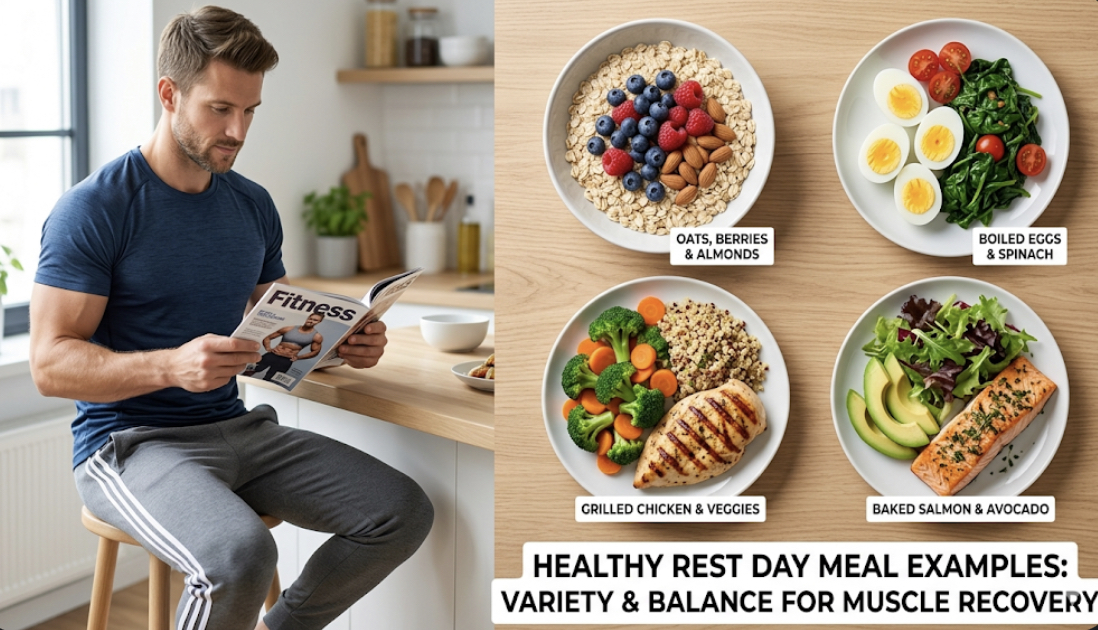
What should you eat on rest days? Keep protein high (muscle recovery), reduce carbs slightly (if not active), healthy fats for hormones, focus on whole foods, and stay hydrated. Examples: eggs + vegetables for breakfast, chicken + salad for lunch, fish + moderate rice for dinner. Maintain protein intake at 1.6-2.2 g/kg body weight.
2. Should You Eat Less on Rest Days?
Should I eat less on rest days? Yes, slightly less – reduce calories by 200-300 on rest days compared to training days, primarily from carbs. Your energy expenditure is lower on rest days. Keep protein intake the same to support muscle recovery. Fat intake remains moderate.
- Training day calories: TDEE + 0-300 (depending on goal)
- Rest day calories: TDEE - 200-300 (or maintenance)
- Protein: Same as training days (1.6-2.2 g/kg)
- Carbs: Reduce by 25-50g (100-200 calories)
- Fats: Maintain same or slightly reduce
Example: A 75 kg person with 2,500 TDEE. Training day: 2,800 calories. Rest day: 2,300-2,500 calories.
3. Macronutrient Breakdown for Rest Days
Protein – Keep High (1.6-2.2 g/kg)
Protein needs don't decrease on rest days. Muscle protein synthesis is elevated for 24-48 hours after training. High protein intake supports repair and growth (Morton et al., 2018).
- Best sources: Eggs, Greek yogurt, cottage cheese, chicken, fish, lean beef, whey protein, tofu, lentils
- Per meal: 30-40g protein
Carbohydrates – Reduce Slightly (3-4 g/kg)
You don't need as many carbs on rest days since you're not depleting glycogen. Reduce intake by 25-50g compared to training days. Choose high-fiber, complex carbs for satiety.
- Best sources: Vegetables, oats, quinoa, beans, lentils, berries, sweet potatoes (moderate)
- Avoid: Simple sugars, white rice (if reducing carbs), sugary snacks
Fats – Moderate (0.8-1.0 g/kg)
Healthy fats support hormone production, including testosterone. Don't drop fats too low on rest days.
- Best sources: Olive oil, avocado, nuts, seeds, fatty fish (salmon), egg yolks
4. Sample Rest Day Meal Plan (2,500 kcal, 170g Protein)
Breakfast (8:00 AM) – 550 kcal, 35g protein, 12g fiber
- 4 eggs (280 kcal, 24g protein)
- 1 cup spinach + 1/2 cup mushrooms (30 kcal, 2g protein)
- 1/2 cup oats (150 kcal, 5g protein, 4g fiber)
- 1/2 cup berries (40 kcal, 1g protein, 4g fiber)
- 1/2 tbsp olive oil (60 kcal)
Lunch (12:30 PM) – 500 kcal, 45g protein, 15g fiber
- 200g chicken breast (330 kcal, 45g protein)
- 3 cups mixed greens + cucumber + tomatoes (50 kcal, 3g protein, 5g fiber)
- 1/2 avocado (120 kcal, 2g protein, 5g fiber)
- Lemon juice + herbs (0 kcal)
Afternoon Snack (3:30 PM) – 200 kcal, 20g protein
- 1 cup Greek yogurt (150 kcal, 20g protein)
- 1/2 cup cucumber slices (10 kcal)
Dinner (7:00 PM) – 600 kcal, 45g protein, 10g fiber
- 200g salmon or white fish (400 kcal, 40g protein)
- 2 cups roasted broccoli + cauliflower (100 kcal, 5g protein, 8g fiber)
- 1/2 cup quinoa (110 kcal, 4g protein, 2g fiber)
Evening Snack (9:30 PM) – 180 kcal, 25g protein
- 1 cup cottage cheese (1% fat) (180 kcal, 25g protein)
Daily Total: ~2,030 kcal, ~170g protein, ~40g fiber
Note: Adjust portions based on your calorie needs. Add extra healthy fats or carbs if needed.
5. Best Recovery Foods for Rest Days
Top Protein Sources for Rest Day Recovery
- Greek yogurt: 20g protein, probiotics for gut health
- Cottage cheese: 25g protein, rich in casein (slow-digesting)
- Eggs: Complete protein, rich in leucine
- Salmon: Protein + omega-3s (reduce inflammation)
- Chicken breast: Lean protein, versatile
- Whey or casein protein: Convenient, high-quality
Top Carbohydrate Sources for Rest Days (Portion-Controlled)
- Oats: 4g fiber per 1/2 cup, slow-digesting
- Quinoa: Complete protein + complex carbs
- Sweet potatoes: Rich in vitamins, moderate GI
- Beans and lentils: Protein + fiber, very filling
- Berries: High fiber, low sugar, antioxidants
- Green vegetables: High volume, very low calorie, high fiber
Top Fat Sources for Hormone Support
- Avocado: Healthy monounsaturated fats
- Olive oil: Anti-inflammatory, heart healthy
- Nuts and seeds: Almonds, walnuts, chia, flax
- Fatty fish: Salmon, mackerel, sardines (omega-3s)
- Egg yolks: Nutrient-dense, healthy fats
6. Rest Day Nutrition for Different Goals
For Muscle Gain (Bulking)
- Calories: Maintenance to slight surplus (TDEE or TDEE + 100-200)
- Protein: 1.8-2.2 g/kg (same as training days)
- Carbs: Reduce by 25-50g (still include complex carbs)
- Example: Training day 3,000 calories → Rest day 2,700-2,800 calories
For Fat Loss (Cutting)
- Calories: Deficit (TDEE - 300-500) on both training and rest days
- Protein: 2.0-2.4 g/kg (higher to preserve muscle)
- Carbs: Lower on rest days (3-4 g/kg vs 4-5 g/kg on training days)
- Example: Training day 2,000 calories → Rest day 1,800-1,900 calories
For Maintenance (Body Recomposition)
- Calories: Slight deficit on rest days (TDEE - 200), maintenance on training days
- Protein: 1.8-2.2 g/kg
- Carbs: Lower on rest days, higher on training days (carb cycling)
7. Hydration and Micronutrients on Rest Days
- Water: 2-3 liters daily (same as training days). Rest days are for flushing metabolic waste and supporting cellular repair.
- Electrolytes: If you sweated heavily the day before, replenish sodium, potassium, magnesium.
- Vitamin D and Calcium: Support bone health and muscle function.
- Magnesium: Aids muscle relaxation and sleep quality. Found in nuts, seeds, leafy greens.
- Zinc: Supports testosterone production and immune function. Found in meat, shellfish, legumes.
8. Special Diets: Rest Day Nutrition
Vegan Rest Day Meal Plan (2,200 kcal, 140g Protein)
- Breakfast: Tofu scramble (1.5 cups) + 1 cup spinach + 1/2 cup oats + 1/2 cup berries (500 kcal, 35g protein, 15g fiber)
- Lunch: 200g tempeh + 2 cups quinoa + 2 cups mixed vegetables (550 kcal, 40g protein, 15g fiber)
- Snack: 1 cup edamame + 1/4 cup almonds (350 kcal, 20g protein, 10g fiber)
- Dinner: 250g lentils + 2 cups brown rice + 2 cups roasted broccoli (600 kcal, 35g protein, 20g fiber)
- Evening: 1 scoop pea protein + water (120 kcal, 24g protein)
Vegetarian Rest Day Meal Plan (2,300 kcal, 150g Protein)
- Breakfast: 4 eggs + 1 cup Greek yogurt + 1/2 cup oats + berries (600 kcal, 45g protein, 10g fiber)
- Lunch: 200g paneer + 2 cups quinoa + 2 cups mixed vegetables (550 kcal, 40g protein, 12g fiber)
- Snack: 1 cup cottage cheese + 1 apple (250 kcal, 28g protein, 5g fiber)
- Dinner: 4 eggs + 2 cups roasted vegetables + 1/2 cup brown rice (500 kcal, 30g protein, 8g fiber)
- Evening: 1 scoop whey + water (120 kcal, 25g protein)
Gluten-Free Rest Day Options
- Carb sources: Rice, quinoa, gluten-free oats, buckwheat, sweet potatoes, potatoes
- Avoid: Wheat, barley, rye, seitan
- Sample meal: 200g chicken + 1.5 cups quinoa + 2 cups vegetables (550 kcal, 50g protein, 60g carbs)
9. Common Rest Day Nutrition Mistakes
- Eating too many calories: "Rest day = cheat day" mentality leads to fat gain. Rest days require fewer calories than training days.
- Not eating enough protein: Protein needs don't decrease on rest days. Muscle repair is happening – feed it.
- Cutting carbs too low: Very low-carb rest days may impair glycogen replenishment and recovery. Reduce carbs moderately, don't eliminate.
- Skipping meals: Rest days aren't for fasting (unless intentional intermittent fasting). Spread protein across 4-5 meals.
- Neglecting hydration: Dehydration impairs recovery. Drink 2-3 liters of water.
- Junk food binges: "I rested, I deserve pizza" – this adds hundreds of empty calories. If you want a treat, keep it small (200-300 calories).
10. Sample Weekly Rest Day Schedule
Full Week Example (Training: Mon/Tue/Thu/Fri; Rest: Wed/Sat/Sun)
- Monday (Upper Body Training): 2,800 calories, 170g protein, 360g carbs, 75g fat
- Tuesday (Lower Body Training): 2,800 calories, 170g protein, 360g carbs, 75g fat
- Wednesday (Rest Day): 2,300 calories, 170g protein, 250g carbs, 75g fat (reduce carbs by 110g)
- Thursday (Push Day): 2,800 calories, 170g protein, 360g carbs, 75g fat
- Friday (Pull Day): 2,800 calories, 170g protein, 360g carbs, 75g fat
- Saturday (Rest Day – Active recovery): 2,400 calories, 170g protein, 270g carbs, 75g fat (light walk, stretching)
- Sunday (Rest Day – Complete rest): 2,200 calories, 170g protein, 230g carbs, 70g fat (lowest carb day)
11. Quick Rest Day Recipes
Protein-Packed Egg Scramble (10 min)
- 4 eggs + 1 cup spinach + 1/2 cup mushrooms + 1/2 avocado
- Macros: 550 kcal, 30g protein, 15g carbs, 40g fat, 8g fiber
Greek Yogurt Bowl (5 min)
- 1 cup Greek yogurt + 1/2 cup berries + 1 tbsp chia seeds + 1 tbsp almond butter
- Macros: 400 kcal, 25g protein, 25g carbs, 25g fat, 12g fiber
Salmon & Vegetable Sheet Pan (25 min)
- 200g salmon + 2 cups broccoli + 1 cup cauliflower + 1 tbsp olive oil
- Macros: 550 kcal, 45g protein, 20g carbs, 35g fat, 10g fiber
12. Frequently Asked Questions
What should you eat on rest days?
Keep protein high (muscle recovery), reduce carbs slightly (if not active), healthy fats for hormones, focus on whole foods, and stay hydrated. Examples: eggs + vegetables for breakfast, chicken + salad for lunch, fish + moderate rice for dinner. Maintain protein intake at 1.6-2.2 g/kg body weight.
Should I eat less on rest days?
Yes, slightly less – reduce calories by 200-300 on rest days compared to training days, primarily from carbs. Your energy expenditure is lower on rest days. Keep protein intake the same to support muscle recovery. Fat intake remains moderate. Example: training day 2,800 calories → rest day 2,500 calories.
What is the best rest day meal plan for muscle growth?
Sample rest day meal plan (2,500 calories, 170g protein): Breakfast: 4 eggs + 1 cup oats + berries (600 kcal, 35g protein). Lunch: 200g chicken breast + 2 cups mixed greens + 1/2 avocado (500 kcal, 50g protein). Dinner: 200g salmon + 2 cups roasted vegetables + 1/2 cup quinoa (650 kcal, 45g protein). Snacks: Greek yogurt, cottage cheese, protein shake.
Do I need carbs on rest days?
Yes, you still need carbs on rest days, but less than training days. Carbs replenish glycogen stores and support recovery. Reduce carb intake by 25-50g (100-200 calories) compared to training days. Choose high-fiber, complex carbs (vegetables, oats, quinoa, beans) over simple carbs. Don't eliminate carbs completely.
Can I eat junk food on rest days?
Occasional treats are fine, but rest days are not 'cheat days' if you're serious about muscle growth. Junk food is low in protein and micronutrients needed for recovery. If you want a treat, keep it small (e.g., 200 calories of dark chocolate or a small dessert). Prioritize whole foods for optimal recovery.
Should I take protein shakes on rest days?
Yes, protein shakes are convenient and effective on rest days. Your protein needs are the same as training days. Whey protein digests quickly, while casein is slow-digesting (good before bed). Use shakes to meet your protein target if you struggle with whole food intake.
13. Related Resources
- How to Read Food Labels for Fitness Goals (Beginner-Friendly Guide)
- Healthy Grocery List for Fitness Beginners (Complete Shopping Guide)
- Best Post-Workout Meals for Muscle Recovery (Fast Recovery Foods Guide)
- How Much Water Should You Drink for Fitness? (Daily Hydration Guide)
- What to Drink During Workout for Better Performance (Hydration Guide)
- High Protein Breakfast Ideas for Muscle Gain (Quick & Healthy Meals)
14. Scientific References
- Trommelen, J., et al. (2021). Pre-sleep protein ingestion increases muscle protein synthesis rates during overnight recovery. Frontiers in Nutrition, 8, 724. PubMed
- Morton, R. W., et al. (2018). A systematic review, meta-analysis and meta-regression of the effect of protein supplementation on resistance training-induced gains in muscle mass and strength. British Journal of Sports Medicine, 52(6), 376-384. PubMed
- Helms, E. R., et al. (2014). Evidence-based recommendations for natural bodybuilding contest preparation. Journal of the International Society of Sports Nutrition, 11(1), 20. PubMed
- Slater, G. J., et al. (2019). Is an energy surplus required to maximize skeletal muscle hypertrophy associated with resistance training? Frontiers in Nutrition, 6, 131. PubMed
- Schoenfeld, B. J., & Aragon, A. A. (2018). How much protein can the body use in a single meal for muscle-building? Journal of the International Society of Sports Nutrition, 15(1), 10. PubMed
- Jäger, R., et al. (2017). International Society of Sports Nutrition Position Stand: protein and exercise. Journal of the International Society of Sports Nutrition, 14(1), 20. PubMed
- Kerksick, C. M., et al. (2018). International society of sports nutrition position stand: nutrient timing. Journal of the International Society of Sports Nutrition, 14(1), 33. PubMed
Join the conversation