Best Evening Habits for Fat Loss (Simple Night Routine That Works)
Best Evening Habits for Fat Loss: Simple Night Routine That Works
🌙 TL;DR
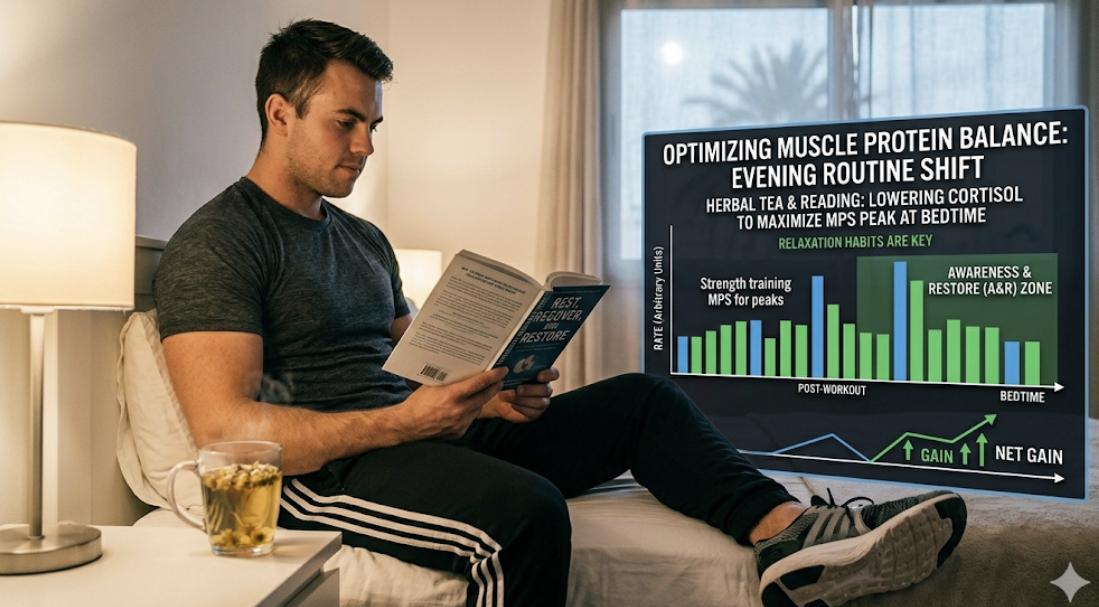
The best evening habits for fat loss revolve around: 1) A light, protein-rich dinner 3–4 hours before bed — prevents late-night cravings and stabilizes blood sugar . 2) Digital sunset (no screens 60–90 min pre-sleep) — blue light suppresses melatonin, disrupting circadian rhythms that regulate metabolism . 3) Consistent sleep-wake schedule (7–9 hours) — poor sleep increases ghrelin and decreases leptin, driving hunger and fat storage . 4) Relaxation ritual (reading, stretching, meditation) — lowers cortisol, which is linked to abdominal fat . Adopt these night routine weight loss strategies to burn fat while you sleep.
1. Why Your Evening Routine Dictates Fat Loss Success
Most weight loss plans focus solely on diet and exercise during the day, but emerging research in chronobiology reveals that evening habits for fat loss are equally critical. The hours before bed influence hormonal balance, sleep quality, and next-day appetite. A structured night routine weight loss protocol can be the missing link between yo-yo dieting and sustainable results.
What are the best evening habits for fat loss?
The best evening habits for fat loss include: 1) Eating a light, high-protein dinner at least 3 hours before sleep to avoid blood sugar spikes and late cravings. 2) Disconnecting from screens 60–90 minutes before bed to preserve melatonin production. 3) Engaging in a relaxing activity (reading, gentle stretching, meditation) to lower cortisol. 4) Going to bed at the same time every night to stabilize circadian rhythms, which control metabolism and hunger hormones. These bedtime routine fat loss strategies are backed by sleep and obesity science .
2. The Circadian Connection: Sleep, Hormones, and Fat Burning
2.1 How Poor Sleep Sabotages Weight Loss
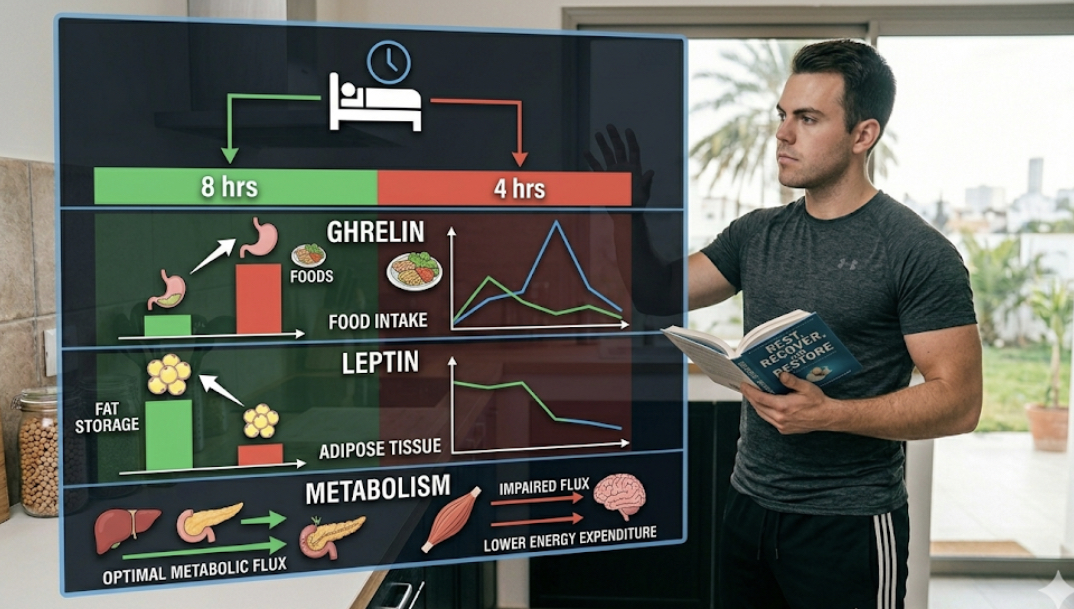
Sleep restriction (less than 7 hours) increases ghrelin (hunger hormone) by up to 28% and decreases leptin (satiety hormone) by 18%, leading to a net increase in appetite of 300–500 kcal/day . A 2022 meta-analysis in JAMA Internal Medicine showed that sleep extension in habitually short sleepers reduced calorie intake by ~270 kcal/day, resulting in significant weight loss .
2.2 Melatonin & Brown Adipose Tissue (BAT)
Melatonin, the "sleep hormone," not only regulates circadian rhythms but also stimulates brown adipose tissue (BAT) activity. BAT burns calories to generate heat — a process called thermogenesis. Evening blue light exposure suppresses melatonin, reducing BAT activity and lowering overnight energy expenditure .
3. Evening Nutrition: What to Eat (and Avoid) for Overnight Fat Burning
3.1 The Ideal Pre-Sleep Meal
Avoid heavy, high-fat, or high-sugar meals within 3 hours of bedtime. Instead, consume a moderate portion of protein + fiber-rich vegetables. Protein provides amino acids for muscle repair during sleep and increases satiety, preventing midnight cravings. Casein-rich foods (cottage cheese, Greek yogurt) offer a slow release of amino acids, supporting overnight muscle protein synthesis .
3.2 Sample Evening Meals (300–400 kcal, 25–35g protein)
- Omnivore: 150g grilled salmon + 1 cup steamed broccoli + ½ avocado (380 kcal, 32g protein)
- Vegetarian: 200g Greek yogurt + 1 tbsp almond butter + ½ cup berries + sprinkle of cinnamon (320 kcal, 28g protein)
- Vegan: 180g tofu scramble with spinach + 1 slice whole-grain toast (optional GF) + 1 tbsp nutritional yeast (350 kcal, 26g protein)
- Gluten-Free: 150g grilled chicken breast + quinoa (½ cup) + roasted zucchini (340 kcal, 30g protein)
3.3 Foods to Avoid Before Bed
- Sugary desserts: Spike insulin and disrupt sleep architecture.
- Alcohol: Suppresses REM sleep and increases cortisol, promoting fat storage .
- Caffeine after 2 PM: Reduces total sleep time by 45 minutes on average.
4. Digital Sunset: The Non-Negotiable Evening Habit
4.1 Blue Light Disrupts Melatonin
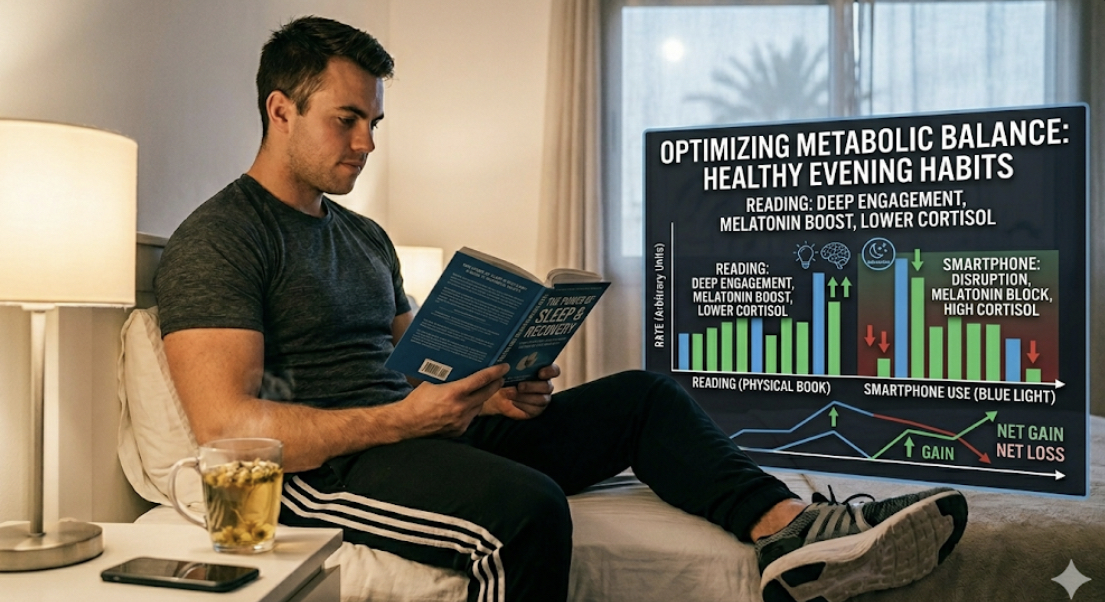
Blue light from phones, tablets, and TVs inhibits melatonin secretion by up to 50%, delaying sleep onset and reducing deep sleep phases . Deep sleep is crucial for growth hormone release, which supports fat oxidation and muscle preservation.
4.2 How to Implement a Digital Sunset
- Set a "screen curfew" 60–90 minutes before target bedtime.
- Use blue-light blocking glasses if screen use is unavoidable.
- Replace screen time with analog activities: reading, journaling, light stretching, or a warm bath.
5. Taming Cortisol: Evening Relaxation Rituals
Chronic stress elevates cortisol, which promotes visceral fat storage and increases appetite for hyper-palatable foods. Evening relaxation techniques lower cortisol and shift the nervous system into parasympathetic (rest-and-digest) mode, optimizing overnight fat metabolism .
5.1 Effective Wind-Down Activities
- Gentle stretching or yin yoga: 10–15 minutes reduces muscle tension and cortisol.
- Box breathing (4-4-4-4): Inhale 4 sec, hold 4 sec, exhale 4 sec, hold 4 sec — proven to lower stress markers.
- Gratitude journaling: 5 minutes of writing reduces rumination and improves sleep quality .
6. Sleep Consistency: The Cornerstone of a Fat-Loss Night Routine
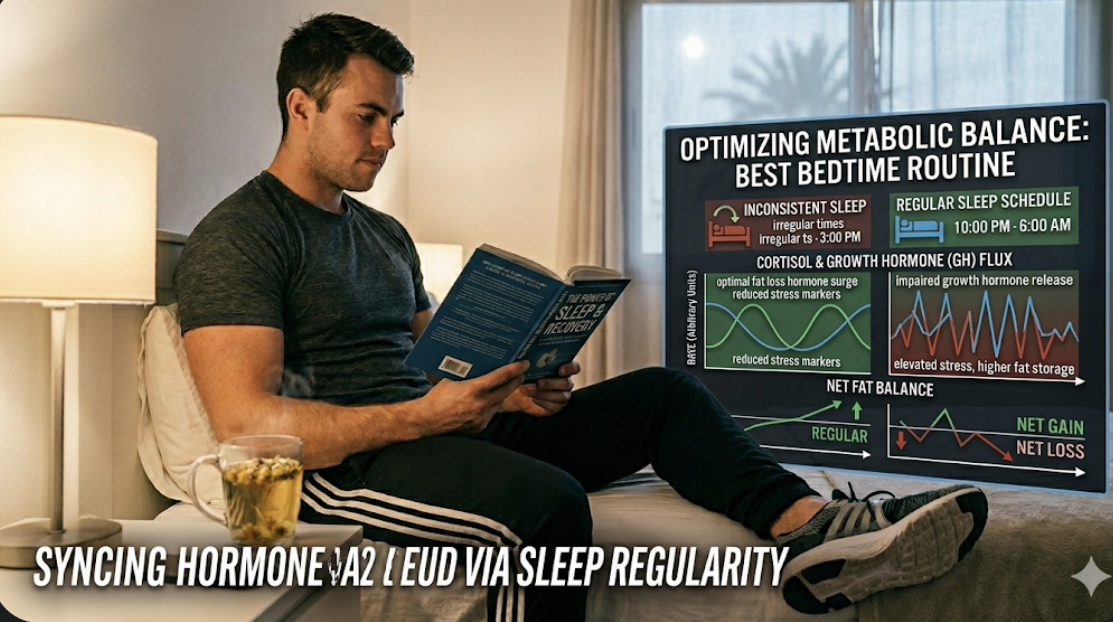
Irregular sleep patterns disrupt the circadian system, leading to insulin resistance and increased calorie intake. A study in Scientific Reports showed that even a 90-minute variation in bedtime is associated with higher body fat percentage . Aim for a consistent bedtime and wake-up time (within 30 minutes) 7 days a week.
6.1 Sample Evening Schedule for Optimal Fat Loss
- 6:30 PM: Light dinner (protein + vegetables)
- 7:30 PM: Walk or gentle movement (10–15 min)
- 8:30 PM: Digital sunset begins (no screens)
- 9:00 PM: Relaxation ritual (stretching, reading)
- 9:30 PM: Dim lights, prepare bedroom (cool temperature 18–20°C)
- 10:00 PM: Lights out, consistent bedtime
7. Quick & Easy Evening Meals (Under 20 Minutes)
- High-Protein Omelet (350 kcal, 30g protein): 3 eggs + 100g spinach + 50g feta cheese. Serve with sliced cucumber.
- Speedy Lentil Bowl (Vegan, 380 kcal, 22g protein, 15g fiber): 1 cup cooked lentils + ½ cup cherry tomatoes + ½ avocado + drizzle of tahini.
- Greek Yogurt Savory Bowl (Vegetarian, 300 kcal, 28g protein): 200g Greek yogurt + cucumber + dill + 1 tbsp olive oil + ½ cup chickpeas.
- Salmon & Veggie Foil Pack (Gluten-Free, 380 kcal, 34g protein): 150g salmon + asparagus + lemon, baked in foil for 15 min at 200°C.
8. 5 Evening Mistakes Sabotaging Your Progress
- Eating large meals after 9 PM: Delays melatonin and increases fat storage due to higher insulin sensitivity in the evening .
- Using phones in bed: Blue light suppresses melatonin and increases sleep latency.
- Late-night alcohol: Disrupts REM sleep and increases cortisol the next morning, promoting cravings.
- Skipping winding down: Going from high stimulation to bed directly raises cortisol, making sleep less restorative.
- Inconsistent bedtimes: Creates "social jetlag," impairing glucose metabolism.
9. Frequently Asked Questions About Evening Habits and Fat Loss
What is the best time to eat dinner for weight loss?
Finish dinner at least 3 hours before bedtime (ideally between 6:00–7:30 PM). This aligns with circadian rhythms and allows glucose to clear before sleep, improving insulin sensitivity.
Does eating late at night make you gain weight?
Yes, late-night eating (after 9 PM) is associated with higher BMI and body fat, partly due to circadian disruption and increased caloric intake from high-energy snacks .
Can a warm bath before bed help with fat loss?
Indirectly, yes. A warm bath 60–90 minutes before sleep raises core body temperature, then induces a cooling effect that signals sleep onset. Better sleep quality enhances fat loss via hormonal balance.
What should I drink before bed to boost metabolism?
Herbal teas like chamomile or peppermint are zero-calorie and promote relaxation. Avoid caffeinated teas. Some research suggests green tea (decaf) provides catechins that may slightly increase overnight thermogenesis.
How long before bed should I stop eating?
Ideally 3–4 hours. This allows digestion to complete and prevents insulin spikes that can interfere with growth hormone secretion during deep sleep.
10. Related Resources
- How to Avoid Muscle Loss While Cutting (Science-Based Guide)
- Why Fat Loss Slows Down After 2 Weeks (And How to Fix It Fast)
- How Many Steps Per Day for Fat Loss Beginners? (Simple Walking Guide)
- Best Simple Habits for Sustainable Fat Loss (Easy Daily Strategies)
- Why You Feel Tired During a Cutting Phase (And How to Fix It)
- How to Stay Full While Cutting Calories (Hunger Control Guide)
11. Scientific References
- Chaput, J. P., et al. (2018). Sleep duration and health in adults: an overview of systematic reviews. Sleep Medicine Reviews, 39, 61–72. PubMed
- Spiegel, K., et al. (2004). Sleep curtailment results in decreased leptin levels and elevated ghrelin. Annals of Internal Medicine, 141(11), 846–850. PubMed
- Tasali, E., et al. (2022). Effect of sleep extension on energy intake and weight loss. JAMA Internal Medicine, 182(4), 365–374. PubMed
- Czeisler, C. A., & Gooley, J. J. (2007). Sleep and circadian rhythms in humans. Cold Spring Harbor Symposia on Quantitative Biology, 72, 579–597. PubMed
- Resende, L. S., et al. (2021). Late-night eating and its association with obesity and metabolic disorders. Nutrients, 13(9), 3030. PubMed
- Kinsey, A. W., & Ormsbee, M. J. (2015). The health impact of nighttime eating. Nutrients, 7(4), 2647–2662. PubMed
- Hirotsu, C., et al. (2015). Interactions between sleep, stress, and metabolism. Sleep Science, 8(3), 143–152. PubMed
Join the conversation