How to Burn More Calories Without Cardio (Simple Fat Loss Strategies)
How to Burn More Calories Without Cardio: Simple Fat Loss Strategies
⚡ TL;DR
You CAN burn more calories without cardio. The most effective strategies: 1) Maximize NEAT (non-exercise activity thermogenesis) – walking, standing, fidgeting can add 300–800 kcal/day . 2) Build muscle via resistance training – more muscle increases resting metabolic rate . 3) Use protein leverage & thermic effect of food (TEF) – high-protein meals burn up to 25% of their calories during digestion . 4) Optimize sleep & stress – poor sleep reduces NEAT and increases fat storage . Implement these fat loss without cardio strategies to transform your body composition.
1. The Metabolic Shift: Why Cardio Isn't the Only Path
Millions of people believe that endless running or cycling is the only route to burn calories without cardio. However, research in exercise physiology reveals that non-exercise activity thermogenesis (NEAT), strength training, and dietary strategies often surpass steady-state cardio in long-term fat loss. This article explains how to increase calorie burn daily using evidence-based protocols that fit any lifestyle — including vegan, vegetarian, and gluten-free adaptations.
Can you burn more calories without cardio?
Yes, absolutely. Through NEAT (non-exercise activity) — like walking, standing, and household chores — you can burn an extra 300–1,000 calories per day without structured cardio. Additionally, resistance training elevates resting metabolic rate (RMR) for up to 48 hours post-workout, while a high-protein diet increases the thermic effect of food (TEF) by 20–30%. Combining these methods creates a powerful fat-burning environment without a single minute on the treadmill .
2. Strategy #1: Unlock NEAT – Your Secret Fat-Burning Engine
2.1 What Is NEAT and Why Does It Matter?
NEAT (Non-Exercise Activity Thermogenesis) includes all calories burned outside of sleep, eating, and formal exercise: walking to work, typing, gardening, even fidgeting. Dr. James Levine, director of the Mayo Clinic, found that lean individuals stand and move about 2.5 hours more per day than obese individuals, translating to ~350 kcal/day difference .
2.2 Practical NEAT Boosters
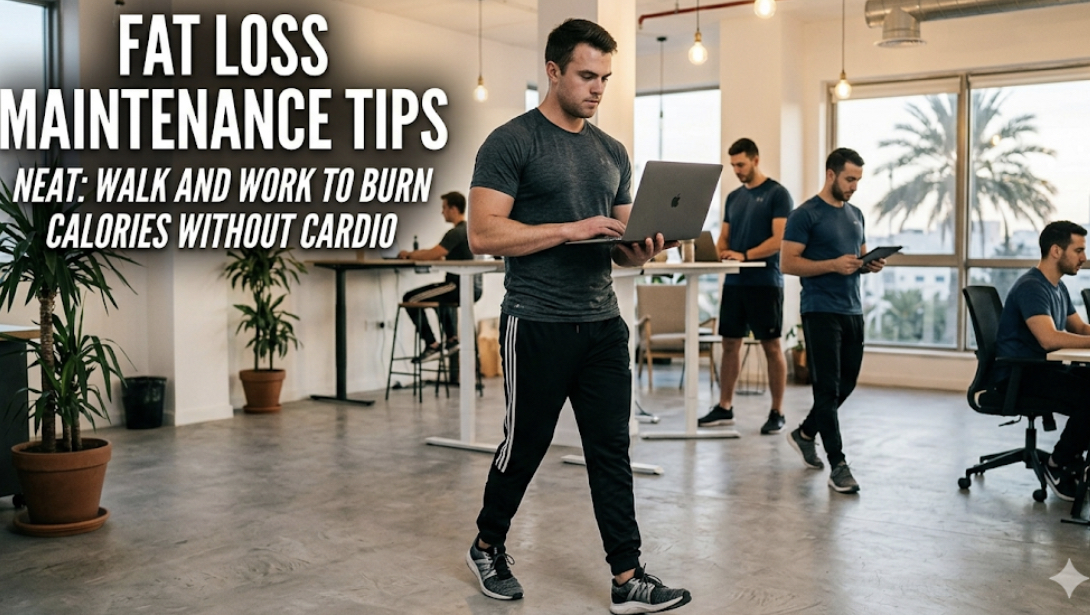
- Walking meetings: 30 minutes walking = +100–150 kcal.
- Standing desk: Burns 8–10 kcal/hour more than sitting; 6 hours = up to 60 extra kcal.
- Carry groceries, take stairs, park farther: Cumulative effect adds 200–400 kcal/day.

3. Strategy #2: Resistance Training – The Metabolic Afterburn Effect
3.1 EPOC & Muscle Mass Impact
Strength training triggers excess post-exercise oxygen consumption (EPOC), elevating metabolism for 24–48 hours . Moreover, each kilogram of muscle burns roughly 10–15 kcal/day at rest, while fat burns only 2–3 kcal. Gaining 3–5 kg of lean mass can raise RMR by 50–75 kcal/day permanently .
3.2 Sample Full-Body Strength Routine (No Cardio Needed)
- Goblet squats: 3×10–12
- Push-ups or bench press: 3×8–12
- Romanian deadlifts: 3×10
- Seated rows or pull-ups: 3×10
- Plank: 3×45 sec

4. Strategy #3: Leverage Thermic Effect of Food (TEF)
4.1 Protein Dominance
TEF is the energy required to digest, absorb, and process nutrients. Protein has the highest TEF (20–30%), followed by carbs (5–10%) and fats (0–3%) . By consuming 30–40% of daily calories from protein, you can increase daily energy expenditure by 80–100 kcal purely through digestion.
4.2 Sample High-Protein Day (2,200 kcal, ~160g protein)
- Breakfast: 3 eggs + 1 cup Greek yogurt + berries (35g protein)
- Lunch: 200g grilled chicken breast, quinoa, spinach (50g protein)
- Snack: 1 scoop plant protein + unsweetened almond milk (25g protein)
- Dinner: 200g tofu or salmon, sweet potato, broccoli (45g protein)
Vegan/Vegetarian Alternative
Use tempeh, seitan, lentils, edamame, and pea protein. Example: tofu scramble + lentil soup + chickpea pasta + vegan protein shake → easily reach 140–160g protein.
Gluten-Free Adaptation
Choose certified gluten-free oats, quinoa, rice, and ensure protein powders are GF. All whole-food proteins (eggs, meat, legumes) are naturally gluten-free.
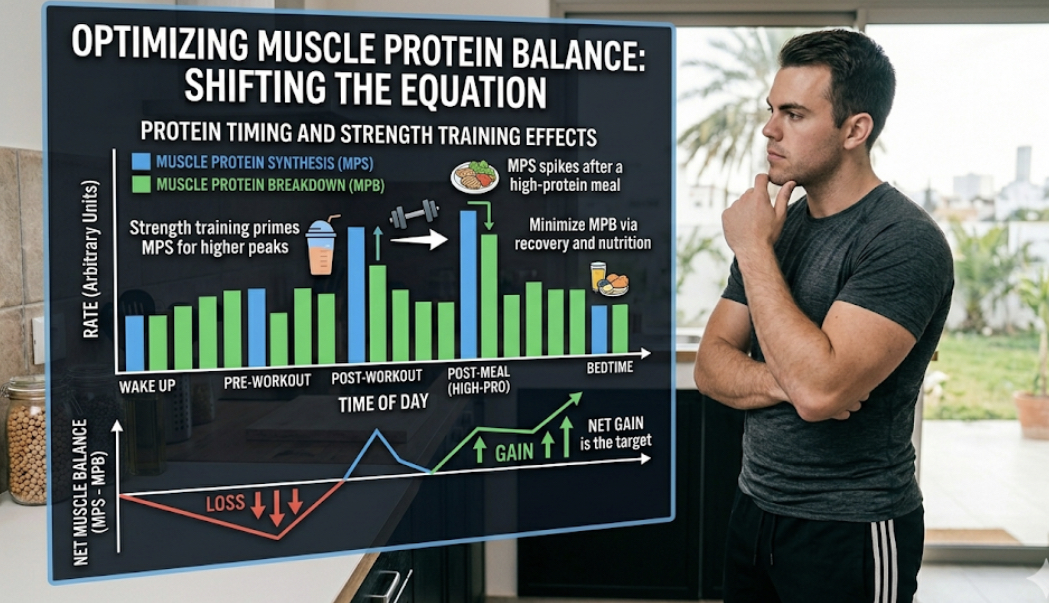
5. Infographic: Muscle Protein Synthesis (MPS) vs. Muscle Protein Breakdown (MPB)
6. Strategy #4: Optimize Sleep & Stress to Maximize NEAT
Poor sleep reduces spontaneous physical activity (NEAT) by 10–15% and increases ghrelin (hunger) . A 2022 study in JAMA Internal Medicine showed that sleep extension (8.5h vs 6h) led to spontaneous reduction in calorie intake and increased fat loss without intentional dieting . Stress management (meditation, nature walks) lowers cortisol, preventing abdominal fat accumulation.
- Aim for 7–9 hours of quality sleep.
- Morning sunlight exposure to regulate circadian rhythm and NEAT levels.
- Reduce blue light 1 hour before bed.
7. Meal Blueprint: Fuel for Calorie Burn Without Cardio
Quick High-Protein Recipes (Under 20 min)
- Protein Oats: ½ cup oats, 1 scoop vanilla protein, 1 tbsp peanut butter, 1 banana — 450 kcal, 30g protein.
- Quick Lentil Bowl: 1 cup cooked lentils, 150g tempeh, 1 tbsp olive oil, mixed greens — 550 kcal, 35g protein, 18g fiber.
- Greek Yogurt Power Bowl: 200g Greek yogurt, 1 scoop collagen, berries, 1 tbsp almond butter — 400 kcal, 42g protein.
Daily Macronutrient Timing
- Pre-workout (strength): 30g protein + 30g carbs (e.g., whey + banana).
- Post-workout: 40g protein + 40g carbs to maximize MPS.
- Evening: casein-rich (cottage cheese) or slow-digesting protein to reduce MPB overnight.
8. Common Mistakes That Hinder Fat Loss Without Cardio
- Underestimating NEAT: Sitting >10 hours/day negates metabolic benefits.
- Chronic low calorie intake: Extreme deficits lower NEAT and increase fatigue.
- Insufficient protein: Less than 1.2g/kg leads to muscle loss and metabolic slowdown.
- Ignoring sleep quality: Reduces willpower for NEAT activities.
9. Frequently Asked Questions
Can you lose fat without doing any cardio?
Yes, by optimizing NEAT, resistance training, and a high-protein diet, many individuals achieve fat loss without dedicated cardio. The key is creating a consistent calorie deficit through increased daily activity and metabolic nutrition.
How many extra calories can NEAT burn daily?
Depending on lifestyle, NEAT can range from 200 to 1,200 kcal/day. Simple changes like walking 8,000–10,000 steps, using a standing desk, and taking stairs can add 300–500 kcal.
What is the best non-cardio fat loss exercise?
Compound strength movements (squats, deadlifts, rows) recruit large muscle groups, maximize EPOC, and improve body composition more efficiently than isolated movements.
Does fidgeting really burn calories?
Yes, studies show that fidgeting can burn up to 350 kcal/day. Small movements like tapping feet, shifting posture, or stretching accumulate significant energy expenditure.
How much protein do I need to increase calorie burn?
Target 1.6–2.2 g per kg of body weight. For a 75 kg person, that’s 120–165 g protein/day, which elevates TEF and supports lean mass.
10. Related Guides & Resources
- How to Avoid Muscle Loss While Cutting (Science-Based Guide)
- Why Fat Loss Slows Down After 2 Weeks (And How to Fix It Fast)
- How Many Steps Per Day for Fat Loss Beginners? (Simple Walking Guide)
- Best Simple Habits for Sustainable Fat Loss (Easy Daily Strategies)
- Why You Feel Tired During a Cutting Phase (And How to Fix It)
- How to Stay Full While Cutting Calories (Hunger Control Guide)
11. Scientific References
- Levine, J. A. (2004). Nonexercise activity thermogenesis (NEAT): environment and biology. American Journal of Physiology-Endocrinology and Metabolism, 286(5), E675–E685. PubMed
- Pesta, D. H., & Samuel, V. T. (2014). A high-protein diet for reducing body fat: mechanisms and possible caveats. Nutrition & Metabolism, 11(1), 53. PMC
- Schoenfeld, B. J., et al. (2021). Resistance training recommendations to maximize muscle hypertrophy. Journal of Strength and Conditioning Research, 35(4), 1109–1117. PubMed
- Hector, A. J., & Phillips, S. M. (2018). Protein recommendations for weight loss in elite athletes: A focus on body composition and performance. International Journal of Sport Nutrition and Exercise Metabolism, 28(2), 170–177. PubMed
- Tasali, E., et al. (2022). Effect of sleep extension on objectively assessed energy intake and weight loss in adults with overweight. JAMA Internal Medicine, 182(4), 365–374. PubMed
- ACSM (2023). Nutrition and Athletic Performance. Medicine & Science in Sports & Exercise, 55(4), 799–812. PubMed
Join the conversation