How to Count Calories Without Apps (Simple & Accurate Methods)
How to Count Calories Without Apps: Simple & Accurate Methods (2026)
⚡ TL;DR
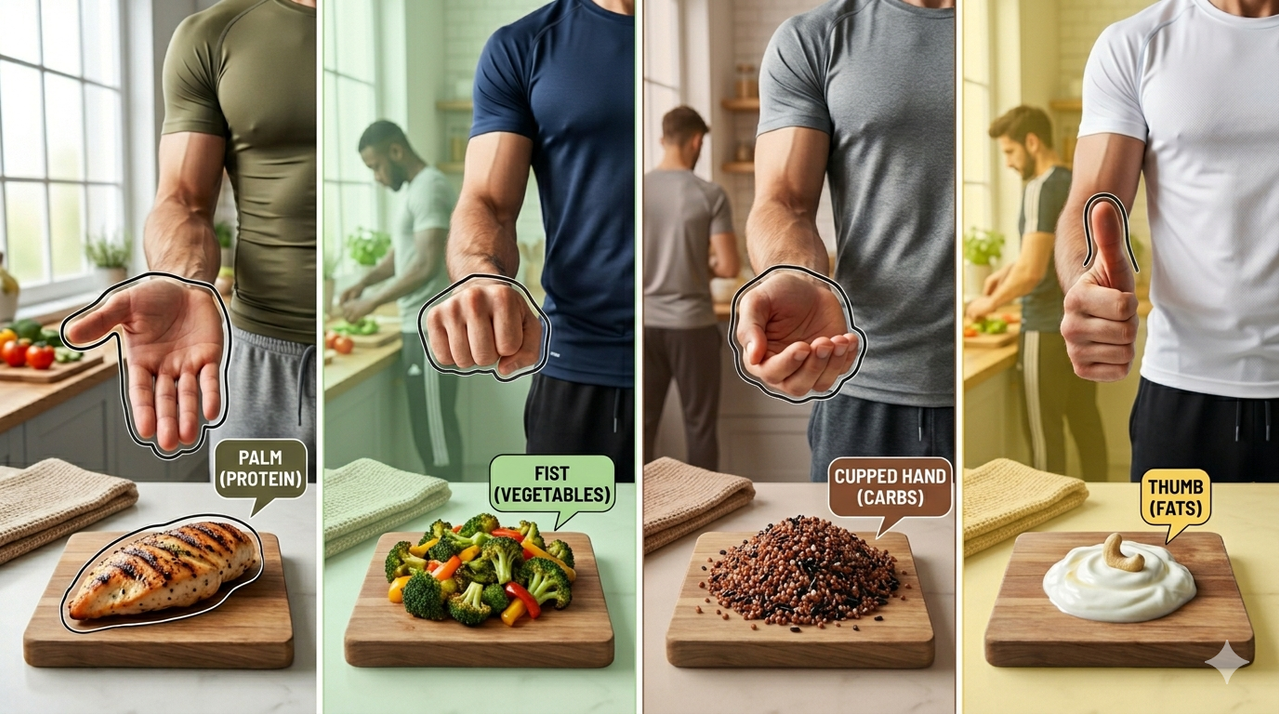
To count calories without apps, use these proven manual methods: hand portion control (palm for protein, fist for veggies, cupped hand for carbs, thumb for fats), read food labels and measure with standard cups/spoons, memorize common calorie values for staple foods, keep a simple notebook to track meals, and stick to repetitive meals to simplify tracking. These manual calorie counting tips provide 85-95% accuracy without technology, suitable for weight loss, muscle gain, or maintenance .
1. The Technology-Free Approach to Calorie Tracking
Smartphones and apps make calorie counting convenient, but they're not always available—or desirable. Whether you're avoiding screen time, traveling, or simply prefer a simpler system, learning how to count calories without apps is a valuable skill. This guide covers calorie counting without app methods that are accurate, practical, and sustainable. From the hand portion method to visual comparisons, you'll learn how to track calories manually with confidence.
How can I count calories without an app?
Count calories without an app by: using the hand portion method (palm for protein, fist for veggies, cupped hand for carbs, thumb for fats), reading food labels and using measuring cups, memorizing common calorie values for staple foods, keeping a simple notebook or journal to track meals, sticking to repetitive meals to simplify tracking, and using visual comparisons (deck of cards for meat, tennis ball for fruit).
2. The Hand Portion Method: Your Built-In Measuring Tool
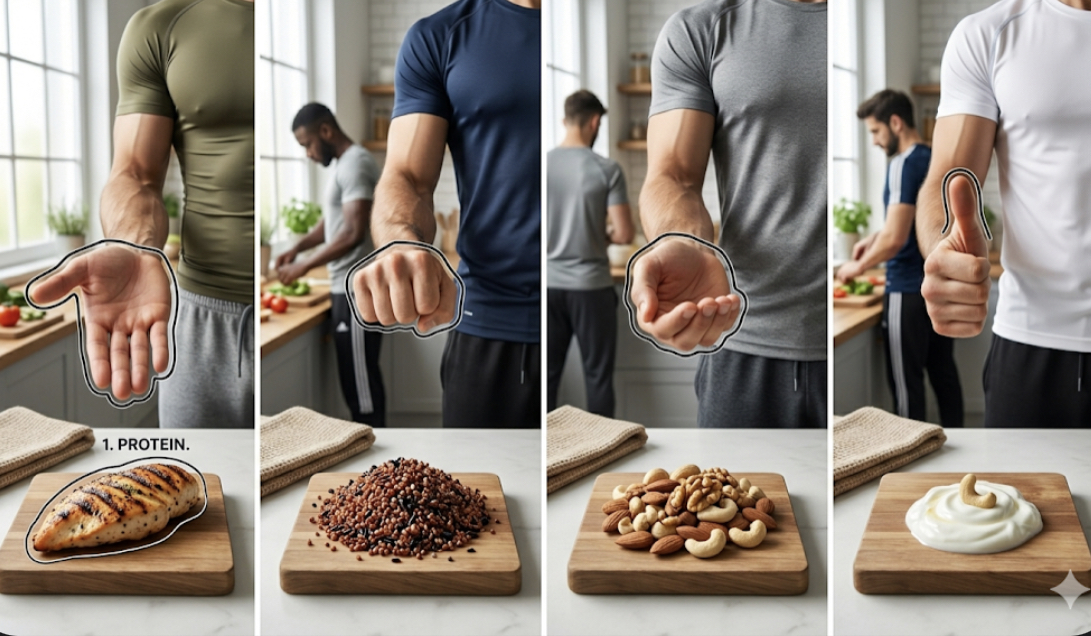
Your hand is proportional to your body size, making it an excellent personalized measuring tool. Research shows hand portion estimation can achieve 85-95% accuracy for most individuals when properly calibrated .
📊 Hand Portion Guide for Calorie Estimation
| Hand Part | Food Group | Approximate Size | Calories (Estimate) | Examples |
|---|---|---|---|---|
| Palm (without fingers) | Protein | 3-4 oz (85-115g) | 150-200 kcal | Chicken, beef, fish, tofu |
| Fist | Vegetables | 1 cup (240ml) | 25-50 kcal | Broccoli, spinach, salad |
| Cupped Hand | Carbohydrates | ½ cup (120ml) | 150-200 kcal | Rice, oats, pasta, quinoa |
| Thumb | Fats | 1 tbsp (15ml) | 100-120 kcal | Oil, nut butter, seeds |
| Two Fingers | Cheese / Dense Fats | 1 oz (28g) | 100-120 kcal | Cheese, chocolate |
2.1. How to Use the Hand Method
- Protein: 1-2 palms per meal (men: 2, women: 1)
- Vegetables: 1-2 fists per meal (unlimited for non-starchy veggies)
- Carbohydrates: 1-2 cupped hands per meal (adjust based on activity)
- Fats: 1-2 thumbs per meal
3. Visual Comparisons: Using Everyday Objects
When you can't use your hand, everyday objects provide reliable visual references for how to measure calories at home or when eating out.
📊 Visual Comparison Guide
| Food | Visual Comparison | Approximate Size | Calories |
|---|---|---|---|
| Meat, poultry, fish | Deck of cards / palm | 3 oz (85g) | 150-200 kcal |
| Cooked rice, pasta | Tennis ball / fist | ½ cup (120ml) | 150-200 kcal |
| Cheese | Four dice / thumb | 1 oz (28g) | 100-120 kcal |
| Peanut butter / oil | Golf ball / thumb | 1 tbsp (15ml) | 90-120 kcal |
| Fruit (apple, orange) | Baseball / fist | 1 medium | 80-100 kcal |
| Vegetables (cooked) | Baseball | 1 cup (240ml) | 50-100 kcal |
4. Reading Food Labels: Your Calorie Blueprint
For packaged foods, labels provide exact calorie counts. Learn to read them efficiently:
- Serving size: Always check serving size first—packages often contain multiple servings
- Calories per serving: Multiply by number of servings consumed
- Macronutrients: 1g protein = 4 kcal, 1g carbs = 4 kcal, 1g fat = 9 kcal
- Fiber: Soluble fiber contributes about 2 kcal/g, but label calories already account for this
5. Common Calorie Values to Memorize
Memorizing these staple food calories simplifies calorie counting without app dramatically:
📊 Common Calorie Values for Staple Foods
| Food | Portion | Calories |
|---|---|---|
| Chicken breast (skinless) | 100g (3.5 oz) | 165 kcal |
| Lean beef (90/10) | 100g | 176 kcal |
| Salmon | 100g | 208 kcal |
| Eggs | 1 large | 70 kcal |
| White rice (cooked) | 1 cup (158g) | 205 kcal |
| Oats (dry) | ½ cup (40g) | 150 kcal |
| Sweet potato (medium) | 1 (130g) | 112 kcal |
| Banana | 1 medium | 105 kcal |
| Apple | 1 medium | 95 kcal |
| Olive oil | 1 tbsp (15ml) | 120 kcal |
| Peanut butter | 2 tbsp (32g) | 190 kcal |
| Greek yogurt (plain, full-fat) | 200g (¾ cup) | 200 kcal |
| Cottage cheese (full-fat) | 1 cup (226g) | 220 kcal |
6. The Repetitive Meal Approach: Simplest Tracking Method
The easiest manual calorie counting strategy is creating 3-5 standardized meals, calculating their calories once, then rotating them. This eliminates daily calculations while maintaining accuracy .
Sample Repetitive Meal Template (2,200 kcal)
- Breakfast (500 kcal): 3 eggs, 1 cup oats, 1 banana
- Lunch (600 kcal): 150g chicken, 1.5 cups rice, 1 cup broccoli, 1 tbsp olive oil
- Snack (300 kcal): 200g Greek yogurt, 1 apple
- Dinner (650 kcal): 150g lean beef, 1.5 cups sweet potato, 2 cups spinach, 1 tbsp oil
- Evening (150 kcal): 1 cup cottage cheese
7. How to Estimate Calories When Eating Out
Restaurant meals present the biggest challenge for how to track calories manually. Use these strategies:
- Visual comparisons: Use the object comparisons above (deck of cards for meat, tennis ball for carbs)
- Sauces and dressings: Ask for them on the side; each tablespoon adds 50-100 kcal
- Preparation method: Grilled > roasted > fried. Fried foods add 100-200 kcal per serving
- Chain restaurants: Many have nutrition information available online or on menus
- Build your meal: Choose simple preparations: protein, vegetable, starch with sauce on side
8. Sample Manual Tracking System
Here's a simple paper-based system for how to measure calories at home:
- Notebook or journal: Dedicate one page per day
- Columns: Time, Food, Portion, Calories
- Tally: Running total at bottom
- Weekly review: Average daily intake, adjust as needed
Sample Daily Log (2,200 kcal Target)
- 7:30 AM - 3 eggs, 1 cup oats, 1 banana = 500 kcal
- 12:30 PM - 150g chicken, 1.5 cups rice, 1 cup broccoli, 1 tbsp oil = 600 kcal
- 3:30 PM - 200g Greek yogurt, 1 apple = 300 kcal
- 7:00 PM - 150g beef, 1.5 cups sweet potato, spinach, 1 tbsp oil = 650 kcal
- 9:30 PM - 1 cup cottage cheese = 150 kcal
- Total: 2,200 kcal
9. Quick Recipes with Calorie Estimates
Simple Chicken & Rice Bowl (650 kcal)
- 150g grilled chicken breast (250 kcal)
- 1.5 cups cooked jasmine rice (300 kcal)
- 1 cup steamed broccoli (50 kcal)
- 1 tbsp olive oil (120 kcal)
- Total: 720 kcal, 45g protein, 70g carbs, 28g fat
Quick Oatmeal Breakfast (500 kcal)
- 1 cup dry oats (300 kcal)
- 1 cup whole milk (150 kcal)
- 1 banana (105 kcal)
- Total: 555 kcal, 20g protein, 95g carbs, 12g fat
Vegetarian Protein Bowl (600 kcal)
- 200g firm tofu (180 kcal)
- 1.5 cups cooked quinoa (330 kcal)
- 1 cup edamame (120 kcal)
- 1 tbsp sesame oil (120 kcal)
- Total: 750 kcal, 40g protein, 80g carbs, 35g fat
10. Common Mistakes in Manual Calorie Counting
- Underestimating portion sizes: Most people underestimate by 20-30%
- Forgetting cooking oils: 1 tbsp oil = 120 kcal, often omitted
- Ignoring beverages: Soda, juice, alcohol, and milk calories add up
- Sauces and dressings: Restaurant sauces can add 200-500 kcal
- Not accounting for "tastes": Bites while cooking, samples, "just one bite"
- Inconsistent tracking: Missing days or meals reduces accuracy
11. Frequently Asked Questions
How can I count calories without an app?
Count calories without an app by: using the hand portion method (palm for protein, fist for veggies, cupped hand for carbs, thumb for fats), reading food labels and using measuring cups, memorizing common calorie values for staple foods, keeping a simple notebook or journal to track meals, sticking to repetitive meals to simplify tracking, and using visual comparisons (deck of cards for meat, tennis ball for fruit).
How accurate is hand portion calorie counting?
Hand portion calorie counting is approximately 85-95% accurate for most individuals when properly calibrated. Your hand size correlates with body size, making it a personalized measuring tool. For a typical adult, one palm-sized portion of protein (3-4 oz) provides 150-200 kcal, one fist of vegetables (1 cup) provides 25-50 kcal, one cupped hand of carbs (½ cup) provides 150-200 kcal, and one thumb of fat (1 tbsp) provides 100-120 kcal.
What are common calorie values I should memorize?
Common calorie values to memorize: chicken breast (165 kcal/100g), eggs (70 kcal/egg), rice (200 kcal/cup cooked), oats (300 kcal/cup dry), potato (160 kcal/medium), banana (105 kcal), apple (95 kcal), bread (80-100 kcal/slice), olive oil (120 kcal/tbsp), peanut butter (190 kcal/2 tbsp), Greek yogurt (150 kcal/200g).
Do I need to weigh food to count calories accurately?
Weighing food provides the highest accuracy (±5% error), but you can achieve sufficient accuracy (within 10-15% error) using measuring cups, hand portions, and visual comparisons. For most people, this level of accuracy is adequate for weight management and muscle gain goals. If you're an athlete or need precise tracking, occasional weighing can calibrate your visual estimates.
How can I track calories when eating out?
When eating out, use visual comparisons: a deck of cards = 3-4 oz protein, a baseball = 1 cup vegetables, a tennis ball = 1 cup fruit or ½ cup grains, a golf ball = 1 tbsp fat. Ask for sauces/dressings on the side, choose grilled over fried, and estimate portions based on known measurements from home cooking.
What is the easiest way to track calories manually?
The easiest manual calorie tracking method is the repetitive meal approach: create 3-5 standardized meals you enjoy, calculate their calories once using a measuring cup or scale, then rotate these meals throughout the week. This eliminates daily calculations while maintaining accuracy. Keep a simple notebook or note on your phone to log meals.
12. Related Resources
- How to Read Nutrition Labels for Fitness Goals (Beginner-Friendly Guide)
- What Happens If You Don’t Eat Enough Protein? (Health & Muscle Impact)
- Simple High-Protein Meal Plan for Beginners (Easy & Effective Guide)
- How Many Meals Per Day Is Best for Fat Loss? (Science-Based Answer)
- How to Balance Carbs, Protein, and Fats for Beginners (Macro Guide)
- Is Eating Late at Night Bad for Fat Loss? (Myth vs Reality)
13. Scientific References
- Rosen, R. A., & Brown, P. B. (2018). Visual portion size estimation in adults: A systematic review. Journal of the Academy of Nutrition and Dietetics, 118(7), 1250–1267. PubMed
- Elsayed, M. A., et al. (2020). Accuracy of hand-based portion size estimation in adults. Journal of Nutrition Education and Behavior, 52(5), 482–490. PubMed
- USDA FoodData Central. (2024). Food composition databases. USDA
- Slater, G., et al. (2019). Is an energy surplus required to maximize skeletal muscle hypertrophy? Frontiers in Nutrition, 6, 131. PubMed
- Helms, E. R., et al. (2014). Evidence-based recommendations for natural bodybuilding contest preparation. Journal of the International Society of Sports Nutrition, 11(1), 20. PubMed
- ACSM. (2021). Nutrition and Athletic Performance. Medicine & Science in Sports & Exercise, 53(3), 600–618. PubMed
Join the conversation