How to Reduce Cravings While Dieting (Control Hunger & Stay Consistent)
How to Reduce Cravings While Dieting (Control Hunger & Stay Consistent)
⚡ TL;DR
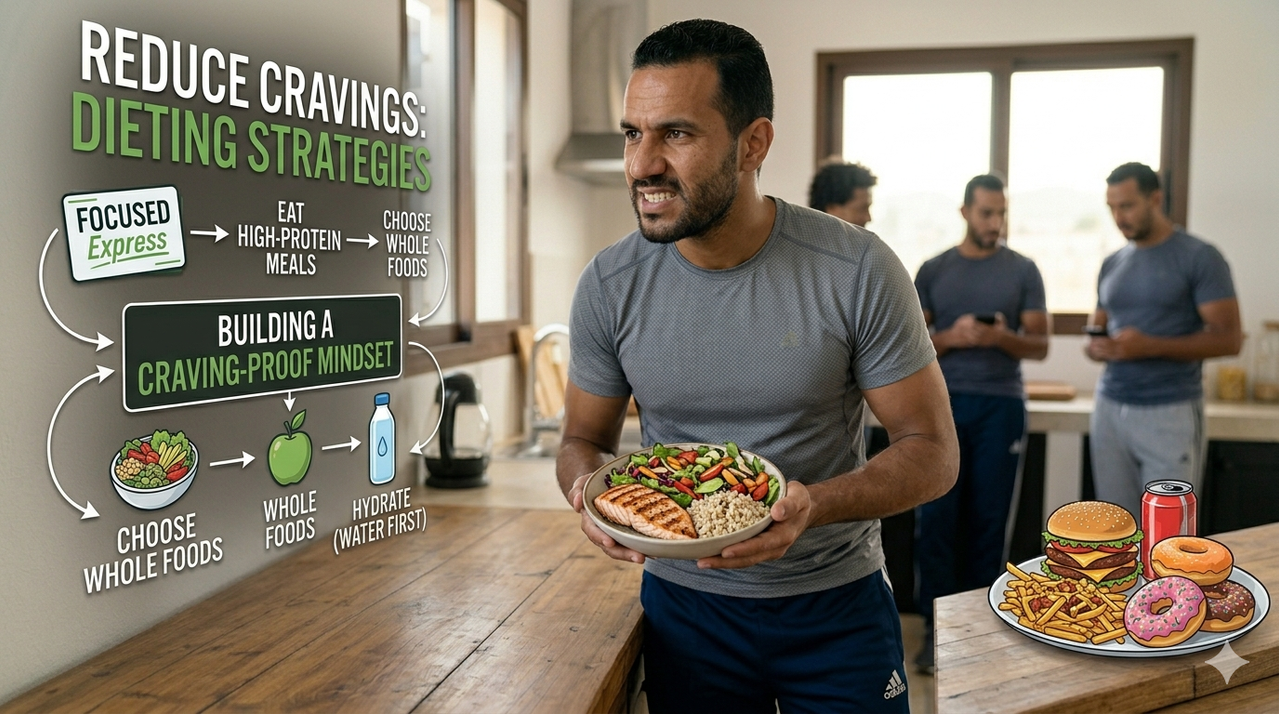
To reduce cravings while dieting, focus on: high protein intake (1.6–2.2 g/kg) to increase satiety hormones, adequate fiber (25–35g) to slow digestion, stable blood sugar by eating regular meals, and managing triggers like stress and boredom. Cravings are normal during a calorie deficit due to hormonal changes (ghrelin up, leptin down) . Instead of fighting them with willpower, use strategies like planned treats, distraction, and addressing nutrient deficiencies . This guide provides a complete system to control cravings and stay on track.
1. The Craving Battle: Why Your Brain Wants Junk Food
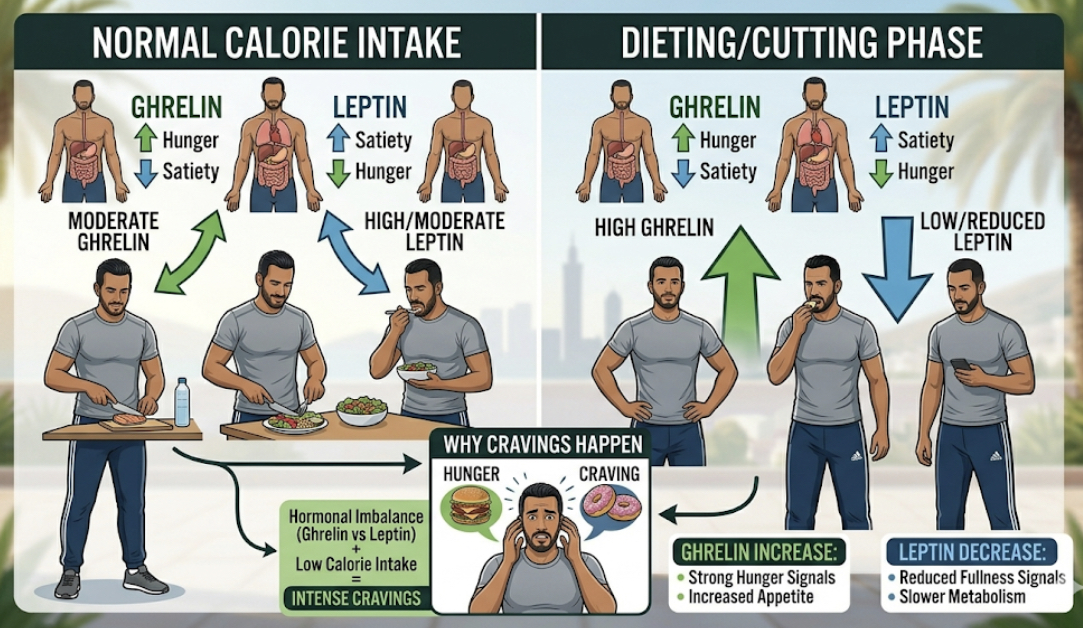
You're doing great on your diet. Then it hits—a sudden, overwhelming desire for chocolate, chips, or ice cream. You feel powerless. This isn't a lack of willpower; it's biology. When you diet, your body increases hunger hormones and reduces satiety signals . This guide will show you how to control food cravings using science-backed strategies.
Why do cravings happen during dieting?
Cravings during dieting happen due to: 1) Calorie deficit—your body increases ghrelin (hunger hormone) and decreases leptin (satiety) to protect against perceived starvation . 2) Habits and cues—your brain associates certain times, emotions, or environments with food. 3) Low nutrient intake—inadequate protein, fiber, or micronutrients can trigger specific cravings (e.g., sugar cravings from low blood sugar). Understanding these triggers is the first step to managing them.
2. Strategy #1: Prioritize Protein – The Satiety King
2.1. How Protein Reduces Cravings
Protein increases levels of satiety hormones (PYY, GLP-1, CCK) and reduces ghrelin . A 2020 study found that increasing protein from 15% to 30% of calories reduced cravings by 60% and led to spontaneous calorie reduction .
2.2. How Much Protein?
Aim for 1.6–2.2 grams per kilogram of body weight daily. For a 70 kg person, that's 112–154 grams. Spread across 3–5 meals (20–40 g per meal).
2.3. Best Protein Sources
- Animal: Eggs, chicken breast, Greek yogurt, cottage cheese, fish, lean beef, whey/casein
- Plant: Tofu, tempeh, edamame, lentils, chickpeas, seitan, pea protein
3. Strategy #2: Load Up on Fiber – Slow Digestion, Full Feeling
3.1. How Fiber Helps
Fiber slows gastric emptying, stabilizes blood sugar, and adds bulk to meals. Soluble fiber (oats, legumes, apples) forms a gel that delays digestion .
3.2. Fiber Target
Aim for 25–35 grams of fiber daily. Most people fall short—increase gradually to avoid digestive issues.
3.3. High-Fiber Foods
- Legumes: Lentils, chickpeas, black beans (8–10g per cup)
- Vegetables: Broccoli, Brussels sprouts, artichokes
- Fruits: Raspberries, pears, apples (with skin)
- Grains: Oats, quinoa, chia seeds
4. Strategy #3: Stabilize Blood Sugar – Avoid the Crash
4.1. Why Blood Sugar Matters
Blood sugar crashes trigger intense cravings for sugar and refined carbs . Eating regular meals and pairing carbs with protein and fat stabilizes glucose levels.
4.2. How to Stabilize
- Eat every 3–5 hours to prevent extreme hunger
- Combine carbs with protein and fat (e.g., apple with peanut butter)
- Limit refined carbs and added sugars—they spike then crash blood sugar
- Start meals with vegetables or protein to blunt glucose spikes
5. Strategy #4: Stay Hydrated – Thirst vs. Hunger
Thirst is often mistaken for hunger. Drinking water before meals reduces calorie intake by 10–15% . Aim for 2–3 liters daily, and when a craving hits, drink a glass of water and wait 10–15 minutes.
6. Strategy #5: Manage Stress and Sleep – Hormonal Balance
6.1. The Stress-Craving Connection
Chronic stress elevates cortisol, which increases appetite and cravings for high-calorie foods . Sleep deprivation increases ghrelin by 15% and decreases leptin by 26% .
6.2. How to Fix
- Sleep 7–9 hours nightly
- Practice stress reduction: Meditation, walking, deep breathing
- Limit caffeine after 2 PM to protect sleep quality
7. Strategy #6: Planned Treats – The Power of Permission
7.1. Why Restriction Backfires
Forbidding foods often increases desire for them . Planned, moderate treats reduce feelings of deprivation and prevent binge episodes.
7.2. How to Implement
- Schedule a small treat daily (e.g., 2 squares dark chocolate, 100g ice cream)
- Use the "10% rule": 90% of calories from nutrient-dense foods, 10% from treats
- Mindful indulgence: Eat slowly, savor it, and move on—no guilt

8. Strategy #7: Distraction and Delay – Outlast the Craving
8.1. The 10-Minute Rule
Most cravings last 10–20 minutes. Set a timer for 10 minutes and do something else—walk, call a friend, stretch. Often, the craving passes .
8.2. Distraction Techniques
- Go for a walk (outside if possible)
- Drink a large glass of water
- Brush your teeth (signal to brain that eating is over)
- Chew sugar-free gum
- Text or call a friend
9. Sample Meal Plan – 1,800 kcal, 140g Protein (Cravings-Busting)
Omnivore Plan
- Breakfast (7:30 AM): 3 eggs, 1 cup oatmeal with berries (450 kcal, 30g protein, 8g fiber)
- Lunch (12:30 PM): 150g grilled chicken breast, 2 cups mixed greens, ½ cup quinoa, 1 tbsp olive oil (500 kcal, 40g protein, 10g fiber)
- Snack (4:00 PM): 200g Greek yogurt, 1 apple (250 kcal, 20g protein, 5g fiber)
- Dinner (7:30 PM): 150g salmon, 2 cups roasted broccoli, 1.5 cups sweet potato (550 kcal, 35g protein, 8g fiber)
- Evening treat (optional): 150g cottage cheese + 2 squares dark chocolate (200 kcal, 15g protein)
Vegan/Vegetarian Plan
- Breakfast: Tofu scramble (200g firm tofu), 1 cup oatmeal with 2 tbsp peanut butter, berries (550 kcal, 35g protein, 12g fiber)
- Lunch: 1.5 cups cooked lentils, 2 cups mixed greens, 1 cup roasted chickpeas (550 kcal, 30g protein, 20g fiber)
- Snack: 1 cup edamame, 1 apple (250 kcal, 15g protein, 8g fiber)
- Dinner: 1.5 cups quinoa, 200g baked tofu, 2 cups roasted vegetables (550 kcal, 35g protein, 12g fiber)
- Evening: 1 cup unsweetened soy milk (100 kcal, 8g protein)
Gluten-Free Options
- Use certified gluten-free oats, quinoa, rice, or buckwheat.
- Ensure tempeh and tofu are gluten-free certified.
10. Quick Craving-Busting Recipes
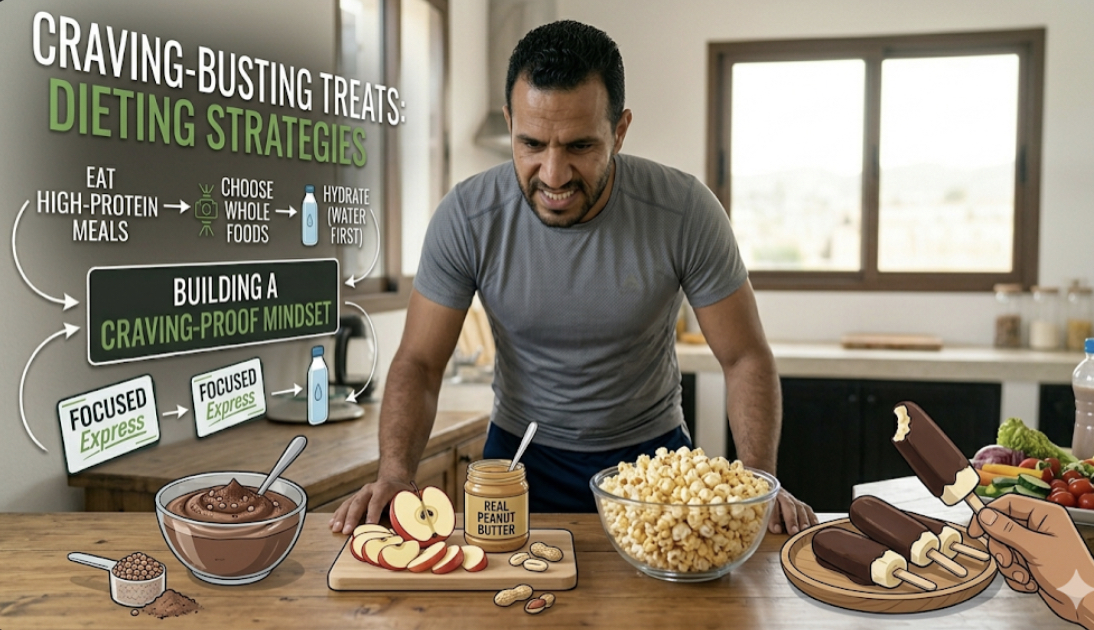
- Chocolate Protein Pudding (200 kcal, 20g protein): 1 scoop chocolate protein, ½ cup Greek yogurt, 1 tbsp cocoa powder, water to thin.
- Apple with Cinnamon Peanut Butter (200 kcal, 7g protein): 1 apple, 1 tbsp peanut butter, sprinkle cinnamon.
- Savory Popcorn (150 kcal, 4g fiber): 3 cups air-popped popcorn, spray with olive oil, salt, nutritional yeast.
- Frozen Banana Bites (100 kcal): ½ banana sliced, frozen, dip in dark chocolate (optional).
11. Common Mistakes That Worsen Cravings
- Mistake #1: Too large a calorie deficit. Severe deficits spike hunger hormones. Aim for 300–500 kcal deficit.
- Mistake #2: Skimping on protein. Below 1.6 g/kg, satiety suffers.
- Mistake #3: Ignoring fiber. Low-fiber diets lead to faster digestion and hunger.
- Mistake #4: Poor sleep. Sleep deprivation increases ghrelin by 15% .
- Mistake #5: All-or-nothing mindset. One "bad" food doesn't ruin your diet—restriction backfires.
- Mistake #6: Not drinking enough water. Dehydration mimics hunger.
12. Frequently Asked Questions
Why do cravings happen during dieting?
Cravings happen due to calorie deficit (increased ghrelin, decreased leptin), habits, and low nutrient intake (especially protein and fiber).
How can I stop cravings immediately?
Drink water, go for a walk, brush your teeth, or use the 10-minute delay rule. Distraction often outlasts the craving.
What foods reduce cravings?
High-protein foods (eggs, Greek yogurt), high-fiber foods (lentils, oats, vegetables), and healthy fats (nuts, avocado) increase satiety.
Does sugar cause cravings?
Yes. Refined sugar spikes then crashes blood sugar, triggering more cravings. Stabilize with protein and fiber.
How much protein do I need to reduce cravings?
Aim for 1.6–2.2 grams per kilogram of body weight daily. Spread across 3–5 meals for best results.
Does sleep affect cravings?
Yes. Poor sleep increases ghrelin (hunger) and decreases leptin (satiety), leading to stronger cravings.
Should I completely avoid trigger foods?
No—complete restriction often increases desire. Plan small, mindful treats to prevent feelings of deprivation.
13. Related Resources
- How to Avoid Muscle Loss While Cutting (Science-Based Guide)
- Why Fat Loss Slows Down After 2 Weeks (And How to Fix It Fast)
- How Many Steps Per Day for Fat Loss Beginners? (Simple Walking Guide)
- Best Simple Habits for Sustainable Fat Loss (Easy Daily Strategies)
- Why You Feel Tired During a Cutting Phase (And How to Fix It)
- How to Stay Full While Cutting Calories (Hunger Control Guide)
14. Scientific References
- Morton, R. W., et al. (2018). A systematic review, meta-analysis and meta-regression of the effect of protein supplementation on resistance training-induced gains in muscle mass and strength in healthy adults. British Journal of Sports Medicine, 52(6), 376–384. PubMed
- Westerterp-Plantenga, M. S. (2008). Protein intake and energy balance. Regulatory Peptides, 149(1-3), 67–69. PubMed
- Slavin, J. L. (2005). Dietary fiber and body weight. Nutrition, 21(3), 411–418. PubMed
- Nedeltcheva, A. V., et al. (2010). Insufficient sleep undermines dietary efforts to reduce adiposity. Annals of Internal Medicine, 153(7), 435–441. PubMed
- Epel, E. S., et al. (2000). Stress and body shape: stress-induced cortisol secretion is consistently higher among women with central fat. Psychosomatic Medicine, 62(5), 623–632. PubMed
- Dennis, E. A., et al. (2010). Water consumption increases weight loss during a hypocaloric diet intervention. Obesity, 18(2), 300–307. PubMed
- ACSM. (2021). Nutrition and Athletic Performance. Medicine & Science in Sports & Exercise, 53(3), 600–618. PubMed
Join the conversation