Why You’re Not Losing Belly Fat Specifically (Common Reasons Explained)
Why You're Not Losing Belly Fat Specifically (Common Reasons Explained)
⚡ TL;DR
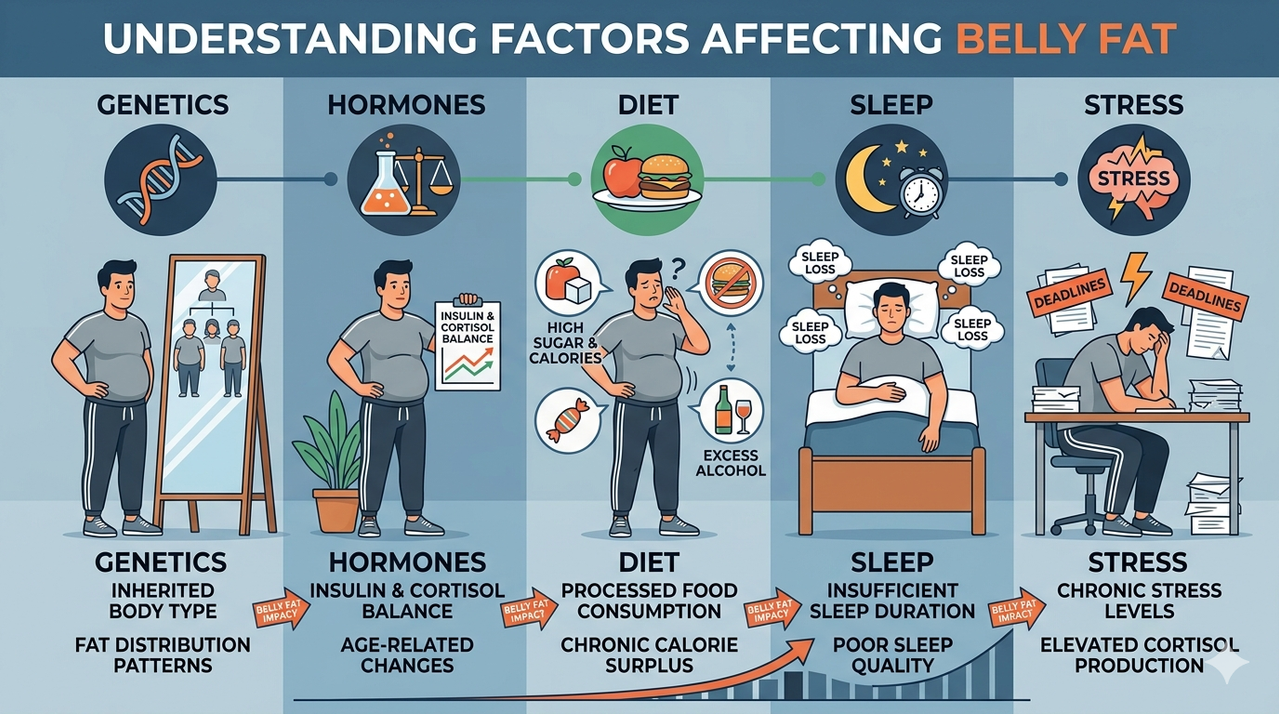
If you're not losing belly fat specifically, it's not because you're doing something wrong—belly fat is biologically stubborn. Reasons include: genetics (fat distribution patterns), hormones (cortisol, insulin), age and sex (menopause, androgens), and spot reduction myth (you can't target fat loss) . The solution is a combination of a modest calorie deficit, stress management, quality sleep, and consistent training. This guide explains why belly fat resists and provides actionable strategies to finally reduce it.
1. The Frustration: Why Your Waist Won't Budge
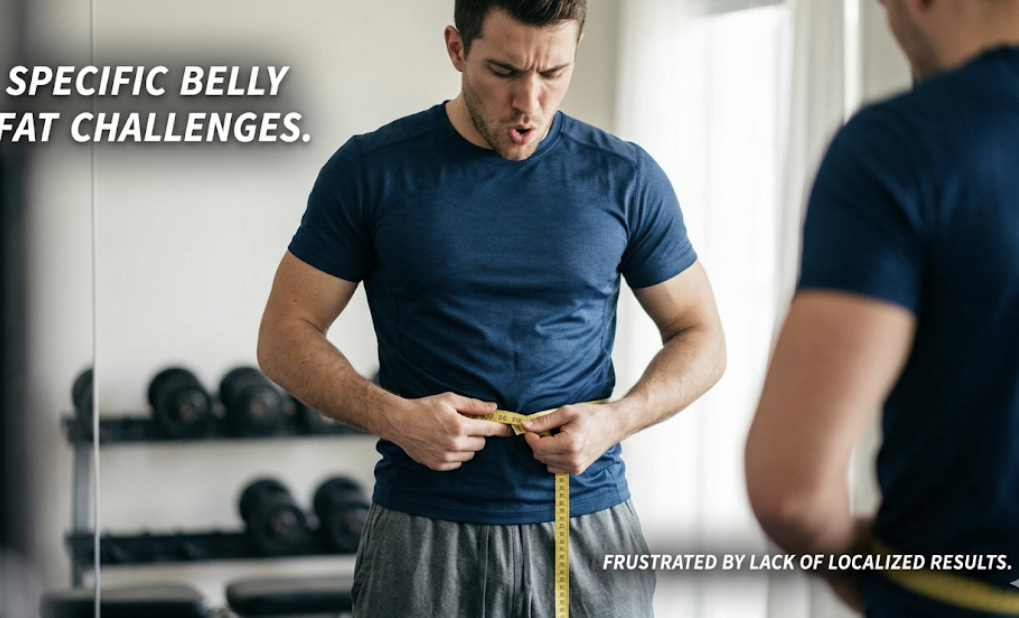
You're eating well, exercising consistently, and losing weight—but your belly seems unchanged. You're not losing belly fat specifically, and it's maddening. This is one of the most common frustrations in fitness. Understanding the science behind stubborn abdominal fat is the first step to finally seeing results.
Why is belly fat the hardest to lose?
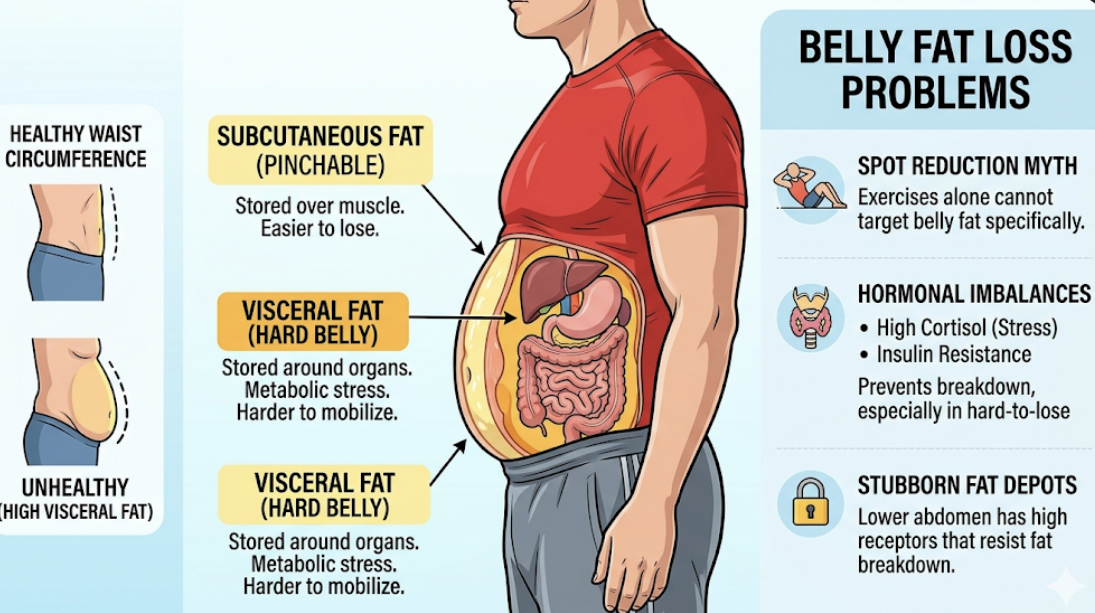
Belly fat is the hardest to lose due to three main factors: 1) Genetics—your body's fat distribution pattern is largely inherited. 2) Hormones—cortisol (stress hormone) promotes fat storage in the abdominal area, and insulin resistance can make belly fat more stubborn. 3) Fat cell biology—visceral fat (deep abdominal fat) has more beta-adrenergic receptors, making it more responsive to stress hormones and harder to mobilize . Additionally, spot reduction is a myth—you can't choose where you lose fat first .
2. Reason #1: Genetics and Fat Distribution
2.1. You Can't Choose Where You Lose Fat
Spot reduction—the idea that you can target fat loss from a specific area by exercising that area—has been repeatedly debunked . Fat loss occurs systemically; where you lose fat first is determined by genetics. If your body stores fat primarily in your abdomen, it will also be the last place it leaves.
2.2. Body Shapes and Genetics
People with an "apple" shape (fat stored around the midsection) tend to have higher visceral fat and may find belly fat more stubborn than those with a "pear" shape (fat stored in hips and thighs) . This pattern is strongly influenced by genetics and hormones .
3. Reason #2: Hormonal Factors (Cortisol, Insulin, Sex Hormones)
3.1. Cortisol – The Stress Hormone
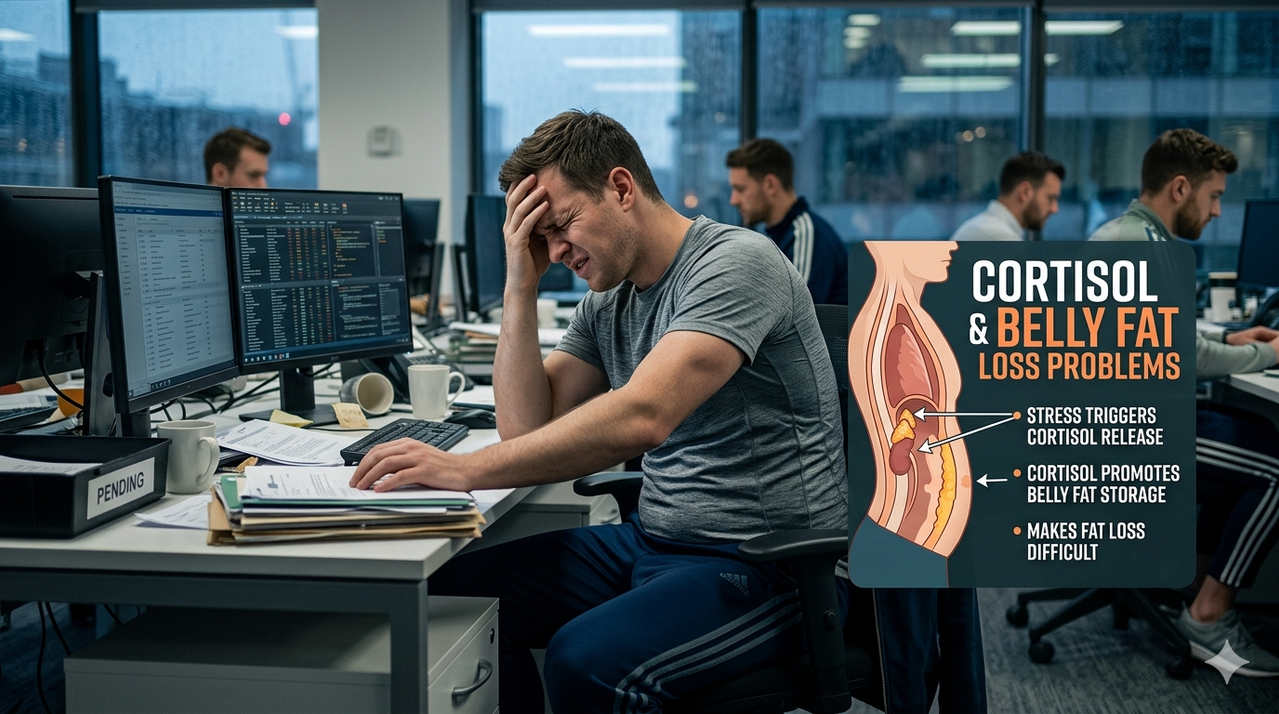
Chronic stress elevates cortisol, which promotes fat storage in the abdominal area. Cortisol increases appetite for high-calorie foods and encourages visceral fat accumulation . Studies show that individuals with higher stress levels have greater waist circumference .
3.2. Insulin Resistance
Insulin resistance—often driven by high sugar intake, sedentary lifestyle, and excess calories—makes it harder to mobilize fat from the abdomen. Visceral fat cells are more insulin-resistant than subcutaneous fat, creating a vicious cycle .
3.3. Sex Hormones
Men naturally store more fat in the abdomen due to androgens. In women, declining estrogen during menopause shifts fat storage to the abdominal area, making belly fat more prominent .
4. Reason #3: Diet Quality – Sugar, Alcohol, and Processed Foods
4.1. Added Sugar and Refined Carbs
High sugar intake is strongly associated with increased visceral fat. Fructose (in added sugars) is metabolized in the liver and can promote fat accumulation around the organs .
4.2. Alcohol
Alcohol is processed by the liver and can contribute to visceral fat accumulation. "Beer belly" isn't a myth—excess alcohol consumption is linked to increased waist circumference .
4.3. Ultra-Processed Foods
Processed foods often combine sugar, unhealthy fats, and low fiber, promoting inflammation and insulin resistance—both linked to abdominal fat .
5. Reason #4: Poor Sleep Quality and Duration
Sleep deprivation increases ghrelin (hunger hormone) and decreases leptin (satiety hormone), leading to overeating. It also elevates cortisol, promoting abdominal fat storage. Studies show that sleeping less than 6 hours per night is associated with increased visceral fat .
6. Reason #5: Not Enough Movement (Especially NEAT)
Sedentary behavior is a major risk factor for visceral fat accumulation. Non-exercise activity thermogenesis (NEAT)—daily movement like walking, standing—plays a crucial role in fat loss. Increasing daily steps can significantly reduce waist circumference .
7. Reason #6: Age-Related Metabolic Changes
As we age, muscle mass decreases, metabolic rate slows, and hormonal shifts (especially in women during menopause) lead to increased abdominal fat storage. This makes belly fat more stubborn over time .
8. How to Finally Lose Belly Fat: Actionable Strategies
8.1. Create a Modest Calorie Deficit
Aim for 300–500 kcal below maintenance. Aggressive deficits can increase cortisol and stress, making belly fat harder to lose .
8.2. Prioritize Protein and Fiber
High protein (1.6–2.2 g/kg) and high fiber (25–35g) improve satiety and support hormonal balance .
8.3. Manage Stress
Incorporate stress-reduction practices: meditation, walking, deep breathing, or yoga. Lower cortisol = less abdominal fat storage .
8.4. Get Quality Sleep
Aim for 7–9 hours nightly. Consistent sleep patterns help regulate hunger hormones and cortisol .
8.5. Increase Daily Movement
Walk 7,000–10,000 steps daily. NEAT is more impactful for fat loss than structured exercise alone .
8.6. Include Strength Training
Resistance training builds muscle, which increases metabolic rate and improves insulin sensitivity—both beneficial for reducing visceral fat .

9. Sample Meal Plan – 1,800 kcal (Supports Fat Loss)
Omnivore Plan
- Breakfast: 3 eggs, 1 cup oatmeal with berries (450 kcal, 30g protein, 10g fiber)
- Lunch: 150g grilled chicken breast, 2 cups mixed greens, ½ cup quinoa, 1 tbsp olive oil (500 kcal, 40g protein, 8g fiber)
- Snack: 200g Greek yogurt, 1 apple (250 kcal, 20g protein, 5g fiber)
- Dinner: 150g salmon, 2 cups roasted broccoli, 1.5 cups sweet potato (550 kcal, 35g protein, 8g fiber)
- Evening: 150g cottage cheese (150 kcal, 15g protein)
Vegan/Vegetarian Plan
- Breakfast: Tofu scramble (200g firm tofu), 1 cup oatmeal with 2 tbsp peanut butter, berries (550 kcal, 35g protein, 12g fiber)
- Lunch: 1.5 cups cooked lentils, 2 cups mixed greens, 1 cup roasted chickpeas (550 kcal, 30g protein, 20g fiber)
- Snack: 1 cup edamame, 1 apple (250 kcal, 15g protein, 8g fiber)
- Dinner: 1.5 cups quinoa, 200g baked tofu, 2 cups roasted vegetables (550 kcal, 35g protein, 12g fiber)
- Evening: 1 cup unsweetened soy milk (100 kcal, 8g protein)
Gluten-Free Options
- Use certified gluten-free oats, quinoa, rice, or buckwheat.
- Ensure tempeh and tofu are gluten-free certified.
10. Quick Recipes to Support Belly Fat Loss
- Anti-Inflammatory Smoothie (350 kcal): 1 cup spinach, ½ cup frozen pineapple, 1 scoop protein, 1 tbsp chia seeds, unsweetened almond milk.
- Lentil Vegetable Soup (300 kcal, 15g fiber): 1 cup lentils, carrots, celery, onion, garlic, vegetable broth.
- Salmon & Asparagus (400 kcal): 150g salmon, 1 cup asparagus, 1 tbsp olive oil, lemon juice.
11. Common Mistakes That Hinder Belly Fat Loss
- Mistake #1: Doing endless crunches. Spot reduction doesn't work. Focus on overall fat loss.
- Mistake #2: Cutting calories too low. Aggressive deficits increase cortisol, worsening belly fat storage.
- Mistake #3: Ignoring sleep and stress. These are major factors in abdominal fat accumulation.
- Mistake #4: Too much cardio, not enough strength training. Building muscle improves insulin sensitivity and metabolic rate.
- Mistake #5: Drinking alcohol frequently. Alcohol is metabolized in the liver and contributes to visceral fat.
- Mistake #6: Expecting quick results. Belly fat is often the last to go—patience is essential.
12. Frequently Asked Questions
Why is belly fat the hardest to lose?
Due to genetics, hormones (cortisol, insulin), and fat cell biology. Visceral fat has more beta-adrenergic receptors, making it more responsive to stress hormones and harder to mobilize.
How long does it take to lose belly fat?
It varies by individual. With consistent diet and exercise, visible changes may take 8–12 weeks. Belly fat is often the last to go.
Can stress cause belly fat?
Yes. Chronic stress elevates cortisol, which promotes fat storage in the abdominal area and increases cravings for high-calorie foods.
Does alcohol cause belly fat?
Yes, excess alcohol consumption is linked to increased visceral fat. Alcohol is processed by the liver and can contribute to "beer belly."
Do crunches help lose belly fat?
No—spot reduction is a myth. Crunches strengthen abdominal muscles but don't burn fat specifically from that area. Overall fat loss is needed.
What foods help lose belly fat?
High-protein foods (eggs, chicken, fish), high-fiber foods (vegetables, legumes, oats), healthy fats (avocado, nuts, olive oil), and limiting added sugar and processed foods.
How much sleep do I need to lose belly fat?
7–9 hours per night. Poor sleep increases ghrelin and cortisol, promoting abdominal fat storage.
13. Related Resources
- How to Avoid Muscle Loss While Cutting (Science-Based Guide)
- Why Fat Loss Slows Down After 2 Weeks (And How to Fix It Fast)
- How Many Steps Per Day for Fat Loss Beginners? (Simple Walking Guide)
- Best Simple Habits for Sustainable Fat Loss (Easy Daily Strategies)
- Why You Feel Tired During a Cutting Phase (And How to Fix It)
- How to Stay Full While Cutting Calories (Hunger Control Guide)
14. Scientific References
- Kissebah, A. H., & Krakower, G. R. (1994). Regional adiposity and morbidity. Physiological Reviews, 74(4), 761–811. PubMed
- Björntorp, P. (2001). Do stress reactions cause abdominal obesity and comorbidities? Obesity Reviews, 2(2), 73–86. PubMed
- Epel, E. S., et al. (2000). Stress and body shape: stress-induced cortisol secretion is consistently higher among women with central fat. Psychosomatic Medicine, 62(5), 623–632. PubMed
- Nedeltcheva, A. V., et al. (2010). Insufficient sleep undermines dietary efforts to reduce adiposity. Annals of Internal Medicine, 153(7), 435–441. PubMed
- Ross, R., et al. (2000). Reduction in obesity and related comorbid conditions after diet-induced weight loss. Annals of Internal Medicine, 133(2), 92–103. PubMed
- Morton, R. W., et al. (2018). A systematic review, meta-analysis and meta-regression of the effect of protein supplementation on resistance training-induced gains in muscle mass and strength in healthy adults. British Journal of Sports Medicine, 52(6), 376–384. PubMed
- ACSM. (2021). Nutrition and Athletic Performance. Medicine & Science in Sports & Exercise, 53(3), 600–618. PubMed
Join the conversation