Full Day of Eating for Muscle Gain (Complete Meal Plan Example)
Full Day of Eating for Muscle Gain: Complete Meal Plan Example (2026)

⚡ TL;DR
A proper full day of eating for muscle gain requires a calorie surplus of 300-500 above maintenance, with adequate protein (1.6-2.2 g/kg body weight). This muscle gain meal plan example provides a complete bulking meal plan full day with 5-6 meals totaling ~2,700-3,000 calories. Learn what to eat to build muscle with this science-based daily diet for muscle growth. This high calorie meal plan includes breakfast, lunch, dinner, snacks, and post-workout nutrition. Follow this muscle building diet plan consistently while training hard to maximize lean mass gains.
1. Why Nutrition Is Critical for Muscle Growth
You train hard in the gym, but without proper nutrition, muscle growth is impossible. Muscle protein synthesis (MPS) – the process that builds muscle – requires adequate protein, energy, and nutrients (Schoenfeld & Aragon, 2018).
This guide provides a complete full day of eating for muscle gain based on current sports nutrition research. Whether you're looking for a muscle gain meal plan example or a complete bulking meal plan full day, this article covers everything you need to know about what to eat to build muscle effectively.
What does a full day of eating for muscle gain look like?
What does a full day of eating for muscle gain look like? Breakfast: 4 eggs + 1.5 cups oatmeal + 1 cup milk. Lunch: 200g chicken breast + 2 cups jasmine rice + vegetables. Snack: Peanut butter sandwich (2 slices bread + 2 tbsp peanut butter) + 1 banana. Dinner: 200g lean beef or salmon + 400g potatoes + vegetables. Before bed: 1.5 cups Greek yogurt or 2 cups cottage cheese.
2. The Science: How Much to Eat for Muscle Growth
To create an effective daily diet for muscle growth, you need to understand three key principles:
- Calorie surplus: Eat 300-500 calories above your Total Daily Energy Expenditure (TDEE). This provides energy for muscle building without excessive fat gain (Slater et al., 2019).
- Protein intake: Consume 1.6-2.2 g protein per kg body weight daily. A 75 kg (165 lb) person needs 120-165g protein daily (Morton et al., 2018).
- Nutrient timing: Distribute protein across 3-5 meals (0.4-0.55 g/kg per meal) to maximize MPS (Schoenfeld & Aragon, 2018).
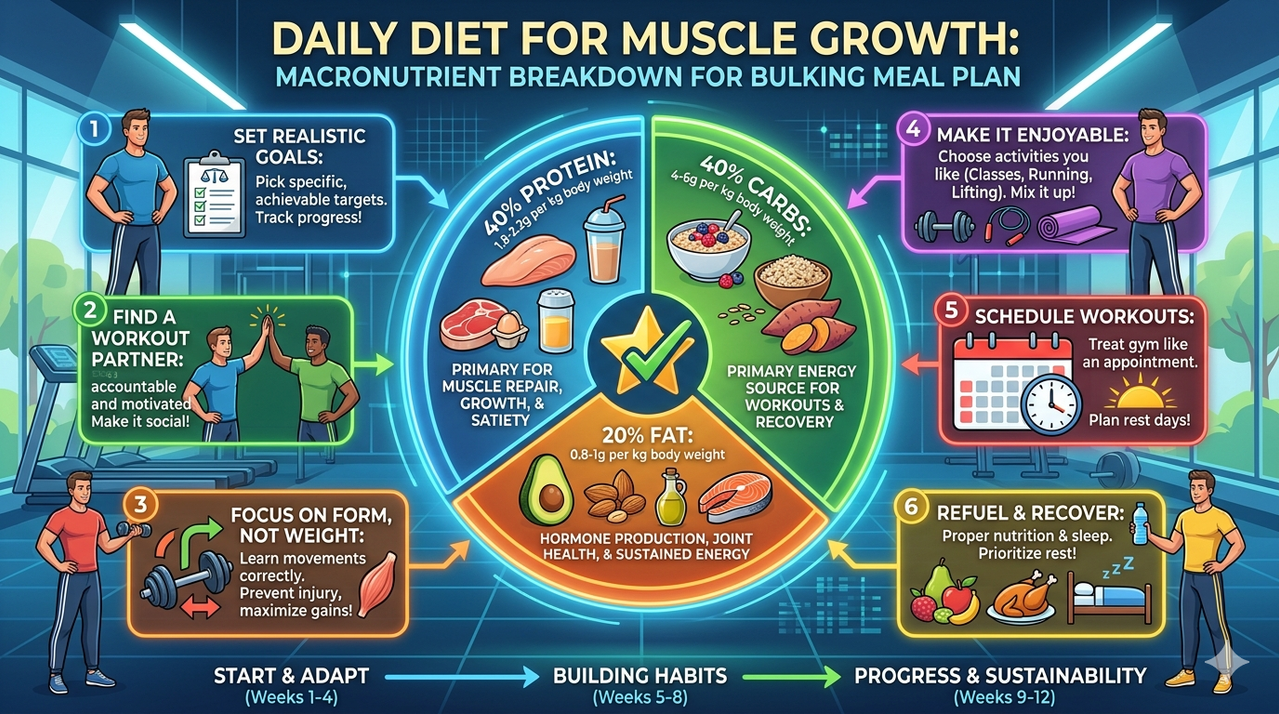
For a 75 kg individual, a high calorie meal plan for muscle gain would be approximately 2,700-3,000 calories daily with 150-165g protein, 340-400g carbohydrates, and 75-85g fat.
📊 Sample Macronutrient Targets for Muscle Gain (75 kg / 165 lb person)
| Nutrient | Amount per kg body weight | Daily Total (75 kg) | Calories | % of Total |
|---|---|---|---|---|
| Protein | 1.8-2.2 g/kg | 135-165g | 540-660 kcal | 20-25% |
| Carbohydrates | 4-6 g/kg | 300-450g | 1,200-1,800 kcal | 45-55% |
| Fats | 0.8-1.2 g/kg | 60-90g | 540-810 kcal | 20-30% |
| Total Calories | - | 2,700-3,100 kcal | - | 100% |
3. Complete Full Day of Eating for Muscle Gain (3,000 kcal Example)
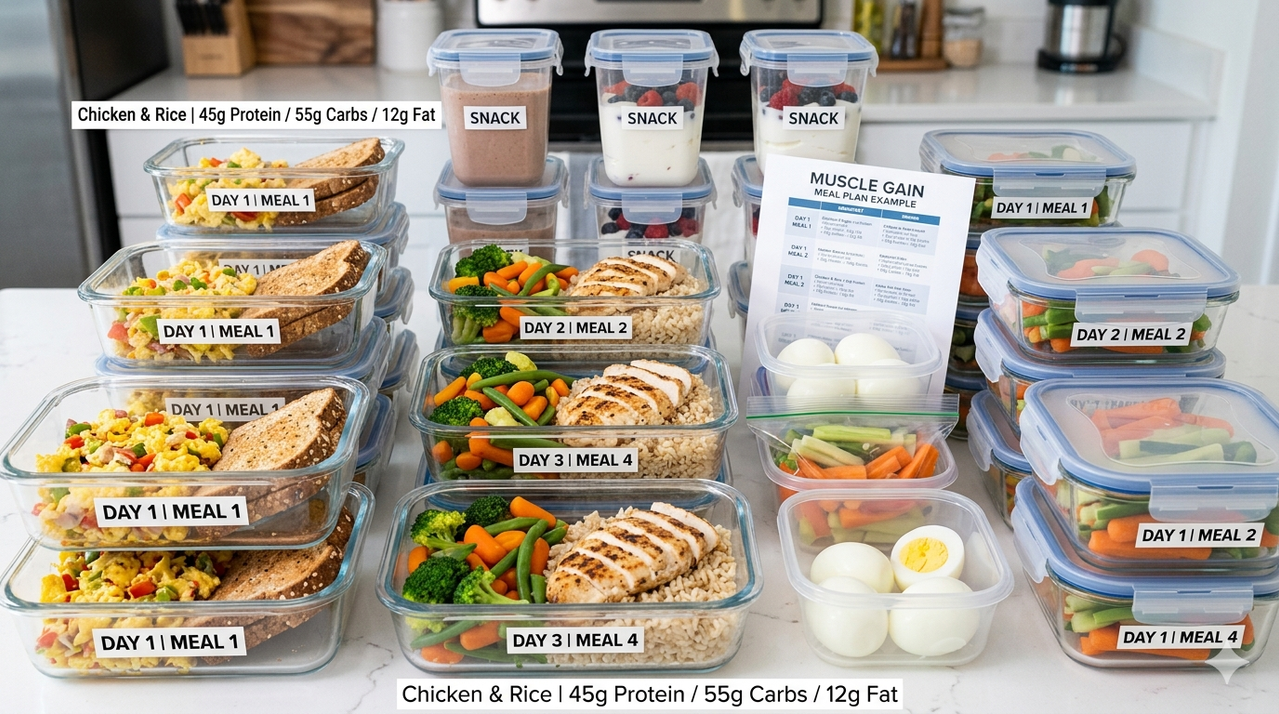
This bulking meal plan full day provides approximately 3,000 calories with 180g protein, 380g carbohydrates, and 85g fat – ideal for a 75-85 kg male or advanced female lifter.
Meal 1: Breakfast (7:00 AM) – 700-750 calories
- 4 large eggs – 280 calories, 24g protein
- 1.5 cups (120g) rolled oats – 450 calories, 15g protein, 81g carbs
- 1 cup (240ml) whole milk – 150 calories, 8g protein
- Optional: 1/2 cup berries or 1 banana – 50-100 calories
- Macros: ~750 calories, 47g protein, 95g carbs, 28g fat
Meal 2: Mid-Morning Snack (10:00 AM) – 350-400 calories
- 2 slices whole grain bread – 160 calories, 8g protein
- 2 tbsp (32g) natural peanut butter – 190 calories, 7g protein, 7g carbs, 16g fat
- 1 medium banana – 105 calories, 1g protein, 27g carbs
- Macros: ~455 calories, 16g protein, 48g carbs, 16g fat
Meal 3: Lunch (12:30 PM) – 750-800 calories
- 200g (7 oz) chicken breast (cooked) – 330 calories, 62g protein
- 2 cups (300g) cooked jasmine rice – 390 calories, 8g protein, 90g carbs
- 1 cup steamed broccoli or mixed vegetables – 50 calories, 3g protein
- 1 tbsp (15ml) olive oil (for cooking) – 120 calories, 14g fat
- Macros: ~890 calories, 73g protein, 98g carbs, 14g fat
Pre-Workout Snack (3:30 PM) – 300-350 calories
- 1 cup (150g) Greek yogurt (plain, full fat) – 220 calories, 20g protein
- 1 tbsp honey or maple syrup – 60 calories, 16g carbs
- 1/2 cup (40g) granola – 200 calories, 5g protein, 30g carbs
- Macros: ~480 calories, 25g protein, 56g carbs, 15g fat
Post-Workout Meal (6:30 PM – within 2 hours after training)
- 2 scoops (60g) whey protein – 240 calories, 48g protein
- 2 bananas – 210 calories, 2g protein, 54g carbs
- OR whole food option: 200g salmon + 2 cups jasmine rice – 700 calories, 50g protein, 90g carbs
- Macros (shake option): 450 calories, 50g protein, 56g carbs, 5g fat
Meal 4: Dinner (7:30 PM) – 700-800 calories
- 200g (7 oz) lean beef (90/10) or salmon – 400 calories, 40g protein (beef) or 350 calories, 40g protein (salmon)
- 400g (about 2 medium) baked potatoes or 300g sweet potato – 350 calories, 8g protein, 80g carbs
- 2 cups roasted vegetables (asparagus, zucchini, bell peppers) – 100 calories, 4g protein
- Macros: ~800-850 calories, 52g protein, 90g carbs, 30g fat
Meal 5: Before Bed Snack (10:00 PM) – 250-300 calories
- 1.5 cups (340g) cottage cheese (4% fat) – 300 calories, 36g protein, 12g carbs, 10g fat
- OR 1 cup Greek yogurt + 1 tbsp almond butter – 320 calories, 25g protein, 15g carbs, 18g fat
- Macros: ~300 calories, 36g protein, 12g carbs, 10g fat
Daily Total Summary
- Total Calories: ~3,000-3,200 kcal
- Total Protein: ~175-185g (2.2-2.4 g/kg for 75kg person)
- Total Carbohydrates: ~350-380g
- Total Fat: ~80-90g
4. Alternative Meal Plans for Different Diets
Vegan Muscle Gain Meal Plan (2,800 calories, 150g protein)
- Breakfast: 1.5 cups tofu scramble + 1.5 cups oats + 2 cups soy milk (650 kcal, 45g protein)
- Snack: 2 tbsp peanut butter + 2 slices bread + 1 banana (450 kcal, 15g protein)
- Lunch: 200g tempeh + 2 cups quinoa + 2 cups mixed vegetables (650 kcal, 45g protein)
- Pre-workout: 2 scoops pea protein + 1 cup soy milk (300 kcal, 45g protein)
- Dinner: 250g lentils + 2 cups brown rice + 2 cups broccoli + 2 tbsp olive oil (700 kcal, 30g protein)
- Total: ~2,750 kcal, ~180g protein
Vegetarian Muscle Gain Meal Plan (2,800 calories, 155g protein)
- Breakfast: 4 eggs + 1.5 cups oats + 1 cup Greek yogurt (650 kcal, 50g protein)
- Snack: 1.5 cups cottage cheese + 1 apple (300 kcal, 30g protein)
- Lunch: 200g paneer + 2 cups quinoa + vegetables (600 kcal, 40g protein)
- Pre-workout: 2 scoops whey + 1 banana (300 kcal, 50g protein)
- Dinner: 4 eggs + 400g potatoes + 2 cups spinach + 2 tbsp olive oil (750 kcal, 30g protein)
- Total: ~2,800 kcal, ~200g protein
Gluten-Free Muscle Gain Meal Plan
- Carb sources: Rice, quinoa, buckwheat, sweet potatoes, gluten-free oats, corn tortillas
- Sample day: 200g chicken + 2 cups quinoa + vegetables (lunch), 200g beef + 400g sweet potatoes (dinner)
- All protein sources naturally gluten-free – verify oats are certified gluten-free
5. Quick Recipes for Muscle Gain
High-Protein Oatmeal (10 min prep)
- 1.5 cups rolled oats + 2 cups milk + 2 scoops whey protein + 2 tbsp peanut butter + 1 banana
- Macros: 950 calories, 65g protein, 110g carbs, 35g fat
Chicken & Rice Bowl (15 min prep, meal prep friendly)
- 200g chicken breast + 2 cups cooked jasmine rice + 1 cup broccoli + 1 tbsp olive oil + soy sauce
- Macros: 750 calories, 55g protein, 85g carbs, 22g fat
Post-Workout Smoothie (5 min)
- 2 scoops whey + 2 bananas + 2 tbsp peanut butter + 2 cups oat milk
- Macros: 800 calories, 55g protein, 95g carbs, 28g fat
6. Meal Timing: When to Eat for Optimal Muscle Growth
Research on nutrient timing shows that total daily intake matters most, but strategic timing can optimize results (Aragon & Schoenfeld, 2013).
- Pre-workout (2-3 hours before): 30-40g protein + 40-60g carbs – fuels training and reduces muscle breakdown.
- Post-workout (within 2 hours): 20-40g protein + 40-80g carbs – maximizes MPS and glycogen replenishment.
- Before bed: 30-40g slow-digesting protein (casein from cottage cheese or Greek yogurt) – supports overnight MPS (Trommelen et al., 2021).
- Spread protein across 4-5 meals: 0.4-0.55 g/kg per meal optimizes MPS throughout the day.
7. How to Adjust This Meal Plan for Your Body
This muscle building diet plan is a template. Adjust based on your:
- Body weight: Multiply protein needs by 1.6-2.2 g/kg. A 90kg person needs ~160-200g protein daily.
- Activity level: More active = more carbs. Add 50-100g carbs on training days.
- Rate of gain: Aim for 0.25-0.5% body weight gain weekly. If gaining faster, reduce calories by 200; if not gaining, add 200-300 calories.
- Digestion: If 3,000 calories feels overwhelming, start with 2,500-2,700 and gradually increase over 2-4 weeks.
8. Foods to Prioritize for Muscle Growth
Best Protein Sources for Muscle Building
- Animal-based: Chicken breast, lean beef, turkey, eggs, Greek yogurt, cottage cheese, whey protein, salmon, tuna
- Plant-based: Tofu, tempeh, seitan, edamame, lentils, chickpeas, black beans, pea protein, soy protein
Best Carbohydrate Sources for Energy & Recovery
- Fast-digesting (post-workout): White rice, jasmine rice, white potatoes, bananas, white bread, sports drinks
- Slow-digesting (other meals): Oats, quinoa, brown rice, sweet potatoes, whole grain bread, beans, lentils
Best Fat Sources for Hormone Production
- Olive oil, avocado, nuts (almonds, walnuts), seeds (chia, flax), fatty fish (salmon, mackerel), egg yolks, nut butters
9. Common Mistakes on a Muscle Gain Diet
- Not eating enough calories: "Clean bulking" with too few calories = no muscle gain. Track intake for 1-2 weeks to ensure surplus.
- Too much dirty bulking: Excessive junk food = mostly fat gain. Focus on nutrient-dense whole foods.
- Insufficient protein distribution: Eating all protein in 1-2 meals reduces MPS. Spread across 4-5 meals.
- Ignoring carbohydrates: Carbs fuel training intensity. Low-carb = poor workouts = less muscle stimulus.
- Not adjusting as you grow: As you gain weight, calorie needs increase. Recalculate TDEE every 5-7 kg gained.
10. Frequently Asked Questions
What does a full day of eating for muscle gain look like?
Breakfast: 4 eggs + 1.5 cups oatmeal + 1 cup milk. Lunch: 200g chicken breast + 2 cups jasmine rice + vegetables. Snack: Peanut butter sandwich (2 slices bread + 2 tbsp peanut butter) + 1 banana. Dinner: 200g lean beef or salmon + 400g potatoes + vegetables. Before bed: 1.5 cups Greek yogurt or 2 cups cottage cheese.
How many calories should I eat to build muscle?
To build muscle, eat 300-500 calories above maintenance (your TDEE). For most men, this is 2,500-3,000 calories daily; for most women, 2,200-2,700 calories. Adjust based on weekly weight gain – aim for 0.25-0.5% body weight gain weekly for lean muscle gain without excessive fat.
What macronutrients are best for muscle growth?
For muscle growth: Protein: 1.6-2.2 g/kg body weight (30-35% of calories), Carbohydrates: 4-7 g/kg (40-50% of calories), Fats: 0.8-1.2 g/kg (20-30% of calories). A 2,700-calorie bulking meal plan example: 180g protein, 340g carbs, 75g fat.
What is the best pre-workout meal for muscle gain?
The best pre-workout meal for muscle gain contains 30-40g protein and 40-60g carbs eaten 2-3 hours before training. Examples: 200g chicken with 1.5 cups rice, or 4 eggs with 2 slices toast and banana. This provides amino acids for muscle protein synthesis and glycogen for energy.
What should I eat after workout for muscle growth?
Post-workout, eat 20-40g protein and 40-80g carbs within 2 hours. Examples: 2 scoops whey protein + 2 bananas, or 200g salmon + 2 cups jasmine rice. This maximizes muscle protein synthesis (MPS) and replenishes glycogen stores. Protein timing matters less than total daily intake, but post-workout is optimal.
Can I build muscle on a vegan diet?
Yes, you can build muscle effectively on a vegan diet. Consume 1.8-2.2 g protein/kg from varied plant sources (tofu, tempeh, seitan, lentils, beans, pea protein). Combine complementary proteins (rice + beans) and consider leucine supplementation if needed. Many vegan athletes build significant muscle mass.
11. Related Resources
- Best Evening Habits for Fat Loss (Simple Night Routine That Works)
- How to Burn More Calories Without Cardio (Simple Fat Loss Strategies)
- Why You Lose Weight Then Gain It Back Quickly (Yo-Yo Dieting Explained)
- How to Avoid Binge Eating During Fat Loss (Control Cravings & Stay on Track)
- Does Drinking Water Help You Lose Fat Faster? (Science-Based Answer)
- How to Reduce Cravings While Dieting (Control Hunger & Stay Consistent)
12. Scientific References
- Schoenfeld, B. J., & Aragon, A. A. (2018). How much protein can the body use in a single meal for muscle-building? Journal of the International Society of Sports Nutrition, 15(1), 10. PubMed
- Morton, R. W., et al. (2018). A systematic review, meta-analysis and meta-regression of the effect of protein supplementation on resistance training-induced gains in muscle mass and strength. British Journal of Sports Medicine, 52(6), 376-384. PubMed
- Slater, G. J., et al. (2019). Is an energy surplus required to maximize skeletal muscle hypertrophy associated with resistance training? Frontiers in Nutrition, 6, 131. PubMed
- Aragon, A. A., & Schoenfeld, B. J. (2013). Nutrient timing revisited: is there a post-exercise anabolic window? Journal of the International Society of Sports Nutrition, 10(1), 5. PubMed
- Trommelen, J., et al. (2021). Pre-sleep protein ingestion increases muscle protein synthesis rates during overnight recovery. Frontiers in Nutrition, 8, 724. PubMed
- Helms, E. R., et al. (2014). Evidence-based recommendations for natural bodybuilding contest preparation. Journal of the International Society of Sports Nutrition, 11(1), 20. PubMed
- Jäger, R., et al. (2017). International Society of Sports Nutrition Position Stand: protein and exercise. Journal of the International Society of Sports Nutrition, 14(1), 20. PubMed
Join the conversation