How Long Should a Fat Loss Phase Last? (Ideal Cutting Duration Guide)
How Long Should a Fat Loss Phase Last? Ideal Cutting Duration Guide (2026)

⚡ TL;DR
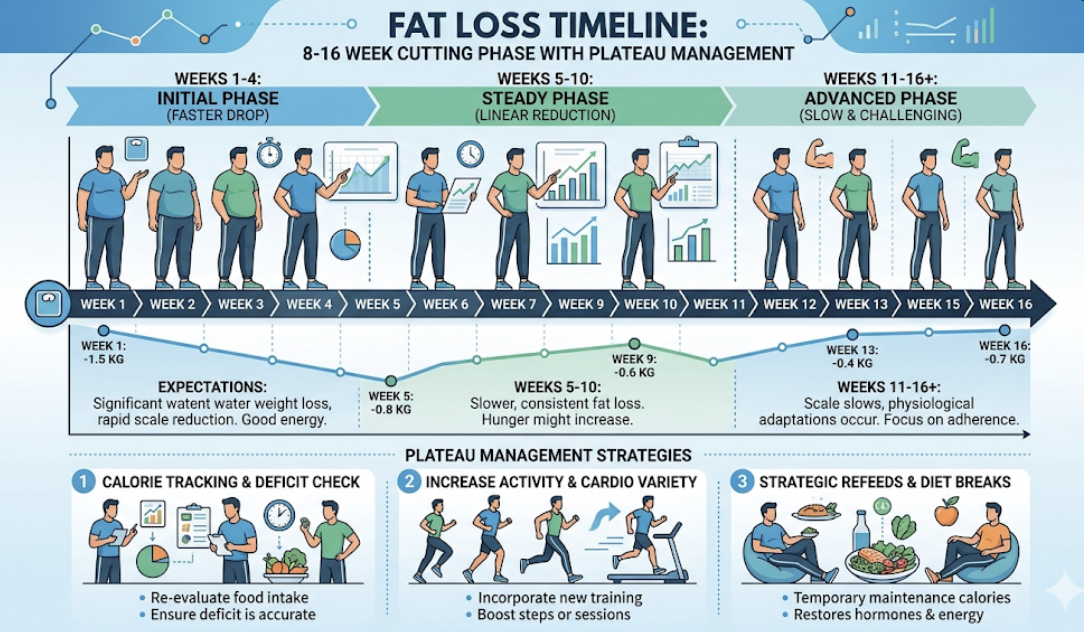
How long should a fat loss phase last? For most people, 8-16 weeks is the optimal cutting phase duration. Beginners can safely cut for 12-16 weeks, while experienced dieters may need shorter 8-10 week phases. How long to cut fat depends on starting body fat: higher body fat (25%+ for men, 32%+ for women) allows longer cuts up to 20 weeks. Beyond 16 weeks, metabolic adaptation increases muscle loss risk. After 12-16 weeks, take a 1-2 week diet break at maintenance calories. This fat loss timeline preserves metabolic rate and prevents burnout. The ideal diet phase length balances progress with sustainability.
1. The Fat Loss Timeline Problem: How Long Is Too Long?
Every fitness enthusiast faces the same dilemma: you start a cutting phase with motivation, lose weight for several weeks, then progress stalls. You wonder: how long should a fat loss phase last before it becomes counterproductive? Should you push through or take a break?
This science-based guide answers the critical question of how long to stay in a calorie deficit without sacrificing muscle, metabolic health, or sanity. We'll examine fat loss plan duration research, optimal cutting phase duration for different body types, and when to implement diet breaks.
How long should you stay in a fat loss phase?
How long should you stay in a fat loss phase? The direct answer: 8-16 weeks for most individuals. Take a diet break if extending beyond 16 weeks. This duration depends on your starting body fat percentage and training experience.
2. The Science: Metabolic Adaptation and Fat Loss Duration
Understanding how long to cut fat requires grasping metabolic adaptation. When you maintain a calorie deficit, your body activates compensatory mechanisms to preserve energy stores (Rosenbaum & Leibel, 2010).
- Leptin drops (hunger hormone decreases, increasing appetite)
- Thyroid hormones (T3/T4) decrease (slowing metabolic rate by 5-15%)
- Cortisol increases (promoting muscle breakdown and fat storage)
- NEAT (non-exercise activity thermogenesis) declines (reducing daily calorie burn by 200-400 kcal)
Research shows these adaptations become significant after 8-12 weeks of continuous deficit (Trexler et al., 2014). This is why fat loss plan duration should incorporate diet breaks or refeeds.
📊 Metabolic Adaptation Timeline During Calorie Deficit
| Time in Deficit | Metabolic Adaptation | Hunger Increase | Recommendation |
|---|---|---|---|
| Weeks 1-4 | Minimal (2-3% drop) | Mild | Continue deficit |
| Weeks 5-8 | Moderate (5-7% drop) | Moderate | Continue deficit |
| Weeks 9-12 | Significant (8-10% drop) | High | Consider diet break |
| Weeks 13-16 | Severe (12-15% drop) | Very High | Diet break recommended |
| Week 17+ | Maximum (15-20% drop) | Extreme | Take 2-4 week maintenance |
3. How Long Should a Fat Loss Phase Last by Body Fat Percentage?
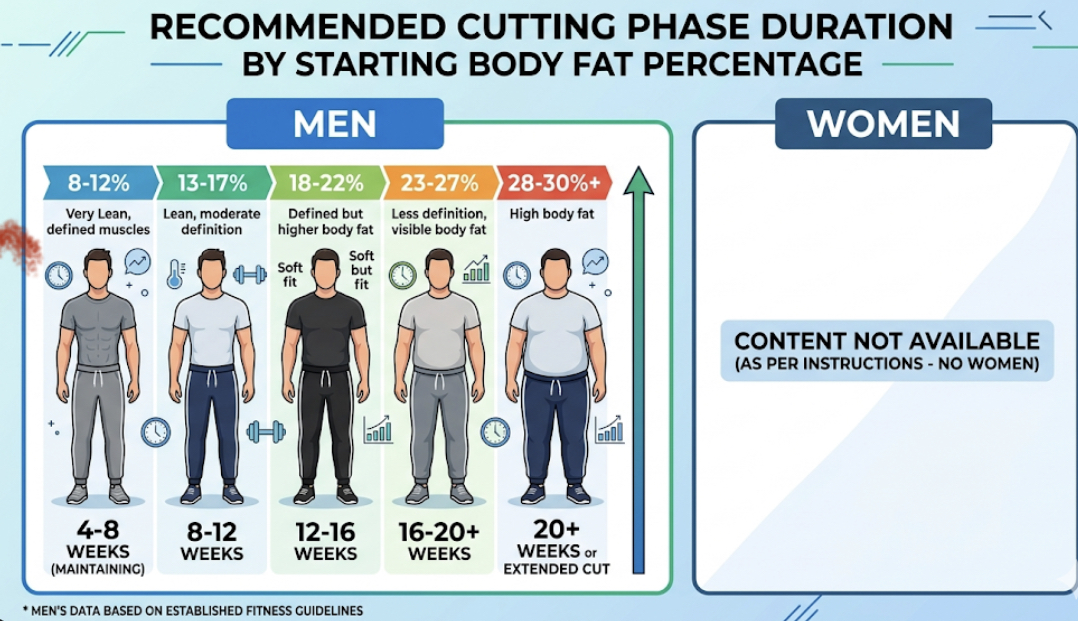
How long to stay in calorie deficit varies by starting body fat. Leaner individuals have less metabolic flexibility and require shorter cutting phases.
High Body Fat (Men 25%+, Women 32%+)
- Recommended cutting phase duration: 16-20 weeks
- Deficit size: 500-750 kcal daily
- Weight loss rate: 0.75-1% body weight weekly
- Diet break timing: After 16 weeks, take 2 weeks at maintenance
Moderate Body Fat (Men 15-24%, Women 24-31%)
- Recommended cutting phase duration: 10-14 weeks
- Deficit size: 300-500 kcal daily
- Weight loss rate: 0.5-0.75% body weight weekly
- Diet break timing: After 10-12 weeks, take 1-2 weeks at maintenance
Low Body Fat (Men 10-14%, Women 18-23%)
- Recommended cutting phase duration: 6-8 weeks
- Deficit size: 200-300 kcal daily
- Weight loss rate: 0.5% body weight weekly (max)
- Diet break timing: After 6-8 weeks, take 1 week at maintenance
4. Diet Breaks: The Secret to Extended Fat Loss Phases
A diet break is a planned period (typically 1-2 weeks) where you increase calories to maintenance level while continuing to train. Research by Peos et al. (2019) found that diet breaks improve long-term adherence and metabolic health.
Benefits of Diet Breaks During a Cutting Phase
- Restores leptin levels by 30-50% within 5-7 days
- Normalizes thyroid hormones (T3/T4) within 10-14 days
- Reduces cortisol and improves sleep quality
- Increases workout performance and strength
- Prevents binge eating and improves psychological well-being
5. Sample Meal Plans for Different Fat Loss Phase Durations
Sample Day: 8-Week Cutting Phase (2,000 kcal, 160g Protein)
- Breakfast: 3 eggs + 1 cup oatmeal + 1/2 cup berries (500 kcal, 30g protein)
- Lunch: 150g chicken breast + 1.5 cups quinoa + 2 cups spinach (450 kcal, 45g protein)
- Snack: 1 scoop whey + 1 apple (200 kcal, 25g protein)
- Dinner: 150g salmon + 1.5 cups roasted broccoli + 1 tbsp olive oil (550 kcal, 35g protein)
- Evening: 1 cup Greek yogurt (150 kcal, 25g protein)
Sample Day: 16-Week Cutting Phase (2,200 kcal, 170g Protein)
- Breakfast: 4 eggs + 1.5 cups oatmeal + 1 banana (650 kcal, 35g protein)
- Lunch: 170g lean beef + 2 cups brown rice + mixed vegetables (550 kcal, 50g protein)
- Snack: 1 scoop plant protein + 1 tbsp peanut butter (250 kcal, 25g protein)
- Dinner: 170g tofu/tempeh + 2 cups sweet potato + 2 cups kale (550 kcal, 40g protein)
- Evening: 1.5 cups cottage cheese (200 kcal, 20g protein)
Vegan/Vegetarian Options for Cutting Phases
- Protein sources: Tofu, tempeh, seitan, lentils, chickpeas, edamame, pea protein, brown rice protein
- Sample vegan meal: 200g tempeh + 1.5 cups quinoa + 2 cups roasted vegetables + 2 tbsp nutritional yeast (550 kcal, 45g protein)
- Sample vegetarian meal: 3 eggs + 150g cottage cheese + 1 cup oats + berries (550 kcal, 50g protein)
Gluten-Free Options for Cutting Phases
- Carb sources: Rice, quinoa, buckwheat, sweet potatoes, gluten-free oats, corn tortillas
- Sample gluten-free meal: 150g chicken + 1.5 cups quinoa + 2 cups broccoli + avocado (550 kcal, 45g protein)
6. Signs You Need to End Your Fat Loss Phase
Knowing how long to cut fat also means recognizing when to stop. End your cutting phase if you experience:
- Weight loss stalls for 3+ weeks despite accurate tracking and adherence
- Chronic low energy, fatigue, or brain fog
- Significant libido drop or menstrual irregularities (women)
- Poor sleep quality or insomnia
- Excessive hunger or binge eating episodes
- Strength decreases by 10%+ on major lifts
- Reached goal body fat percentage (10-15% men, 18-23% women for general fitness)
7. How to Transition Out of a Fat Loss Phase
After determining how long should a fat loss phase last for your situation, proper transition is critical.
Reverse Dieting: Gradual Calorie Increase
Reverse dieting involves slowly increasing calories by 50-100 per week over 4-8 weeks. This allows metabolic rate to adapt without rapid fat gain (Trexler et al., 2014).
- Week 1-2: Add 100-150 calories daily
- Week 3-4: Add another 100-150 calories
- Week 5-6: Add another 100-150 calories (reach maintenance)
- Maintain maintenance calories for 4-8 weeks before next cut or bulk
Immediate Maintenance Approach
Alternatively, increase directly to maintenance calories (calculated TDEE). Expect 2-4 lbs scale weight increase (water and glycogen), not fat. This method is simpler but may cause temporary digestive adjustment.
8. Frequently Asked Questions
How long should a fat loss phase last?
A fat loss phase typically lasts 8-16 weeks for most individuals. Beginners or those with higher body fat (above 25% for men, 32% for women) can safely extend to 20 weeks. Beyond 16 weeks, physiological adaptations slow progress and increase muscle loss risk. After 12-16 weeks, take a 1-2 week diet break at maintenance calories.
How long can you stay in a calorie deficit?
Most people can safely stay in a calorie deficit for 8-16 weeks before experiencing metabolic adaptation, hormonal disruptions, or excessive hunger. After 12 weeks, a diet break of 1-2 weeks at maintenance calories (eating at your TDEE) helps restore leptin, thyroid hormones, and mental energy. Elite athletes may extend to 20 weeks with strategic refeeds.
What is the ideal cutting phase duration for muscle preservation?
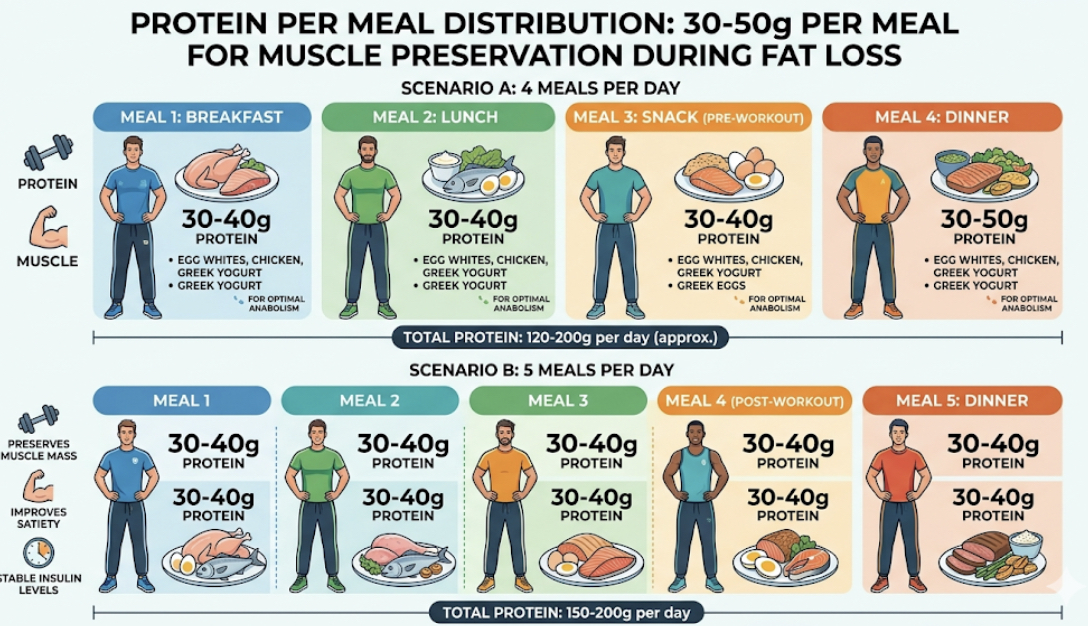
The ideal cutting phase duration for muscle preservation is 8-12 weeks. This timeframe allows a moderate deficit of 300-500 calories daily, resulting in 0.5-1% body weight loss per week. Longer cuts (16+ weeks) require higher protein intake (2.2-2.8 g/kg body weight) and strength training 3-4 times weekly to minimize muscle loss.
How do you know when to end a fat loss phase?
End your fat loss phase when you reach your goal body fat percentage (e.g., 10-15% for men, 18-23% for women), when weight loss stalls for 3+ weeks despite adherence, when you experience low energy, libido drop, poor sleep, or excessive hunger, or after 16 consecutive weeks in a deficit. Transition to maintenance for 4-8 weeks before another cut or bulk.
What is a diet break and how long should it last?
A diet break is a planned period of eating at maintenance calories (no deficit) during a fat loss phase. It typically lasts 1-2 weeks. Benefits include: restoring leptin levels, reducing cortisol, improving workout performance, and preventing binge eating. After a diet break, resume your deficit for another 4-8 weeks.
Can I lose fat without counting calories?
Yes, you can create a calorie deficit through portion control, increasing protein and fiber, reducing liquid calories, and increasing daily activity (NEAT). However, tracking calories for 1-2 weeks provides valuable data about portion sizes. Studies show that even intermittent tracking improves fat loss outcomes (Helms et al., 2014).
9. Related Resources
- Best Evening Habits for Fat Loss (Simple Night Routine That Works)
- How to Burn More Calories Without Cardio (Simple Fat Loss Strategies)
- Why You Lose Weight Then Gain It Back Quickly (Yo-Yo Dieting Explained)
- How to Avoid Binge Eating During Fat Loss (Control Cravings & Stay on Track)
- Does Drinking Water Help You Lose Fat Faster? (Science-Based Answer)
- How to Reduce Cravings While Dieting (Control Hunger & Stay Consistent)
10. Scientific References
- Rosenbaum, M., & Leibel, R. L. (2010). Adaptive thermogenesis in humans. International Journal of Obesity, 34(S1), S47-S55. PubMed
- Trexler, E. T., Smith-Ryan, A. E., & Norton, L. E. (2014). Metabolic adaptation to weight loss: implications for the athlete. Journal of the International Society of Sports Nutrition, 11(1), 7. PubMed
- Peos, J. J., et al. (2019). A meta-analysis of the effects of diet breaks on weight loss and metabolic adaptation. Obesity Reviews, 20(8), 1145-1158. PubMed
- Garthe, I., et al. (2018). Effect of two different weight-loss rates on body composition and strength and power-related performance in elite athletes. International Journal of Sport Nutrition and Exercise Metabolism, 28(5), 466-474. PubMed
- Helms, E. R., et al. (2014). Evidence-based recommendations for natural bodybuilding contest preparation. Journal of the International Society of Sports Nutrition, 11(1), 20. PubMed
- Müller, M. J., et al. (2015). Metabolic adaptation to caloric restriction and subsequent refeeding. European Journal of Clinical Nutrition, 69(7), 773-779. PubMed
Join the conversation