How to Lose Fat Without Losing Muscle (Ultimate Cutting Guide)
How to Lose Fat Without Losing Muscle: Ultimate Cutting Guide (2026)
⚡ TL;DR
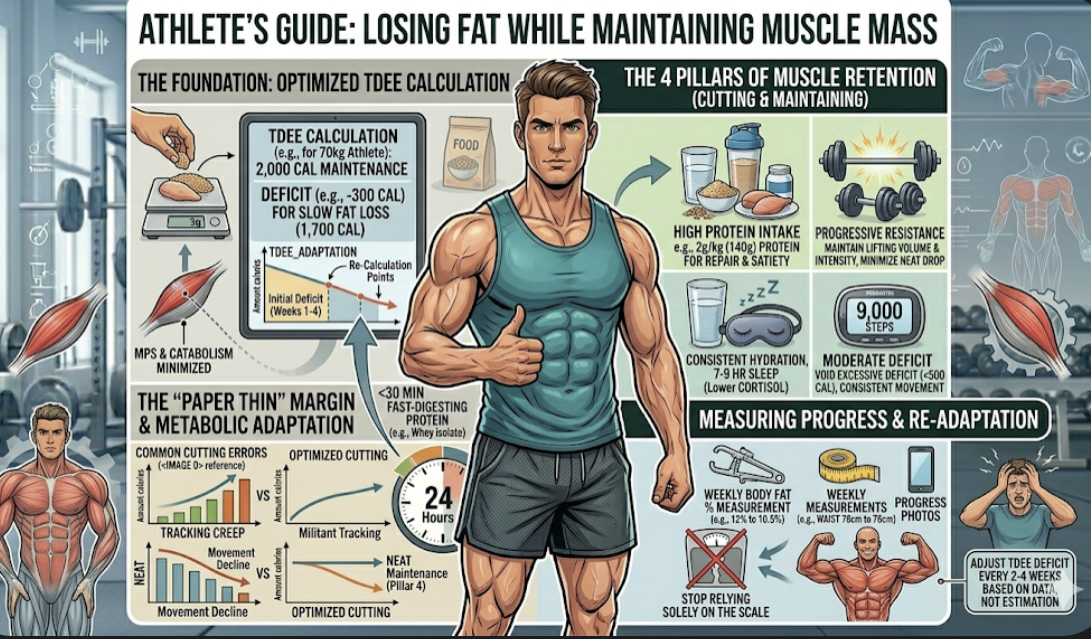
To lose fat without losing muscle, follow these fat loss muscle retention principles: high protein intake (1.8–2.4 g/kg body weight), strength training 3–5x weekly with progressive overload, a moderate calorie deficit (300–500 below maintenance), limited cardio (2–3 sessions weekly), and prioritize recovery (7–9 hours sleep). This cutting without muscle loss approach preserves muscle while shedding fat. Aim for 0.25–0.5% body weight loss weekly. Research shows high protein and strength training are the two most critical factors for muscle retention during a cut .
1. The Cutting Dilemma: Lose Fat, Keep Muscle
You've worked hard to build muscle. The last thing you want is to lose it while trying to reveal it. This is the challenge of cutting without muscle loss. How to lose fat without losing muscle requires a strategic approach to nutrition, training, and recovery. This ultimate cutting guide provides science-backed fat loss muscle retention strategies used by bodybuilders and athletes. Whether you're preparing for summer or a competition, these body recomposition tips will help you get lean while keeping your hard-earned mass.
How can I lose fat without losing muscle?
How can I lose fat without losing muscle? Maintain high protein intake (1.8-2.4 g/kg body weight), strength training regularly (3-5 times weekly with progressive overload), keep a moderate calorie deficit (300-500 below maintenance), avoid excessive cardio (2-3 sessions of 20-30 minutes), and prioritize sleep and recovery (7-9 hours).
2. The Science: Why Muscle Loss Happens During Cutting
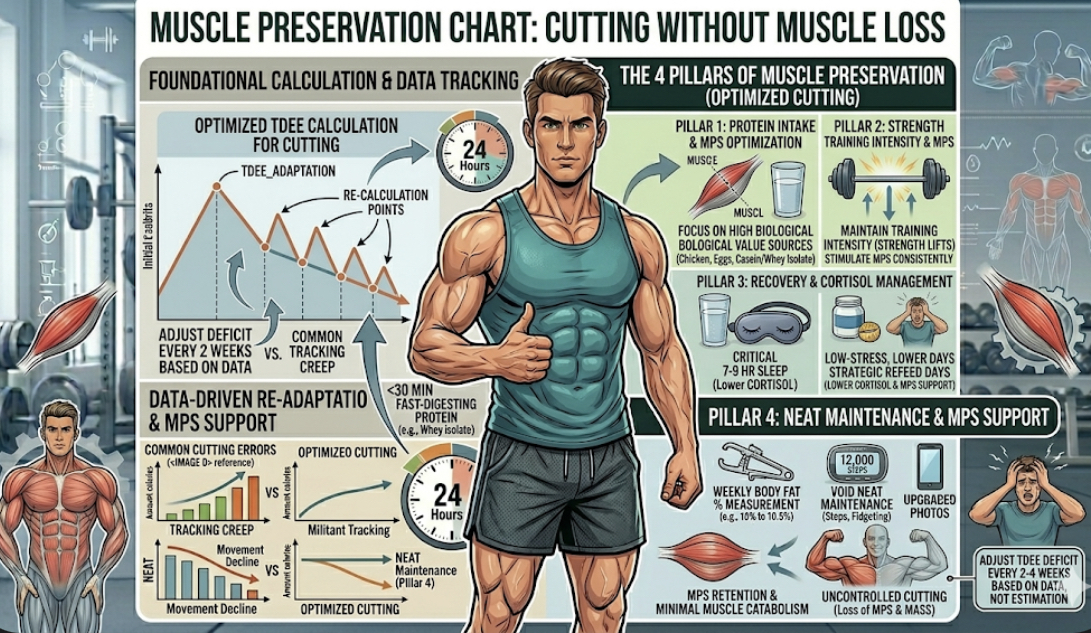
During a calorie deficit, your body breaks down both fat and muscle for energy. Muscle loss occurs due to:
- Reduced muscle protein synthesis (MPS): Lower calories decrease MPS
- Increased muscle protein breakdown (MPB): Body uses amino acids for energy
- Hormonal changes: Decreased testosterone, increased cortisol
- Reduced training intensity: Fatigue leads to lighter weights
3. Nutrition for Muscle Preservation
3.1. Protein: The Most Important Macro
During cutting, increase protein to 1.8-2.4 g per kg body weight (higher than bulking). For an 80 kg person: 144-192g protein daily. Spread across 3-5 meals with 30-40g per meal .
3.2. Calorie Deficit: Moderate Wins
Aim for 300-500 calories below maintenance. Larger deficits (>700 kcal) significantly increase muscle loss risk. Weekly weight loss target: 0.25-0.5% body weight .
3.3. Carbohydrates: Time Them Strategically
Carbs preserve muscle by providing energy for training and reducing cortisol. Consume 3-5 g per kg body weight, focusing intake around workouts (30-60g pre and post) .
3.4. Fats: Don't Cut Too Low
Maintain 0.5-0.8 g per kg body weight for hormone production. Dropping too low reduces testosterone and increases muscle loss risk .
4. Training for Muscle Retention
Fat loss workout plan priorities:
- Frequency: Train each muscle group 2 times weekly
- Intensity: Keep weights heavy (70-85% 1RM), don't reduce load
- Volume: Maintain 10-20 sets per muscle group weekly
- Progressive overload: Try to add weight or reps, even in a deficit
- Cardio: Limit to 2-3 sessions of 20-30 minutes LISS (walking, incline walking)
5. Sample Cutting Meal Plan (2,200 kcal, 180g Protein)
Omnivore Cutting Plan
- Breakfast: 3 eggs, 1 cup oats, ½ cup berries (500 kcal, 28g protein)
- Lunch: 150g chicken breast, 1 cup quinoa, 2 cups spinach, 1 tbsp vinaigrette (450 kcal, 40g protein)
- Pre-Workout: 1 apple + 1 tbsp peanut butter (200 kcal, 5g protein)
- Post-Workout: 1 scoop whey + 1 banana (250 kcal, 25g protein)
- Dinner: 150g lean beef or white fish, 1.5 cups roasted vegetables, 1 tbsp olive oil (500 kcal, 35g protein)
- Evening: 1 cup cottage cheese (200 kcal, 25g protein)
- Total: ~2,100 kcal, ~158g protein
Vegan/Vegetarian Cutting Plan
- Breakfast: Tofu scramble (150g tofu), 1 cup oats, ½ cup berries (500 kcal, 25g protein)
- Lunch: 1.5 cups lentils, 1 cup quinoa, 2 cups spinach, 1 tbsp olive oil (550 kcal, 25g protein)
- Snack: 1 cup edamame, 1 apple (200 kcal, 11g protein)
- Post-Workout: 1 scoop plant protein, 1 banana (200 kcal, 20g protein)
- Dinner: 150g tempeh, 2 cups roasted vegetables, 1 tbsp olive oil (500 kcal, 30g protein)
- Total: ~1,950 kcal, ~111g protein (add another shake for higher)
Gluten-Free Options
- Use certified gluten-free oats
- Choose rice, quinoa, buckwheat
- Verify protein sources are gluten-free certified
6. Sample Cutting Training Week (Muscle Preservation Focus)
- Monday: Upper body strength (heavy compound lifts: bench, rows, OHP)
- Tuesday: Lower body strength (squat, deadlift, leg press) + 20 min LISS cardio
- Wednesday: Rest or active recovery (walk 30 min)
- Thursday: Upper body hypertrophy (dumbbell work, pull-ups, dips)
- Friday: Lower body hypertrophy (lunges, leg curls, extensions) + 20 min LISS cardio
- Saturday: Full body accessory work + 30 min LISS cardio
- Sunday: Complete rest
7. Recovery Strategies for Cutting
- Sleep: 7-9 hours nightly (sleep deprivation increases cortisol, reduces testosterone)
- Deload weeks: Every 8-10 weeks, reduce volume by 40-50% for one week
- Stress management: High cortisol increases muscle breakdown
- Hydration: 2.5-3.5 liters water daily
- Diet breaks: 1-2 weeks at maintenance calories every 8-12 weeks to reset hormones
8. Quick Cutting Recipes
High-Protein Breakfast Bowl (400 kcal, 35g protein)
- 3 eggs (18g protein)
- 100g cottage cheese (12g protein)
- 1 cup spinach
- Scramble eggs, mix with cottage cheese and spinach.
Post-Workout Shake (300 kcal, 35g protein)
- 1 scoop whey (25g protein)
- 1 cup unsweetened almond milk (1g protein)
- ½ banana
- 1 tbsp peanut butter (4g protein)
- Blend and drink within 30 minutes post-workout.
9. Common Cutting Mistakes That Cause Muscle Loss
- Too large calorie deficit: >700 kcal deficit accelerates muscle loss
- Too little protein: Below 1.6 g/kg fails to preserve muscle
- Stopping strength training: Only doing cardio signals body to drop muscle
- Reducing weights: Lifting lighter reduces muscle preservation signal
- Too much cardio: Excessive cardio increases muscle breakdown
- Poor sleep: Sleep deprivation increases cortisol, muscle catabolism
- No diet breaks: Extended deficits lower metabolic rate and increase muscle loss
10. How to Track Progress During Cutting
- Weekly weigh-ins: 0.25-0.5% body weight loss weekly
- Strength levels: If strength drops significantly, increase calories
- Measurements: Waist, hips, arms monthly
- Progress photos: Monthly photos reveal muscle retention
- Body fat calipers: Track every 4-6 weeks
11. Frequently Asked Questions
How can I lose fat without losing muscle?
Lose fat without losing muscle by: maintaining high protein intake (1.8-2.4 g/kg body weight), strength training 3-5 times weekly with progressive overload, keeping a moderate calorie deficit (300-500 below maintenance), avoiding excessive cardio (2-3 sessions of 20-30 minutes), and prioritizing sleep and recovery (7-9 hours).
What is the best diet for cutting without muscle loss?
The best cutting diet includes: high protein (1.8-2.4 g/kg), moderate carbs (3-5 g/kg) timed around workouts, moderate fats (0.5-0.8 g/kg), and a 300-500 calorie deficit. Prioritize whole foods: lean meats, eggs, Greek yogurt, vegetables, complex carbs, and healthy fats. Avoid extreme deficits that increase muscle loss risk.
How much protein to preserve muscle while cutting?
Consume 1.8-2.4 grams of protein per kilogram of body weight daily during cutting. For an 80 kg person, that's 144-192g protein. Higher protein preserves muscle mass, increases satiety, and has the highest thermic effect of food (20-30% of calories burned during digestion).
Should I do cardio when cutting to preserve muscle?
Yes, but moderate amounts. Do 2-3 sessions of low-to-moderate intensity cardio (20-30 minutes) weekly. Excessive cardio (5+ hours weekly) can increase muscle breakdown. Prioritize strength training; use cardio only to increase calorie deficit modestly. LISS (walking, incline walking) is better than HIIT for muscle preservation.
How fast can I lose fat without losing muscle?
Lose 0.25-0.5% body weight weekly to maximize fat loss while preserving muscle. For an 80 kg person, that's 0.2-0.4 kg (0.5-1 lb) per week. Faster rates (>1% weekly) significantly increase muscle loss risk. A 12-16 week cutting phase is optimal for significant fat loss with muscle retention.
Do I need to track macros when cutting?
Tracking macros is highly recommended during cutting to ensure adequate protein intake and appropriate calorie deficit. Focus on: hitting protein target daily, staying within calorie range, and ensuring sufficient carbs around workouts. Tracking for 2-4 weeks helps calibrate portions; after that, many succeed with hand portion methods.
12. Related Resources
- Best Evening Habits for Fat Loss (Simple Night Routine That Works)
- How to Burn More Calories Without Cardio (Simple Fat Loss Strategies)
- Why You Lose Weight Then Gain It Back Quickly (Yo-Yo Dieting Explained)
- How to Avoid Binge Eating During Fat Loss (Control Cravings & Stay on Track)
- Does Drinking Water Help You Lose Fat Faster? (Science-Based Answer)
- How to Reduce Cravings While Dieting (Control Hunger & Stay Consistent)
13. Scientific References
- Helms, E. R., et al. (2014). Evidence-based recommendations for natural bodybuilding contest preparation. Journal of the International Society of Sports Nutrition, 11(1), 20. PubMed
- Morton, R. W., et al. (2018). A systematic review, meta-analysis and meta-regression of the effect of protein supplementation on resistance training-induced gains in muscle mass and strength. British Journal of Sports Medicine, 52(6), 376–384. PubMed
- Garthe, I., et al. (2013). Effect of two different weight-loss rates on body composition and strength and power-related performance in elite athletes. International Journal of Sport Nutrition and Exercise Metabolism, 23(1), 20–30. PubMed
- Phillips, S. M., & Van Loon, L. J. (2011). Dietary protein for athletes: from requirements to optimum adaptation. Journal of Sports Sciences, 29(sup1), S29–S38. PubMed
- ACSM. (2021). Nutrition and Athletic Performance. Medicine & Science in Sports & Exercise, 53(3), 600–618. PubMed
Join the conversation