Best High-Calorie Foods to Eat More Calories Easily for Weight Gain
Best High-Calorie Foods to Eat More Calories Easily for Weight Gain (2026)
⚡ TL;DR
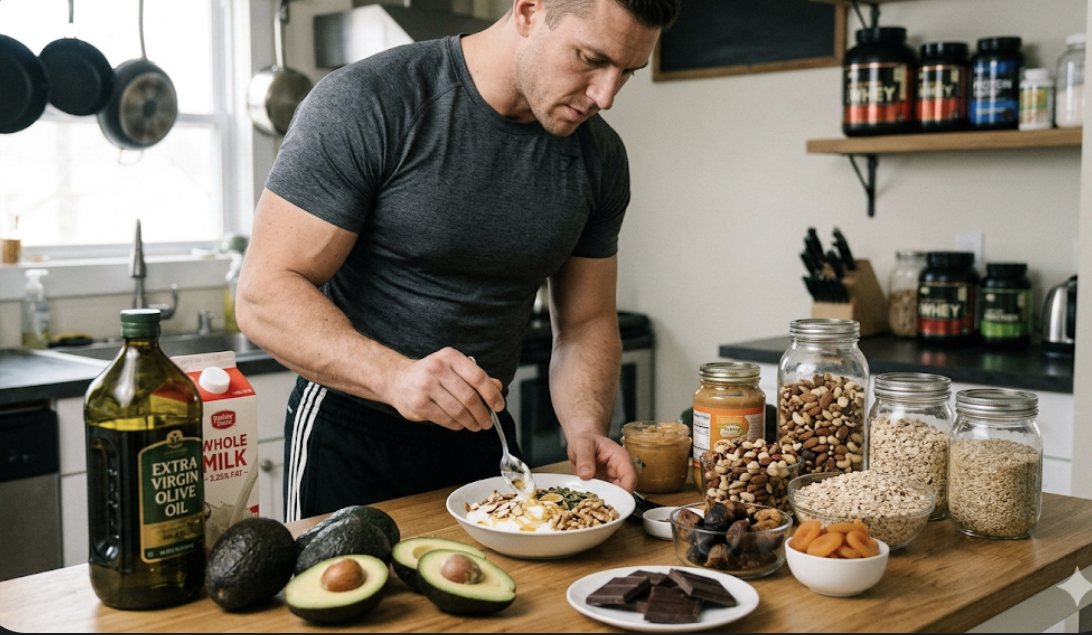
To eat more calories easily, focus on calorie-dense foods for weight gain like nuts and nut butters (160–200 kcal/tbsp), avocados (320 kcal each), olive oil (120 kcal/tbsp), whole milk (150 kcal/cup), dried fruits, oats, fatty fish, and full-fat dairy. High-calorie diet foods allow you to increase intake without excessive volume. Combine these into smoothies, add oils to meals, and eat frequent smaller meals. A 500 kcal daily surplus yields 0.5 kg weekly weight gain .
1. The Challenge of Eating Enough Calories
For many individuals—whether hardgainers, athletes, or those recovering from illness—eating enough calories to support weight gain feels like a full-time job. The appetite simply isn't there, or healthy foods feel too filling. The solution lies in strategically incorporating high-calorie foods that provide maximum energy with minimal volume. Understanding how to eat more calories easily transforms weight gain from a struggle into a manageable process. This guide covers the most effective calorie-dense foods for weight gain, practical meal strategies, and sample plans.
What are the easiest foods to eat more calories?
The easiest foods to eat more calories are: nuts and nut butter (peanut, almond, cashew), rice and pasta (simple carbs low in volume), olive oil (add to any meal), avocados (high healthy fat), whole milk (liquid calories), dried fruits, full-fat dairy, and calorie-dense smoothies.
2. Why Calorie Density Matters for Weight Gain
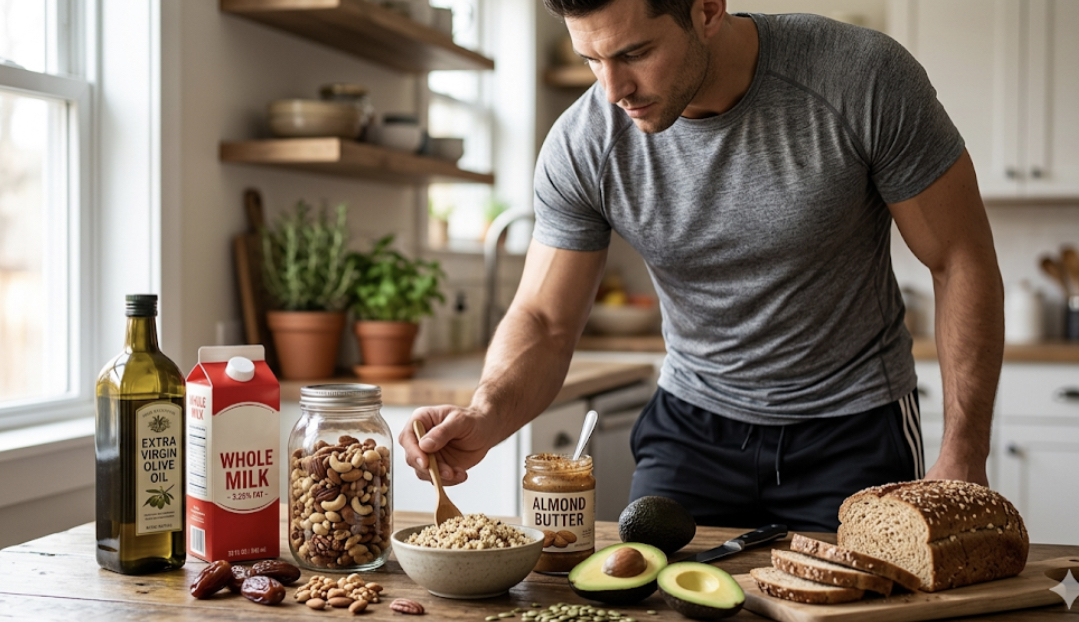
Calorie density refers to calories per gram of food. High-calorie foods have high calorie density, meaning you consume more energy with less stomach volume. This is critical for individuals with low appetite or high metabolic rates. Research shows that consuming calorie-dense foods increases total daily energy intake without causing excessive fullness .
📊 Calorie Density Comparison
| Food | Calories per 100g | Volume (relative) |
|---|---|---|
| Olive Oil | 884 kcal | Very low |
| Peanut Butter | 588 kcal | Low |
| Almonds | 579 kcal | Low |
| Avocado | 160 kcal | Moderate |
| Oats (dry) | 389 kcal | Low |
| Chicken Breast | 165 kcal | Moderate-High |
| Broccoli | 34 kcal | Very high |
3. Top High-Calorie Foods for Easy Weight Gain
3.1. Nuts and Nut Butters
Nuts are among the most calorie-dense foods for weight gain. A small handful (30g) of almonds provides 170–200 kcal. Nut butters are even more convenient—2 tablespoons of peanut butter add 190–200 kcal to any meal or smoothie .
3.2. Healthy Fats: Olive Oil, Avocado, Coconut Oil
Adding fat is the simplest way to eat more calories easily. One tablespoon of olive oil adds 120 kcal to salads, rice, or pasta. A whole avocado provides 320 kcal plus fiber and potassium. Coconut milk is excellent for smoothies and curries .
3.3. Liquid Calories: Whole Milk, Smoothies, Juices
Liquids bypass satiety signals more effectively than solids. One cup of whole milk contains 150 kcal. A smoothie can easily deliver 500–800 kcal without feeling heavy. This is a cornerstone of how to eat more calories easily .
3.4. Dried Fruits
Dried fruits concentrate sugar and calories. Half a cup of raisins (80g) provides 240–280 kcal. Dates, figs, and dried apricots are excellent additions to oatmeal, yogurt, or as snacks .
3.5. Grains: Oats, Rice, Pasta, Quinoa
Complex carbohydrates provide sustained energy. One cup of dry oats (80g) yields 300 kcal. White rice and pasta are lower in volume than their whole-grain counterparts, making them easier to consume in larger quantities .
4. Complete High-Calorie Foods List with Calorie Counts
| Food Category | Specific Food | Serving Size | Calories |
|---|---|---|---|
| Nuts & Seeds | Almonds | 30g (handful) | 170–200 |
| Nuts & Seeds | Walnuts | 30g | 185–200 |
| Nut Butters | Peanut Butter | 2 tbsp (32g) | 190–200 |
| Nut Butters | Almond Butter | 2 tbsp (32g) | 190–200 |
| Fats & Oils | Olive Oil | 1 tbsp (15ml) | 120 |
| Fats & Oils | Coconut Oil | 1 tbsp | 120 |
| Fruits | Avocado | 1 medium | 320 |
| Fruits | Dates | 5 medjool | 330 |
| Dairy | Whole Milk | 1 cup (240ml) | 150 |
| Dairy | Greek Yogurt (full-fat) | 200g | 200–220 |
| Dairy | Cheddar Cheese | 30g | 115 |
| Grains | Oats (dry) | 1 cup (80g) | 300 |
| Grains | White Rice (cooked) | 1 cup (158g) | 205 |
| Grains | Quinoa (cooked) | 1 cup | 220 |
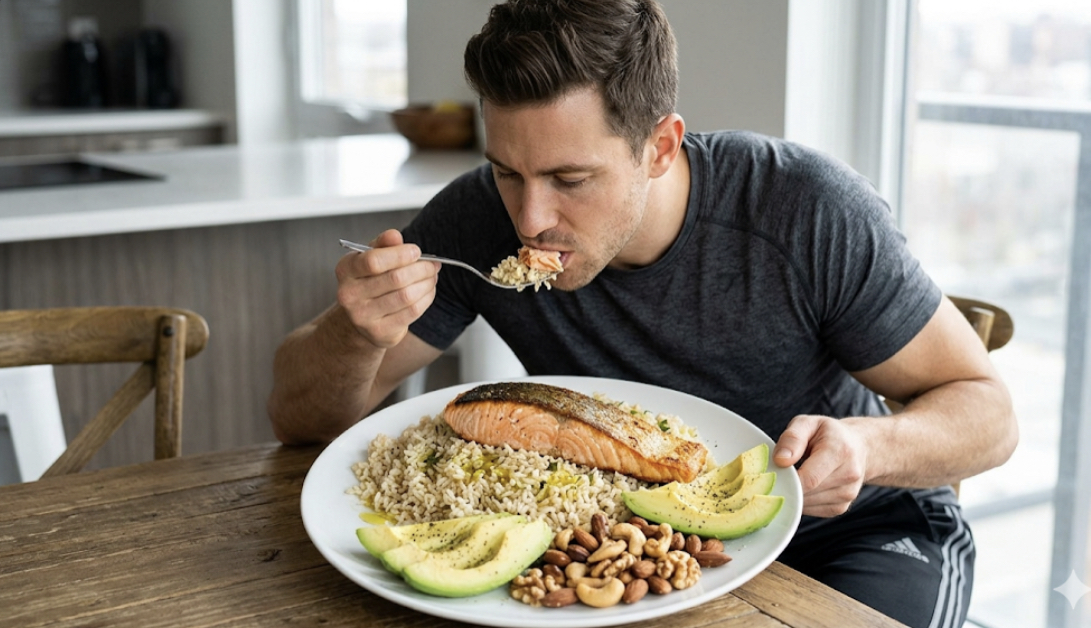
| Proteins | Salmon | 200g | 350–400 |
| Proteins | Ground Beef (80/20) | 200g | 500–550 |
| Dried Fruits | Raisins | ½ cup (80g) | 240–280 |
5. Practical Strategies: How to Eat More Calories Easily
5.1. Add Fats to Every Meal
Drizzle olive oil over vegetables, rice, and pasta. Add nut butter to oatmeal, smoothies, and toast. Top salads with avocado and nuts. These small additions add 200–400 kcal daily without noticeable volume .
5.2. Drink Your Calories
Liquid calories are less satiating. Prepare high-calorie smoothies with whole milk, nut butter, oats, banana, and protein powder. A 500ml smoothie can easily reach 800–1,000 kcal .
5.3. Eat Frequent Smaller Meals
Instead of 3 large meals, aim for 5–6 smaller meals. This prevents overwhelming fullness and keeps total intake high. Each meal should include at least one calorie-dense food .
5.4. Prioritize Calorie-Dense Foods Early
Eat your highest-calorie meals when appetite is strongest—typically breakfast and post-workout. Delaying high-volume, low-calorie vegetables until later meals can help maintain overall intake .
6. Sample High-Calorie Meal Plan (3,200–3,500 kcal)
Omnivore Plan
- Breakfast (7:30 AM): 1 cup oats, 2 tbsp peanut butter, 1 banana, 1 cup whole milk, 1 scoop whey (750 kcal, 45g protein)
- Morning Snack (10:30 AM): 30g almonds + 30g dried apricots (300 kcal)
- Lunch (1:00 PM): 200g chicken breast, 2 cups white rice (cooked), 1 tbsp olive oil, ½ avocado (800 kcal, 55g protein)
- Afternoon Snack (4:00 PM): 200g full-fat Greek yogurt + 2 tbsp honey + 30g walnuts (450 kcal, 20g protein)
- Post-Workout (6:30 PM): 2 scoops whey, 1 banana, 1 cup oats, 1 tbsp peanut butter (650 kcal, 50g protein)
- Dinner (8:30 PM): 200g salmon, 1 cup quinoa, 1 tbsp olive oil, 1 cup spinach (600 kcal, 45g protein)
- Optional Evening: 1 cup whole milk (150 kcal)
Vegan/Vegetarian High-Calorie Plan
- Breakfast: 1 cup oats, 2 tbsp almond butter, 1 banana, 1 cup soy milk, 1 scoop plant protein (700 kcal)
- Snack: 30g cashews + 30g dates (300 kcal)
- Lunch: 200g tempeh, 2 cups quinoa, 1 tbsp olive oil, ½ avocado (750 kcal)
- Snack: Coconut yogurt with 2 tbsp peanut butter, 1 apple (400 kcal)
- Dinner: 1.5 cups lentils, 2 cups brown rice, 1 tbsp coconut oil, spinach (650 kcal)
- Evening: 1 cup full-fat oat milk + 2 tbsp tahini (300 kcal)
Gluten-Free Options
- Use certified gluten-free oats
- Choose rice, quinoa, buckwheat, or gluten-free pasta
- Verify all protein powders and nut butters are gluten-free certified
7. Quick High-Calorie Recipes
Mass Gain Smoothie (800–1,000 kcal)
- 1 cup whole milk (or oat milk for vegan)
- 1 banana
- ½ cup oats
- 2 tbsp peanut butter
- 1 scoop protein powder
- 1 tbsp honey
- Blend and enjoy. Add spinach for micronutrients without affecting taste.
High-Calorie Oatmeal (700 kcal)
- 1 cup oats
- 1 cup whole milk
- 2 tbsp peanut butter
- 1 banana, sliced
- 1 tbsp honey
- Cook oats with milk, top with peanut butter, banana, and honey.
Avocado Toast with Eggs (600–700 kcal)
- 2 slices sourdough bread
- 1 whole avocado
- 3 eggs (fried or poached)
- 1 tbsp olive oil
- Toast bread, mash avocado, top with eggs, drizzle olive oil.
8. Common Mistakes to Avoid
- Relying on processed junk food: While calorie-dense, these lack micronutrients and may cause inflammation.
- Drinking water before meals: This fills the stomach without calories. Save water for between meals.
- Avoiding fats due to outdated advice: Healthy fats are essential for weight gain and hormone production.
- Not tracking intake: Even with calorie-dense foods, you may underestimate intake. Use an app for 1–2 weeks to calibrate.
- Inconsistent meal timing: Skipping meals makes it harder to hit daily targets.
9. Frequently Asked Questions
What are the easiest foods to eat more calories?
The easiest foods to eat more calories are: nuts and nut butter (peanut, almond, cashew), rice and pasta (simple carbs low in volume), olive oil (add to any meal), avocados (high healthy fat), whole milk (liquid calories), dried fruits, full-fat dairy, and calorie-dense smoothies.
What are the best high-calorie foods for weight gain?
The best high-calorie foods include nuts and nut butters (160-200 kcal/tbsp), avocados (320 kcal each), whole milk (150 kcal/cup), olive oil (120 kcal/tbsp), oats (300 kcal/cup), fatty fish like salmon (350 kcal/200g), full-fat Greek yogurt, and dried fruits (200-300 kcal/half cup).
How can I eat more calories easily without feeling too full?
Eat more calories easily by drinking liquid calories (smoothies, whole milk), adding healthy fats (oil, nut butter) to meals, eating frequent smaller meals (5-6 per day), choosing calorie-dense foods over high-volume low-calorie options, and avoiding excessive fiber before meals.
Are high-calorie foods healthy for weight gain?
Yes, when you choose nutrient-dense high-calorie foods like nuts, avocados, whole grains, lean proteins with healthy fats, and full-fat dairy. Avoid processed foods with empty calories. Focus on foods that provide vitamins, minerals, and healthy fats alongside calories.
What is a high-calorie meal plan for weight gain?
A high-calorie meal plan includes breakfast (oatmeal with nut butter and whole milk, 700-800 kcal), lunch (chicken with rice and olive oil, 700 kcal), snack (nuts and dried fruit, 400 kcal), dinner (salmon with sweet potato and avocado, 800 kcal), and a pre-bed smoothie (400-500 kcal), totaling 3,000-3,200 kcal.
Can vegans gain weight easily with high-calorie foods?
Yes, vegans can gain weight using nuts and nut butters, avocados, coconut milk, olive oil, quinoa, oats, dried fruits, tahini, lentils, beans, tofu, tempeh, and calorie-dense smoothies with plant-based protein and nut butter.
10. Related Resources
- How to Fix a Failed Bulking Phase (Step-by-Step Recovery Guide)
- Signs Your Bulk Is Working (Or Failing): How to Track Progress Correctly
- How Many Calories Do You Need to Build Muscle? (Complete Guide)
- Why Your Muscles Are Not Growing (Even If You Train Hard)
- Best Meal Timing for Muscle Growth Beginners (When to Eat for Results)
- Can You Build Muscle Without Supplements? (Natural Muscle Growth Guide)
- How to Know If You’re Gaining Muscle or Fat (Simple Tracking Guide)
11. Scientific References
- Rolls, B. J., et al. (2000). Energy density of foods affects energy intake in normal-weight women. American Journal of Clinical Nutrition, 72(3), 678–683. PubMed
- Drewnowski, A., & Almiron-Roig, E. (2010). Human perceptions and preferences for fat-rich foods. In Fat Detection: Taste, Texture, and Post Ingestive Effects. CRC Press. PubMed
- Mattes, R. D. (2009). Nut consumption and body weight. American Journal of Clinical Nutrition, 89(5), 1736S–1741S. PubMed
- Helms, E. R., et al. (2014). Evidence-based recommendations for natural bodybuilding contest preparation. Journal of the International Society of Sports Nutrition, 11(1), 20. PubMed
- Slater, G., et al. (2019). Is an energy surplus required to maximize skeletal muscle hypertrophy? Frontiers in Nutrition, 6, 131. PubMed
- ACSM. (2021). Nutrition and Athletic Performance. Medicine & Science in Sports & Exercise, 53(3), 600–618. PubMed
- Kerksick, C. M., et al. (2018). ISSN exercise & sports nutrition review update. Journal of the International Society of Sports Nutrition, 15(1), 38. PubMed
Join the conversation