How to Fix Slow Muscle Growth Naturally (Proven Strategies Guide)
How to Fix Slow Muscle Growth Naturally: Proven Strategies Guide (2026)
⚡ TL;DR
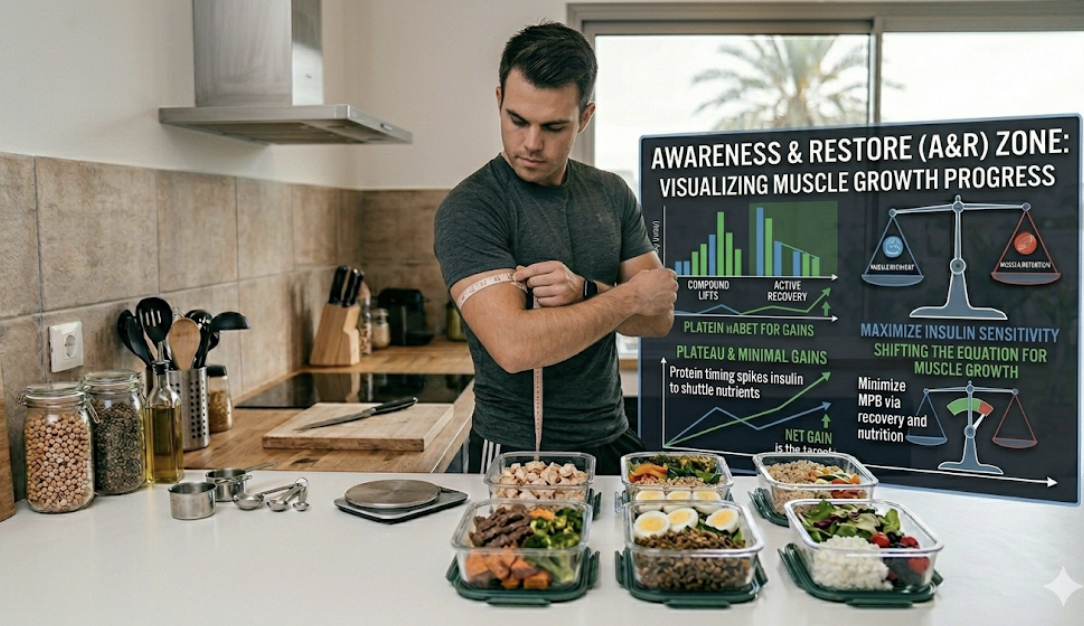
If you're experiencing slow muscle growth, you've hit a muscle growth plateau. The fix requires addressing four key areas: calorie surplus (250–500 kcal above maintenance), protein intake (1.6–2.2 g/kg body weight), training stimulus (progressive overload with 10–20 sets per muscle group weekly), and recovery (7–9 hours sleep, stress management). Natural muscle gain tips focus on whole foods, consistent training, and patience—muscle grows at 0.25–0.5% body weight per week .
1. The Frustration of Slow Muscle Growth: Why You're Stuck
You train consistently. You eat "healthy." Yet months pass with minimal visible change. This frustrating experience—slow muscle growth—affects countless lifters, from beginners to advanced athletes. Understanding why muscle growth slow occurs is the first step to breaking through. The truth is, muscle growth requires precise conditions: adequate energy surplus, sufficient protein to stimulate muscle protein synthesis (MPS), proper training volume and intensity, and complete recovery. When any of these factors fall short, progress stalls.
Why is my muscle growth slow?
Your muscle growth is slow due to low calorie intake (insufficient surplus to support tissue synthesis), low protein intake (below 1.6 g/kg failing to maximize MPS), poor training stimulus (lack of progressive overload or insufficient volume), or inadequate recovery (poor sleep, high stress, no deload weeks) .
2. The Science of Muscle Protein Synthesis vs. Breakdown
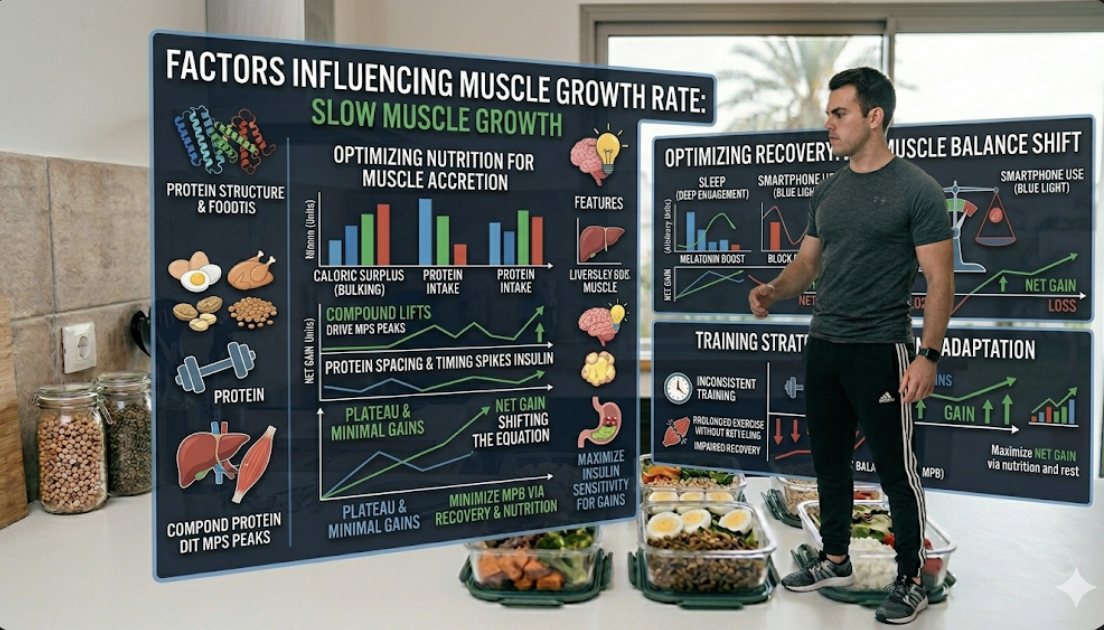
Muscle growth occurs when muscle protein synthesis (MPS) exceeds muscle protein breakdown (MPB) over time. This net positive balance is the foundation of hypertrophy. Factors that influence this balance include nutrition (especially protein and calories), training stimulus, hormonal environment, and recovery .
2.1. Understanding MPS and MPB
MPS is stimulated by resistance training and dietary protein (particularly leucine). MPB is elevated during training and periods of caloric deficit. To fix slow muscle growth, you must create conditions where MPS consistently outpaces MPB .
2.2. The Leucine Threshold
Research shows that consuming 2–3 g of leucine per meal (approximately 20–40 g of high-quality protein) maximally stimulates MPS . This is why protein distribution across meals matters more than total daily intake alone.
📊 Optimal Protein Distribution for Muscle Growth
| Meal | Protein (g) | Leucine (g) | Effect on MPS |
|---|---|---|---|
| Breakfast | 30–40 | 2.5–3.2 | Maximal stimulation |
| Lunch | 30–40 | 2.5–3.2 | Maximal stimulation |
| Pre/Post Workout | 30–40 | 2.5–3.2 | Maximal stimulation + recovery |
| Dinner | 30–40 | 2.5–3.2 | Maximal stimulation |
3. Caloric Intake: Are You Eating Enough to Grow?
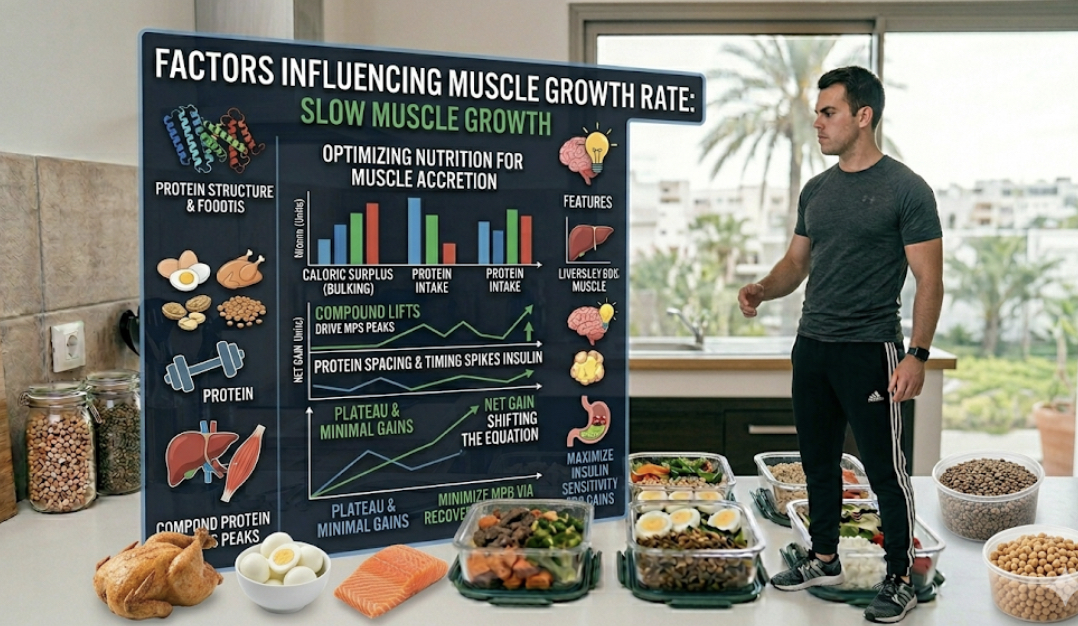
One of the most common causes of slow muscle growth is insufficient caloric intake. Muscle tissue requires energy to build—approximately 2,500–3,500 additional calories per kilogram of muscle gained .
3.1. The Surplus Sweet Spot
Target a 250–500 kcal daily surplus above maintenance. This provides enough energy for muscle synthesis without excessive fat gain. For an 80 kg individual, that's approximately 2,800–3,200 kcal/day depending on activity level.
3.2. How to Calculate Your Needs
Use the Mifflin-St Jeor equation to estimate basal metabolic rate (BMR), multiply by activity factor (1.4–1.8), then add 250–500 kcal. Track weight gain: aim for 0.25–0.5% body weight increase weekly.
4. Protein: The Building Block of Muscle
Protein provides the amino acids necessary for MPS. Inadequate protein intake is a primary reason for why muscle growth slow occurs.
4.1. Optimal Protein Intake
Consume 1.6–2.2 g of protein per kilogram of body weight daily. For an 80 kg individual, that's 128–176 g protein. Spread across 3–5 meals, each containing 20–40 g protein .
4.2. Quality Matters
Prioritize complete protein sources: lean meats, poultry, fish, eggs, dairy, and for vegetarians/vegans, combine complementary proteins (rice + beans, tofu, tempeh, seitan).
5. Training Variables: Breaking the Plateau
If nutrition is on point but slow muscle growth persists, training variables need evaluation. A muscle growth plateau often indicates insufficient training stimulus.
5.1. Progressive Overload
To grow, muscles must be exposed to increasing demands. This can be achieved through: increased weight, increased reps, increased sets, decreased rest periods, or improved form. Aim to add weight or reps weekly .
5.2. Optimal Training Volume
Research indicates 10–20 working sets per muscle group per week optimizes hypertrophy . Beginners start at lower volumes; advanced lifters may require higher volumes.
5.3. Frequency
Training each muscle group 2 times per week yields superior results compared to once weekly . This frequency maintains elevated MPS throughout the week.

6. Recovery: The Overlooked Growth Factor
Muscle doesn't grow during training—it grows during recovery. Poor recovery is a leading cause of slow muscle growth.
6.1. Sleep and Muscle Growth
Sleep deprivation reduces testosterone, increases cortisol, and impairs MPS. Aim for 7–9 hours of quality sleep nightly. Studies show that sleep restriction reduces muscle protein synthesis by 18–27% .
6.2. Stress Management
Chronic stress elevates cortisol, a catabolic hormone that breaks down muscle tissue. Incorporate stress-reduction practices: meditation, walking, adequate rest days, and deload weeks every 4–6 weeks .
7. Sample Meal Plan for Natural Muscle Gain (3,000 kcal)
Omnivore Plan
- Breakfast (7:00 AM): 4 whole eggs, 1 cup oats, 1 banana, 1 tbsp peanut butter, 1 cup milk (750 kcal, 45g protein, 80g carbs)
- Lunch (12:00 PM): 200g grilled chicken breast, 1.5 cups jasmine rice, 1 cup broccoli, 1 tbsp olive oil (700 kcal, 52g protein, 75g carbs)
- Pre-Workout (3:30 PM): 1 cup Greek yogurt, 1 apple, 1 tbsp honey (300 kcal, 22g protein, 45g carbs)
- Post-Workout (6:00 PM): 2 scoops whey protein, 1 banana, 1 cup oats (550 kcal, 48g protein, 85g carbs)
- Dinner (8:00 PM): 200g salmon, 2 medium sweet potatoes, asparagus (700 kcal, 45g protein, 60g carbs)
Vegan/Vegetarian Plan (2,900 kcal, 150g protein)
- Breakfast: Tofu scramble (200g firm tofu), 1.5 cups oats, 2 tbsp peanut butter, banana (750 kcal, 42g protein)
- Lunch: 200g tempeh, 1.5 cups quinoa, 1 cup edamame, mixed greens (700 kcal, 48g protein)
- Snack: 1 cup soy yogurt, 1 scoop pea protein, berries (350 kcal, 32g protein)
- Post-Workout: 2 scoops plant protein, 1 banana, 1 cup oats (550 kcal, 44g protein)
- Dinner: 1.5 cups cooked lentils, 1.5 cups brown rice, 1 cup spinach, 1 tbsp olive oil (550 kcal, 28g protein)
Gluten-Free Options
- Use certified gluten-free oats
- Replace wheat-based products with rice, quinoa, buckwheat
- Ensure protein powders are gluten-free certified
8. Quick Muscle-Building Recipes
- Post-Workout Mass Shake (700 kcal, 50g protein): 1 cup oats, 2 scoops whey, 1 banana, 1 tbsp peanut butter, 1 cup milk.
- High-Protein Oatmeal (600 kcal, 35g protein): 1 cup oats, 1 scoop protein, 2 tbsp peanut butter, 1 banana, cinnamon.
- Turkey & Rice Bowl (650 kcal, 55g protein): 200g lean ground turkey, 1.5 cups rice, mixed vegetables, avocado.
9. Supplements That Actually Help
While whole foods should be priority, certain supplements can support natural muscle gain:
- Whey or Plant Protein: Convenient way to meet daily protein targets
- Creatine Monohydrate: 3–5g daily; increases strength and muscle volume
- Vitamin D3: If deficient; supports testosterone and immune function
- Magnesium: Supports sleep quality and recovery
10. Tracking Progress: How to Know You're Growing
To overcome slow muscle growth, track these metrics weekly:
- Strength: Are you adding weight or reps to key lifts?
- Body Weight: Aim for 0.25–0.5% increase weekly
- Measurements: Track arm, chest, thigh circumference monthly
- Progress Photos: Take monthly photos under same conditions
11. Frequently Asked Questions
Why is my muscle growth slow?
Your muscle growth is slow due to low calorie intake (insufficient surplus), low protein intake (below 1.6 g/kg), poor training stimulus (lack of progressive overload), or inadequate recovery (poor sleep, high stress, no deload weeks).
How can I naturally fix slow muscle growth?
Fix slow muscle growth naturally by eating in a 250-500 kcal surplus, consuming 1.6-2.2 g protein per kg body weight, implementing progressive overload in training, prioritizing 7-9 hours of sleep, and managing stress levels.
What are the signs of a muscle growth plateau?
Signs include no strength gains for 3-4 weeks, no measurable muscle size increase, persistent fatigue, lack of pump during workouts, and feeling stalled despite consistent training.
How much protein do I need to improve muscle growth?
Aim for 1.6-2.2 grams of protein per kilogram of body weight daily. Spread intake across 3-5 meals with 20-40g protein per meal to maximize muscle protein synthesis.
Can stress cause slow muscle growth?
Yes, chronic stress elevates cortisol, a catabolic hormone that breaks down muscle tissue and impairs protein synthesis. Managing stress through sleep, meditation, and adequate recovery is essential for muscle growth.
How often should I train for optimal muscle growth?
Train each muscle group 2 times per week with 10-20 working sets per muscle group weekly. This frequency optimizes muscle protein synthesis and recovery.
What foods naturally boost muscle growth?
Lean meats, eggs, Greek yogurt, cottage cheese, fatty fish (salmon), quinoa, oats, sweet potatoes, nuts, seeds, and leafy greens provide essential nutrients for muscle growth.
12. Related Resources
- How to Fix a Failed Bulking Phase (Step-by-Step Recovery Guide)
- Signs Your Bulk Is Working (Or Failing): How to Track Progress Correctly
- How Many Calories Do You Need to Build Muscle? (Complete Guide)
- Why Your Muscles Are Not Growing (Even If You Train Hard)
- Best Meal Timing for Muscle Growth Beginners (When to Eat for Results)
- Can You Build Muscle Without Supplements? (Natural Muscle Growth Guide)
- How to Know If You’re Gaining Muscle or Fat (Simple Tracking Guide)
13. Scientific References
- Morton, R. W., et al. (2018). A systematic review, meta-analysis and meta-regression of the effect of protein supplementation on resistance training-induced gains in muscle mass and strength in healthy adults. British Journal of Sports Medicine, 52(6), 376–384. PubMed
- Schoenfeld, B. J., et al. (2017). Effects of different weekly sets-equated resistance training frequencies on muscular strength, muscle hypertrophy, and body composition. Journal of Strength and Conditioning Research, 31(12), 3271–3278. PubMed
- Helms, E. R., et al. (2014). Evidence-based recommendations for natural bodybuilding contest preparation: nutrition and supplementation. Journal of the International Society of Sports Nutrition, 11(1), 20. PubMed
- Slater, G., et al. (2019). Is an energy surplus required to maximize skeletal muscle hypertrophy associated with resistance training? Frontiers in Nutrition, 6, 131. PubMed
- Vitale, K. C., et al. (2019). Sleep hygiene for optimizing recovery in athletes: review and recommendations. International Journal of Sports Medicine, 40(8), 535–543. PubMed
- Schoenfeld, B. J., & Aragon, A. A. (2018). How much protein can the body use in a single meal for muscle-building? Implications for daily protein distribution. Journal of the International Society of Sports Nutrition, 15, 10. PubMed
- Kreider, R. B., et al. (2017). ISSN exercise & sport nutrition review: research & recommendations. Journal of the International Society of Sports Nutrition, 14, 33. PubMed
- ACSM. (2021). Nutrition and Athletic Performance. Medicine & Science in Sports & Exercise, 53(3), 600–618. PubMed
Join the conversation