How to Gain Muscle Without Going to the Gym (Home Workout Guide)
How to Gain Muscle Without Going to the Gym: Home Workout Guide (2026)
⚡ TL;DR
To gain muscle without going to the gym, focus on bodyweight muscle building with progressive overload—increase reps, sets, or use advanced variations. Key home exercises for muscle growth include push-ups, pull-ups (or doorway rows), squats, lunges, and dips. Combine with protein intake of 1.6–2.2 g/kg body weight, a 250–500 kcal surplus, and 7–9 hours of sleep. Train each muscle group 2–3 times weekly. Research confirms that bodyweight training can produce comparable hypertrophy to gym-based training when progressive overload is applied .
1. The Home Muscle Building Revolution
Gym closures, busy schedules, and personal preference have led millions to ask: can I gain muscle at home without expensive equipment? The answer is a definitive yes. Build muscle without gym is not only possible but can be highly effective when you understand the principles of hypertrophy and apply them to bodyweight training. This guide provides a complete blueprint for muscle gain home workout success, covering exercise selection, progression strategies, nutrition, and recovery—all from your living room.
Can you really gain muscle without a gym?
Yes, you can gain muscle without a gym using bodyweight exercises, progressive overload, sufficient protein intake (1.6–2.2 g/kg body weight), and proper recovery. By increasing exercise difficulty through variations, adding reps, or using resistance bands, you can stimulate muscle hypertrophy at home. Research shows that bodyweight training produces similar muscle activation to weighted exercises when intensity is matched .
2. The Science: Can Bodyweight Training Build Muscle?
Muscle growth (hypertrophy) requires mechanical tension, metabolic stress, and muscle damage—all achievable with bodyweight exercises. A 2017 study comparing bodyweight training to resistance machine training found similar improvements in muscle thickness and strength when exercises were progressed appropriately . The key is progressive overload: continuously challenging muscles beyond their current capacity.
2.1. Mechanical Tension Without Weights
Mechanical tension is the primary driver of hypertrophy. With bodyweight exercises, tension is created through leverage, leverage angles, and eccentric control. For example, a decline push-up increases upper chest activation by shifting more body weight onto the hands .
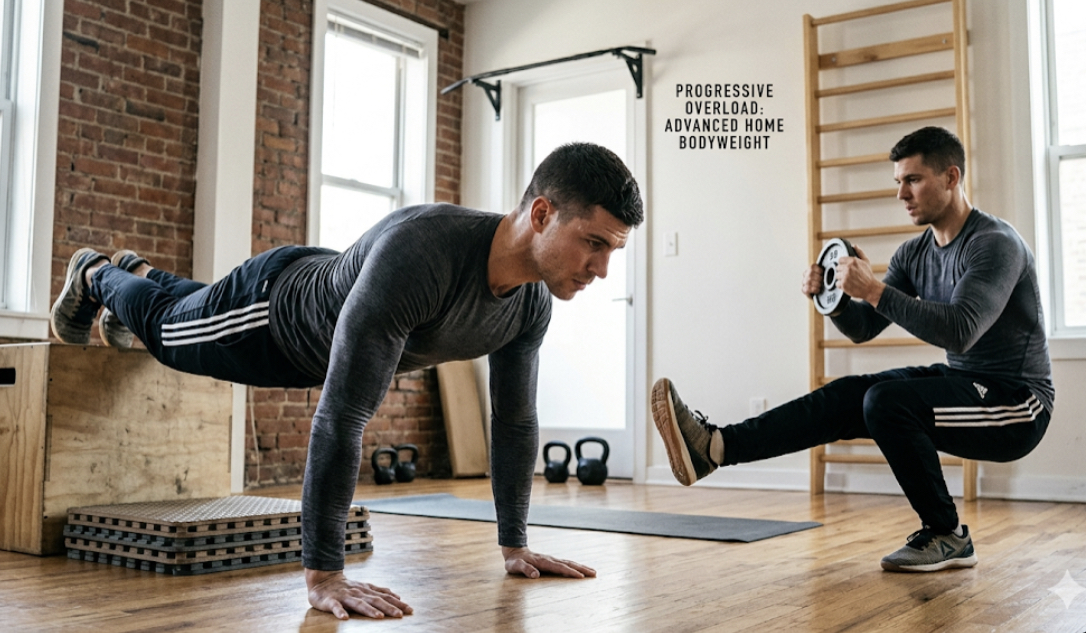
2.2. Progressive Overload Strategies for Home
- Increase reps: Aim for 8–15 reps; when you exceed 15, progress to a harder variation.
- Increase sets: Add 1–2 sets per exercise over weeks.
- Advance variations: Push-up → decline push-up → archer push-up → one-arm push-up.
- Slow tempo: 3–5 seconds eccentric (lowering) phase increases time under tension.
- Add resistance: Use a backpack with books, resistance bands, or a weighted vest.

3. Best Home Exercises for Muscle Growth (By Muscle Group)
📊 Complete Home Exercise Library
| Muscle Group | Beginner Exercise | Intermediate | Advanced |
|---|---|---|---|
| Chest | Standard Push-up | Decline Push-up | Archer/One-arm Push-up |
| Back | Doorway Rows | Towel Rows | Pull-ups (if bar available) |
| Shoulders | Pike Push-up | Elevated Pike | Handstand Push-up |
| Triceps | Bench Dips | Close-grip Push-up | Diamond Push-up |
| Biceps | Towel Curls | Chin-ups | Archer Chin-ups |
| Quads | Bodyweight Squat | Bulgarian Split Squat | Pistol Squat |
| Hamstrings/Glutes | Glute Bridge | Single-leg Bridge | Nordic Curl |
| Core | Plank | Side Plank | Dragon Flag |
3.1. Chest: Push-Up Variations
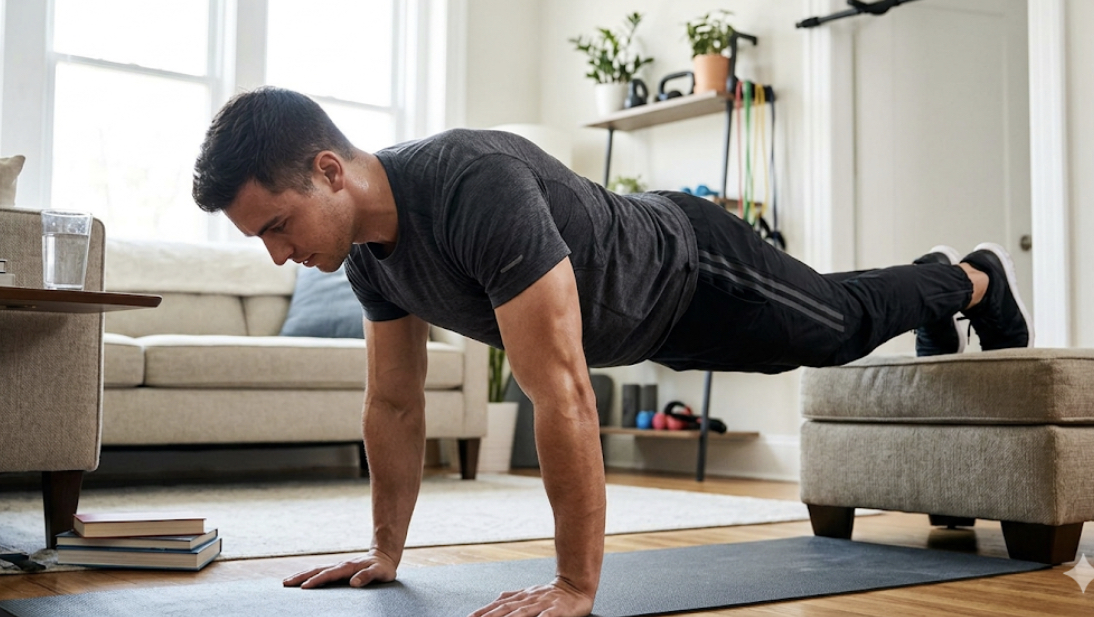
The push-up is the foundational chest exercise. Progress by elevating feet (decline push-up), narrowing hand placement (diamond push-up), or shifting weight to one side (archer push-up). Studies show decline push-ups activate the upper chest comparably to incline bench press .
3.2. Back: Rows and Pull-Ups
For back development, use a sturdy table for inverted rows or a towel looped over a door for rows. If a pull-up bar is available, it's the gold standard for lat development. Without a bar, resistance bands can simulate pulling movements .
3.3. Legs: Squats and Lunges
Bodyweight squats build a foundation. Progress to Bulgarian split squats (rear foot elevated) for unilateral loading. Pistol squats (single-leg squats) provide the highest resistance and challenge balance and mobility .
4. Sample Home Workout Schedule (3–4 Days/Week)
Full Body Split (3x/week)
- Day 1 (Monday): Push-ups 3×10–15, Inverted Rows 3×10–12, Bodyweight Squats 3×15–20, Plank 3×45s, Diamond Push-ups 3×8–12
- Day 2 (Wednesday): Decline Push-ups 3×10–12, Doorway Rows 3×12–15, Bulgarian Split Squats 3×8–12/leg, Glute Bridges 3×15, Side Plank 3×30s/side
- Day 3 (Friday): Archer Push-ups (or max standard), Pike Push-ups 3×8–12, Lunges 3×12/leg, Single-leg Glute Bridge 3×10/leg, Hanging Knee Raises 3×12
Upper/Lower Split (4x/week)
- Upper A: Push-ups 3×10–15, Inverted Rows 3×10–12, Pike Push-ups 3×8–12, Dips 3×10–12
- Lower A: Bulgarian Split Squats 3×8–12, Glute Bridges 3×15, Calf Raises 3×20, Plank 3×60s
- Upper B: Decline Push-ups 3×10–12, Towel Rows 3×12–15, Diamond Push-ups 3×8–12, Chin-ups (if available)
- Lower B: Pistol Squat Progressions, Nordic Curl Progressions, Single-leg Bridge, Side Plank
5. Nutrition for Home Muscle Growth
Training stimulus is only half the equation. To build muscle without weights, nutrition must support hypertrophy. The principles are identical to gym-based training: calorie surplus, adequate protein, and nutrient timing.
5.1. Calorie Surplus
Consume 250–500 kcal above maintenance to support muscle synthesis. For an 80 kg individual, this typically means 2,800–3,200 kcal/day depending on activity .
5.2. Protein Intake
Aim for 1.6–2.2 g protein per kg body weight daily. Spread across 3–5 meals with 20–40 g protein per meal to maximize muscle protein synthesis .
5.3. Sample High-Protein Meal Plan (3,000 kcal)
- Breakfast: 4 eggs, 1 cup oats, 1 banana, 1 tbsp peanut butter (700 kcal, 40g protein)
- Lunch: 200g chicken breast, 2 cups rice, 1 tbsp olive oil, 1 cup broccoli (700 kcal, 55g protein)
- Snack: 200g Greek yogurt, 1 apple, 30g almonds (400 kcal, 25g protein)
- Dinner: 200g salmon, 1.5 cups quinoa, 1 tbsp olive oil, spinach (700 kcal, 50g protein)
- Evening: 1 cup cottage cheese (200 kcal, 25g protein)
Vegan/Vegetarian Alternative
- Replace chicken/tuna with 200g tempeh or seitan
- Replace whey with pea/rice protein blend
- Use tofu scramble for breakfast protein
- Incorporate lentils, chickpeas, and edamame
Gluten-Free Options
- Use certified gluten-free oats
- Choose rice, quinoa, buckwheat
- Verify protein powders and tempeh are gluten-free certified
6. Recovery: The Overlooked Growth Factor
Muscle grows during recovery, not during workouts. Home training often neglects recovery, but it's equally critical for muscle gain home workout success.
6.1. Sleep
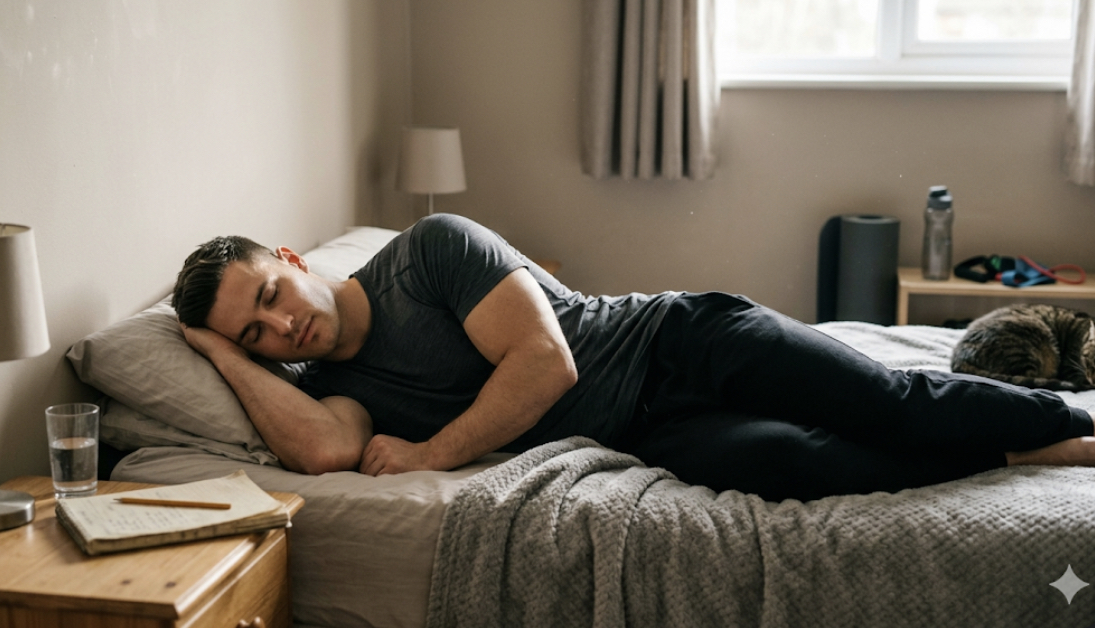
Aim for 7–9 hours of quality sleep nightly. Sleep deprivation reduces testosterone, increases cortisol, and impairs muscle protein synthesis by up to 27% .
6.2. Deload Weeks
Every 4–6 weeks, take a deload week: reduce volume by 40–60% or take 3–4 days off. This prevents overtraining and allows full recovery .
6.3. Stress Management
Chronic stress elevates cortisol, a catabolic hormone. Incorporate meditation, walking, or breathing exercises to manage stress levels.
7. Equipment You Can Add (Optional but Helpful)
While you can gain muscle at home with no equipment, a few affordable items can enhance variety and progression:
- Resistance bands: $10–30; add variable resistance to push-ups, squats, and rows
- Pull-up bar: $25–40; essential for back development
- Weighted vest or backpack with books: Adds load to bodyweight exercises
- Adjustable dumbbells: $100–200; allows for traditional weight training
- Yoga mat: Comfort for floor exercises
8. Tracking Progress Without Gym Equipment
Measure progress to ensure you're building muscle without gym effectively:
- Reps/sets: Are you adding reps or sets weekly?
- Body weight: Aim for 0.25–0.5% gain weekly (0.2–0.4 kg for an 80 kg person)
- Measurements: Track arm, chest, thigh circumference monthly
- Photos: Take progress photos every 2–4 weeks under same conditions
- Exercise difficulty: Can you perform harder variations than 4 weeks ago?
9. Common Mistakes to Avoid
- No progressive overload: Doing the same reps and variations leads to plateaus.
- Inconsistent protein intake: Without adequate protein, MPS cannot match breakdown.
- Overtraining: Training the same muscles daily without recovery impairs growth.
- Poor sleep: Sacrificing sleep undermines hormonal environment for hypertrophy.
- Undereating: A calorie deficit prevents muscle gain even with perfect training.
- Neglecting legs: Lower body exercises are essential for full-body development and hormonal response.
10. Frequently Asked Questions
Can you really gain muscle without a gym?
Yes, you can gain muscle without a gym using bodyweight exercises, progressive overload, sufficient protein intake (1.6-2.2 g/kg body weight), and proper recovery. By increasing exercise difficulty through variations, adding reps, or using resistance bands, you can stimulate muscle hypertrophy at home.
How can I build muscle without weights at home?
Build muscle without weights using bodyweight exercises like push-ups, pull-ups (or doorway rows), squats, lunges, and dips. Apply progressive overload by increasing reps, sets, tempo, or using advanced variations (decline push-ups, pistol squats, archer pull-ups).
What are the best home exercises for muscle growth?
Best home exercises include push-ups (chest, shoulders, triceps), pull-ups or rows (back, biceps), squats and lunges (quads, glutes), glute bridges (hamstrings, glutes), pike push-ups (shoulders), and dips (triceps, chest).
How often should I train at home to gain muscle?
Train 3-5 times per week, with each muscle group trained 2-3 times weekly. Aim for 10-20 sets per muscle group per week, similar to gym-based training. Allow 48 hours of recovery between training the same muscle group.
What protein intake is needed for home muscle growth?
Consume 1.6-2.2 grams of protein per kilogram of body weight daily. Spread across 3-5 meals with 20-40g protein per meal to maximize muscle protein synthesis.
Can I gain muscle with only bodyweight exercises?
Yes, bodyweight exercises can build significant muscle when combined with progressive overload. Advanced variations like one-arm push-ups, pistol squats, and weighted vest training provide sufficient resistance for hypertrophy.
11. Related Resources
- How to Fix a Failed Bulking Phase (Step-by-Step Recovery Guide)
- Signs Your Bulk Is Working (Or Failing): How to Track Progress Correctly
- How Many Calories Do You Need to Build Muscle? (Complete Guide)
- Why Your Muscles Are Not Growing (Even If You Train Hard)
- Best Meal Timing for Muscle Growth Beginners (When to Eat for Results)
- Can You Build Muscle Without Supplements? (Natural Muscle Growth Guide)
- How to Know If You’re Gaining Muscle or Fat (Simple Tracking Guide)
12. Scientific References
- Schoenfeld, B. J., et al. (2017). Effects of different weekly sets-equated resistance training frequencies on muscular strength, muscle hypertrophy, and body composition. Journal of Strength and Conditioning Research, 31(12), 3271–3278. PubMed
- Calatayud, J., et al. (2015). Muscle activity during push-ups with different suspension training systems. Journal of Sports Science & Medicine, 14(3), 502–508. PubMed
- Morton, R. W., et al. (2018). A systematic review, meta-analysis and meta-regression of the effect of protein supplementation on resistance training-induced gains in muscle mass and strength. British Journal of Sports Medicine, 52(6), 376–384. PubMed
- Helms, E. R., et al. (2014). Evidence-based recommendations for natural bodybuilding contest preparation. Journal of the International Society of Sports Nutrition, 11(1), 20. PubMed
- Vitale, K. C., et al. (2019). Sleep hygiene for optimizing recovery in athletes: review and recommendations. International Journal of Sports Medicine, 40(8), 535–543. PubMed
- Kikuchi, N., & Nakazato, K. (2017). Low-load bench press and push-up induce similar muscle hypertrophy and strength gains. Journal of Sports Science & Medicine, 16(3), 344–350. PubMed
- ACSM. (2021). Nutrition and Athletic Performance. Medicine & Science in Sports & Exercise, 53(3), 600–618. PubMed
Join the conversation