Why You Gain Fat Instead of Muscle While Bulking (Causes & Fixes)
Why You Gain Fat Instead of Muscle While Bulking: Causes & Fixes (2026)
⚡ TL;DR
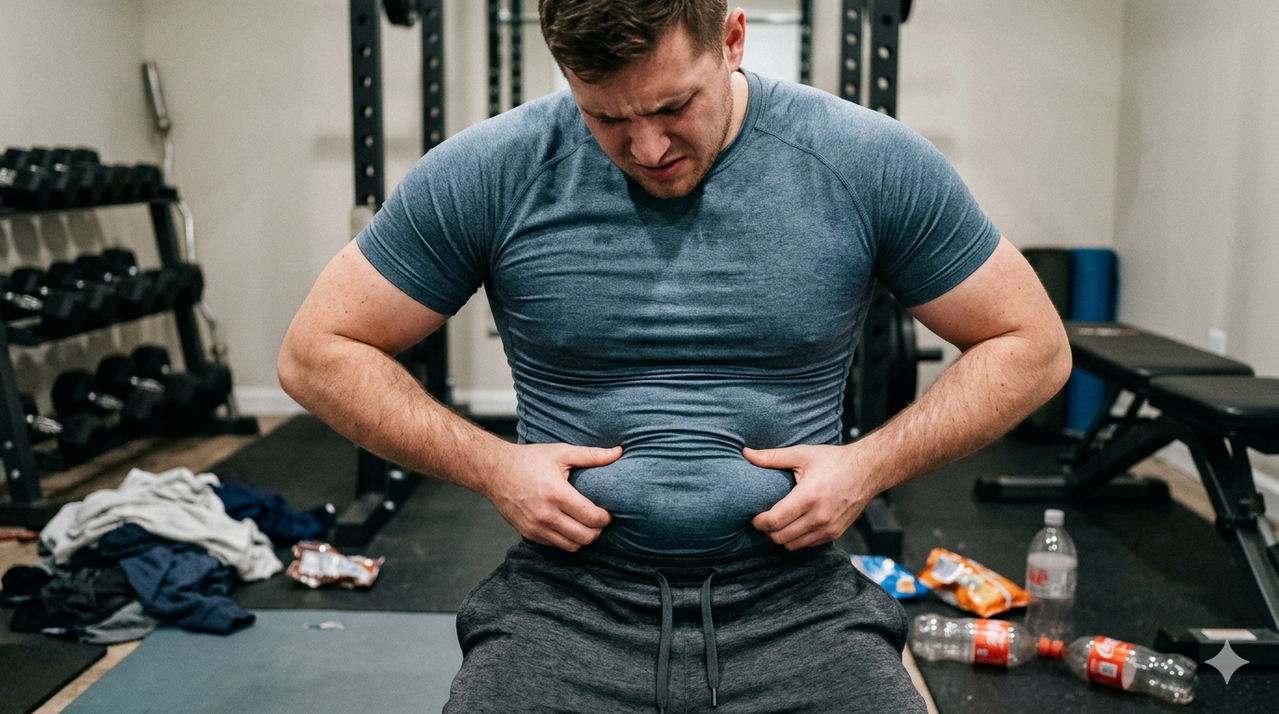
If you're gaining fat instead of muscle while bulking, you're likely experiencing dirty bulk problems. The main causes: excessive calorie surplus (>500 kcal), insufficient protein (<1.6 g/kg), poor training intensity, lack of progressive overload, and poor food quality. To fix it, switch to a lean bulk vs dirty bulk approach: 250–500 kcal surplus, 1.6–2.2 g/kg protein, progressive overload, and whole foods. Track weekly weight gain—aim for 0.25–0.5% body weight .
1. The Bulking Paradox: Why You Get Fluffy Instead of Muscular
You've been eating big. You're lifting heavy. Yet the mirror shows a softer midsection, not the muscular physique you envisioned. This frustrating scenario—fat gain instead of muscle—is the most common bulking pitfall. Understanding why gaining fat while bulking happens requires examining the balance between muscle protein synthesis (MPS) and fat storage. When the surplus exceeds what muscles can use for growth, excess energy is stored as adipose tissue. This guide reveals the science behind muscle gain vs fat gain and provides actionable solutions for how to bulk without gaining fat.
Why am I gaining fat instead of muscle?
You're gaining fat instead of muscle due to: surplus calories too high (exceeding 500 kcal above maintenance), low protein intake (below 1.6 g/kg limiting MPS), poor training intensity (lack of progressive overload), insufficient volume (less than 10 sets per muscle group weekly), or too much junk food (processed foods promoting fat storage over muscle synthesis).
2. The Science: Why Excess Calories Become Fat, Not Muscle
Muscle growth is limited by the rate of muscle protein synthesis (MPS). Research shows MPS is maximized at approximately 1.6–2.2 g protein per kg body weight and a modest calorie surplus . Any surplus beyond what MPS can use—plus energy for training and recovery—is shunted toward fat storage. This is why how to bulk without gaining fat requires precision, not just "eating everything."
2.1. The Maximum Rate of Muscle Gain
Natural athletes can gain approximately 0.25–0.5% body weight per week as muscle (0.2–0.4 kg for an 80 kg person). Gaining faster than this almost certainly means excessive fat accumulation .
2.2. Nutrient Partitioning: Where Do Calories Go?
Nutrient partitioning describes how the body directs calories toward muscle or fat. Factors influencing partitioning include insulin sensitivity, training status, genetics, and food quality. Poor partitioning leads to fat gain instead of muscle .
3. Common Causes of Fat Gain During Bulking
3.1. Excessive Calorie Surplus
A surplus above 500 kcal/day rarely accelerates muscle growth but significantly increases fat storage. Studies show that surpluses exceeding 700–1,000 kcal produce nearly 1:1 muscle-to-fat gain ratio or worse .
3.2. Inadequate Protein Intake
Without sufficient protein (1.6–2.2 g/kg), MPS cannot keep pace with the surplus, forcing excess calories into fat stores. Protein also has the highest thermic effect of food (20–30%), meaning more calories are burned during digestion .
3.3. Poor Training Stimulus
If training intensity, volume, or frequency is insufficient, the body has no signal to build muscle. Calories then accumulate as fat. Progressive overload is non-negotiable for muscle gain vs fat gain optimization .
3.4. Junk Food Dominance (Dirty Bulk)
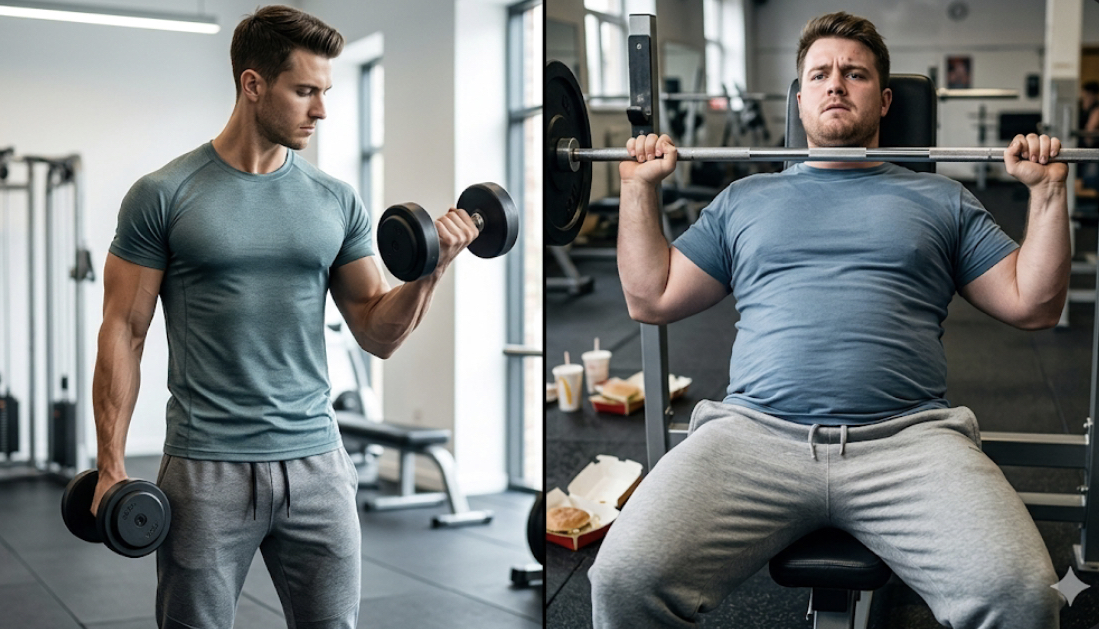
Dirty bulk problems include consuming processed foods high in refined sugars and unhealthy fats. These foods impair insulin sensitivity, promote inflammation, and preferentially store calories as fat .
📊 Lean Bulk vs Dirty Bulk Comparison
| Parameter | Lean Bulk | Dirty Bulk |
|---|---|---|
| Calorie Surplus | 250–500 kcal | 700–1000+ kcal |
| Protein Intake | 1.6–2.2 g/kg | Often insufficient |
| Food Quality | Whole foods, nutrient-dense | Processed, high sugar/fat |
| Weekly Weight Gain | 0.25–0.5% body weight | 1%+ body weight |
| Muscle:Fat Ratio | ~3:1 or better | ~1:1 or worse |
| Health Impact | Improved metabolic health | Increased inflammation, insulin resistance |
4. How to Bulk Without Gaining Fat: The Lean Bulk Protocol
4.1. Calculate Your Ideal Surplus
Determine maintenance calories (Mifflin-St Jeor equation × activity factor). Add 250–500 kcal. Monitor weekly weight gain; adjust if exceeding 0.5% body weight per week.
4.2. Optimize Protein Intake
Consume 1.6–2.2 g protein per kg body weight. For an 80 kg individual, that's 128–176 g daily. Spread across 3–5 meals with 20–40 g per meal to maximize MPS .
4.3. Train with Progressive Overload
Aim for 10–20 working sets per muscle group weekly. Each week, add weight, reps, or sets. Without progressive overload, there's no stimulus for muscle growth, and surplus calories become fat .
4.4. Prioritize Food Quality
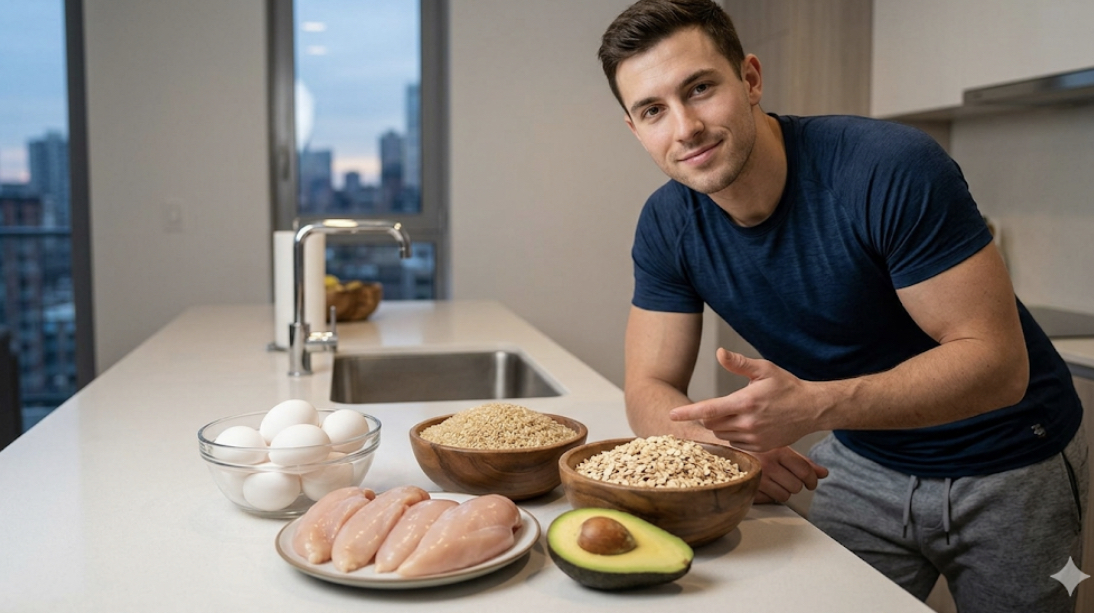
Choose whole foods: lean meats, eggs, fish, oats, rice, sweet potatoes, quinoa, nuts, seeds, avocado, vegetables. These support insulin sensitivity and better nutrient partitioning.
5. Sample Lean Bulk Meal Plan (3,000 kcal, 180g Protein)
Omnivore Plan
- Breakfast (7:30 AM): 4 whole eggs, 1 cup oats, 1 banana, 1 cup whole milk (650 kcal, 40g protein)
- Lunch (12:00 PM): 200g chicken breast, 2 cups jasmine rice, 1 tbsp olive oil, 1 cup broccoli (700 kcal, 55g protein)
- Pre-Workout (3:30 PM): 200g Greek yogurt, 1 apple, 1 tbsp honey (350 kcal, 22g protein)
- Post-Workout (6:00 PM): 2 scoops whey, 1 banana, 1 cup oats (550 kcal, 48g protein)
- Dinner (8:00 PM): 200g lean beef, 2 medium sweet potatoes, 1 tbsp olive oil (700 kcal, 45g protein)
Vegan/Vegetarian Lean Bulk Plan (2,900 kcal, 150g Protein)
- Breakfast: Tofu scramble (200g firm tofu), 1.5 cups oats, 2 tbsp peanut butter, banana (750 kcal, 45g protein)
- Lunch: 200g tempeh, 1.5 cups quinoa, 1 cup edamame, 1 tbsp olive oil (700 kcal, 48g protein)
- Snack: 1 cup soy yogurt, 1 scoop pea protein, 30g almonds (400 kcal, 32g protein)
- Dinner: 1.5 cups cooked lentils, 2 cups brown rice, 1 tbsp coconut oil, spinach (650 kcal, 28g protein)
- Evening: 1 cup full-fat oat milk + 1 tbsp almond butter (250 kcal, 8g protein)
Gluten-Free Options
- Use certified gluten-free oats
- Choose rice, quinoa, buckwheat, or gluten-free pasta
- Ensure tempeh, tofu, and protein powders are gluten-free certified
6. Training Strategies to Maximize Muscle, Minimize Fat
6.1. Progressive Overload Implementation
Add 2.5–5 kg to compound lifts weekly or increase reps by 1–2 per set. This ensures continuous muscle adaptation and signals the body to direct nutrients toward hypertrophy .
6.2. Volume Guidelines
Research suggests 10–20 working sets per muscle group per week is optimal for hypertrophy . Lower volumes are sufficient for beginners; advanced lifters may require higher volumes.
6.3. Cardio During Bulking
Contrary to belief, moderate cardio (2–3 sessions/week, 20–30 min) improves insulin sensitivity and nutrient partitioning, actually helping how to bulk without gaining fat .
7. Tracking Progress: How to Know You're Gaining Muscle, Not Fat
- Weekly weigh-ins: 0.25–0.5% body weight gain (0.2–0.4 kg for 80 kg person)
- Waist circumference: If waist increases faster than weight, reduce surplus
- Strength progression: Are you consistently adding weight or reps?
- Progress photos: Monthly photos reveal muscle vs fat changes
- Skinfold measurements: Track body fat percentage every 4–6 weeks
8. Common Bulking Mistakes That Cause Fat Gain
- Mistake #1: Eating everything in sight — Excessive surplus guarantees fat storage.
- Mistake #2: Neglecting protein — Low protein = poor MPS, more fat gain.
- Mistake #3: Training without progression — No stimulus = no muscle growth.
- Mistake #4: Skipping cardio — No cardio worsens insulin sensitivity.
- Mistake #5: Ignoring sleep — Poor sleep increases cortisol, reduces testosterone.
- Mistake #6: Dirty bulking with processed foods — Promotes inflammation and fat storage.
- Mistake #7: Not tracking progress — Without data, you can't adjust surplus.
9. Quick Lean Bulk Recipes
- Lean Mass Shake (650 kcal, 50g protein): 1 cup oats, 2 scoops whey, 1 banana, 1 tbsp peanut butter, 1 cup water/ice.
- High-Protein Oatmeal (600 kcal, 40g protein): 1 cup oats, 1 cup milk, 2 tbsp peanut butter, 1 scoop protein powder.
- Chicken & Rice Bowl (700 kcal, 55g protein): 200g chicken, 2 cups rice, 1 tbsp olive oil, vegetables.
10. Frequently Asked Questions
Why am I gaining fat instead of muscle?
You're gaining fat instead of muscle due to: surplus calories too high (exceeding 500 kcal above maintenance), low protein intake (below 1.6 g/kg), poor training intensity (lack of progressive overload), insufficient volume, or consuming too many processed foods that promote fat storage over muscle synthesis.
What is the difference between lean bulk and dirty bulk?
Lean bulk uses a modest calorie surplus (250-500 kcal) with nutrient-dense foods, resulting in slow, quality muscle gain with minimal fat. Dirty bulk uses excessive surplus (700-1000+ kcal) with processed foods, causing rapid weight gain but mostly fat, leading to poor muscle-to-fat ratio.
How can I bulk without gaining fat?
Bulk without gaining fat by: maintaining a 250-500 kcal surplus, consuming 1.6-2.2 g protein per kg body weight, training with progressive overload (10-20 sets per muscle group weekly), prioritizing whole foods, and tracking weekly weight gain (0.25-0.5% body weight).
What are common bulking mistakes that cause fat gain?
Common bulking mistakes include: excessive calorie surplus, neglecting protein intake, insufficient training intensity, skipping progressive overload, poor food choices (processed junk), inadequate sleep, and not tracking progress.
How much protein do I need during bulking?
Consume 1.6-2.2 grams of protein per kilogram of body weight daily. Spread across 3-5 meals with 20-40g protein per meal to maximize muscle protein synthesis and minimize fat storage.
Can I build muscle without gaining fat?
Yes, you can build muscle with minimal fat gain using a lean bulk approach: moderate surplus (250-500 kcal), high protein, progressive overload, and consistent tracking. Research shows muscle can be gained with as little as 0.25-0.5% body weight gain weekly.
11. Related Resources
- How to Fix a Failed Bulking Phase (Step-by-Step Recovery Guide)
- Signs Your Bulk Is Working (Or Failing): How to Track Progress Correctly
- How Many Calories Do You Need to Build Muscle? (Complete Guide)
- Why Your Muscles Are Not Growing (Even If You Train Hard)
- Best Meal Timing for Muscle Growth Beginners (When to Eat for Results)
- Can You Build Muscle Without Supplements? (Natural Muscle Growth Guide)
- How to Know If You’re Gaining Muscle or Fat (Simple Tracking Guide)
12. Scientific References
- Morton, R. W., et al. (2018). A systematic review, meta-analysis and meta-regression of the effect of protein supplementation on resistance training-induced gains in muscle mass and strength. British Journal of Sports Medicine, 52(6), 376–384. PubMed
- Slater, G., et al. (2019). Is an energy surplus required to maximize skeletal muscle hypertrophy associated with resistance training? Frontiers in Nutrition, 6, 131. PubMed
- Schoenfeld, B. J., et al. (2017). Effects of different weekly sets-equated resistance training frequencies on muscular strength, muscle hypertrophy, and body composition. Journal of Strength and Conditioning Research, 31(12), 3271–3278. PubMed
- Helms, E. R., et al. (2014). Evidence-based recommendations for natural bodybuilding contest preparation. Journal of the International Society of Sports Nutrition, 11(1), 20. PubMed
- Garthe, I., et al. (2013). Effect of two different weight-loss rates on body composition and strength and power-related performance in elite athletes. International Journal of Sport Nutrition and Exercise Metabolism, 23(1), 20–30. PubMed
- Kerksick, C. M., et al. (2018). ISSN exercise & sports nutrition review update. Journal of the International Society of Sports Nutrition, 15(1), 38. PubMed
- ACSM. (2021). Nutrition and Athletic Performance. Medicine & Science in Sports & Exercise, 53(3), 600–618. PubMed
Join the conversation